
← machines, mics, and family nights
The Best Karaoke Machine for Home (Or the Cheaper Setup)
For home karaoke you can buy one all-in-one machine for about $100 to $300, or build a better-sounding speaker-and-app stack for around $230.
 Gus Harmon · Updated July 8, 2026 · how I decide
If you buy through my links the site earns a little. It's never why I pick things.
Option one is an all-in-one machine: one box, one plug, around a hundred to three hundred dollars. Option two is the stack: a karaoke app on your TV or phone, one real speaker, and two wireless mics, about two hundred thirty total. The machine is easier. The stack sounds better for the money and outlasts the machine. Either way the songs live in an app, not in the box.
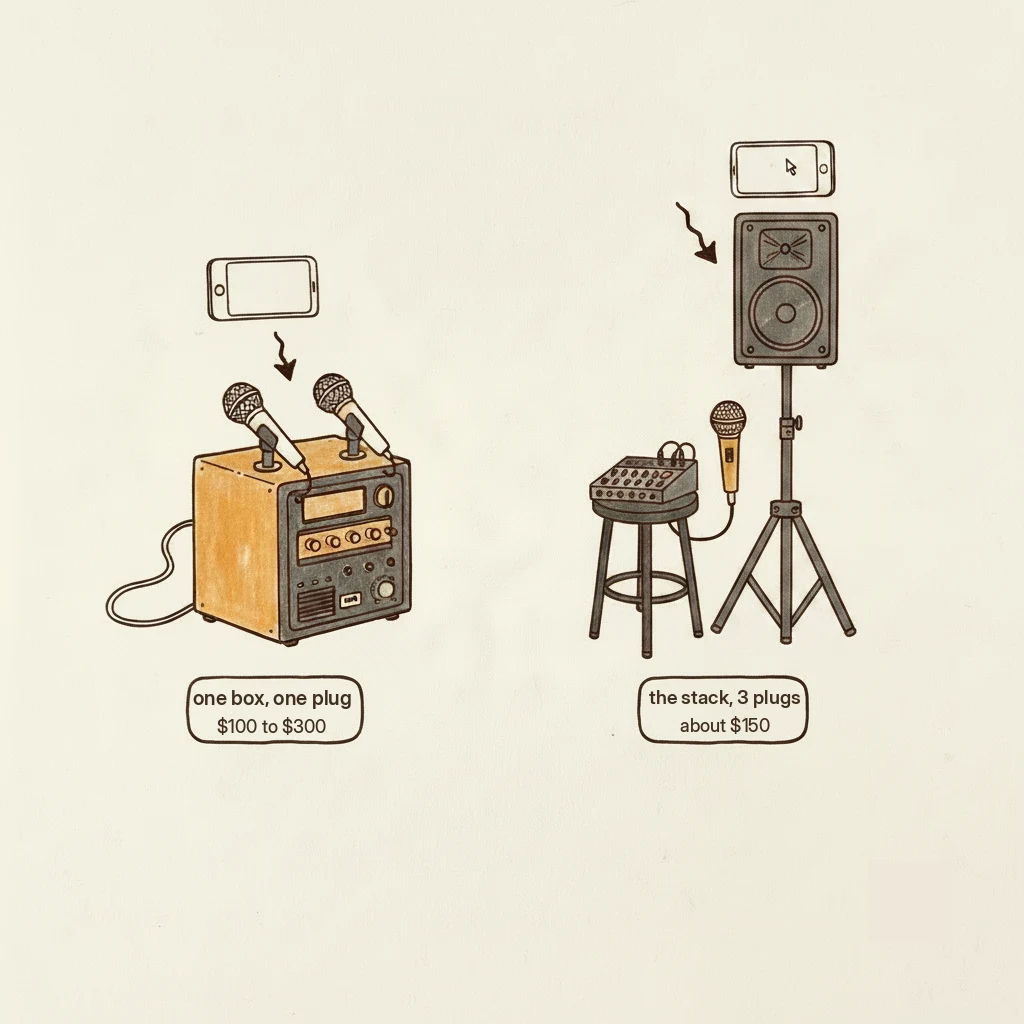
You’ve got two good ways to do karaoke at home, and nobody selling you a machine will mention the second one.
Here’s the thing nobody tells you at the store. The all-in-one machines get sold on their “built-in song library,” but the songs you’ll actually want are a subscription anyway. So you’re really just buying a speaker with a handle. Once you see that, the whole decision gets simpler.
Why the stack wins on sound (professional karaoke rigs are stacks)
When you spend two hundred dollars, most of that money should be going into the speaker, because the speaker is what you actually hear. In an all-in-one machine, that two hundred is split across a screen, a plastic body, lights, a battery, and the speaker, so only a slice of it ends up in the sound.
In the stack, nearly the whole budget goes to the speaker. Same money, a lot more sound. That’s the entire reason the stack keeps winning.
The stack is also just more flexible. A powered party speaker with mic inputs, plus a karaoke app on your TV, and you’re running the same songs everyone else is, with better sound and a queue you can manage from your phone. One tip people always forget: those speakers usually have one-click reverb, which is the little bit of polish that makes a nervous singer sound brave. Machine buyers rarely get told that exists.
When the one box is the right call
I’m not going to talk you out of a machine if a machine is what fits your life. One plug, kid-proof, and the battery-powered ones run for hours, so you can carry it to the backyard or a friend’s place. If you don’t want to think about it, that’s a real reason, and it’s fine.
One safety note that saves gear: music through a soundbar is fine, but never plug a microphone into a soundbar. It’s not built for a mic and you can damage it. Mics go into a speaker or a machine made to take them.
The one thing that matters more than the machine
Where the speaker points. A cheap setup aimed at the room beats an expensive one aimed at a wall. My niece, she’s eleven and sings into anything with a switch on it, runs the song queue at our place and she’s better at pointing the speaker at people than most adults. Get the sound aimed at the singers and half your problems disappear.
If you want one box, fine: get one with a screen that swivels so the singer can see the words. If you want it to sound good at the same money, get the Fifine mic pair, about sixty dollars, running into a real powered speaker, with a karaoke app like KaraFun on the TV. That setup beats just about every machine under three hundred dollars, and you can put someone bossy in charge of the queue.
If you buy through my links the site earns a little coffee money. Doesn’t change the price, doesn’t change my answer.
If you’re figuring this out, you’re probably also wondering:
Gus Harmon
Gus spent three decades running sound wherever somebody needed it: bar bands, weddings, school shows, and twelve years of Sunday mornings. He can't sing a note. He can make sure you're heard. Now he writes so normal people can buy the right thing the first time.