
← machines, mics, and family nights
The Best Mini Karaoke Machine (and What Mini Really Costs You)
A mini karaoke machine is either a mic with a speaker inside at about $20 to $35 or a lunchbox speaker with mics at about $50 to $120, and smaller means quieter.
 Gus Harmon · Updated July 8, 2026 · how I decide
If you buy through my links the site earns a little. It's never why I pick things.
“Mini karaoke machine” usually means one of two things. Thing one is a microphone with a speaker built right into the handle, about twenty to thirty-five dollars. It’s a toy, and a fun one. Thing two is a lunchbox-size speaker with a couple of mics, about fifty to a hundred and twenty dollars, loud enough for a bedroom but not a backyard. Smaller box, smaller sound.
Knowing which one you’re looking at saves you a disappointed kid. Here’s the part no listing admits: mini is a volume decision, not just a size one. There’s no getting around it.
What is the little microphone everyone is using?
That little handheld mic, by the way, the one you’ve seen everywhere, is thing one. It’s a Bluetooth mic-with-speaker, and it’s a great giggle for twenty-five bucks.
The honest ceiling on the cheap ones
Here’s the thing I want you to hear before you buy. At the twenty-five dollar tier, the complaint that keeps coming up is the same one: the volume’s too low. That’s not a lemon. That’s just what a tiny speaker does. If you set that expectation now, nobody’s let down on birthday morning. The cheap ones work, they’re just more toy than machine, and that’s completely fine if a toy is what you wanted.
A small speaker can be loud or it can be clean, but a tiny one can’t really be both at once. Pushing a little cone hard enough to fill a room makes it distort, that crackly, strained sound. The physics just don’t bend for a speaker the size of a soda can.
That’s why the same song sounds thin on the toy and full on the bigger box. You’re not doing anything wrong. The cone is simply too small to move that much air politely.
The three mics problem nobody warns you about
If you’ve got more than two kids, read this. Almost every karaoke set, cheap or not, comes with two mics and defaults to two mics. On the toy tiers, adding a third is usually just impossible. So if you’ve got three kids who all want to sing at once, price that in now: you either go up to a box that supports more, or you accept that somebody’s on backup vocals. Better to know at the checkout than at the party.
The size-and-sound ladder
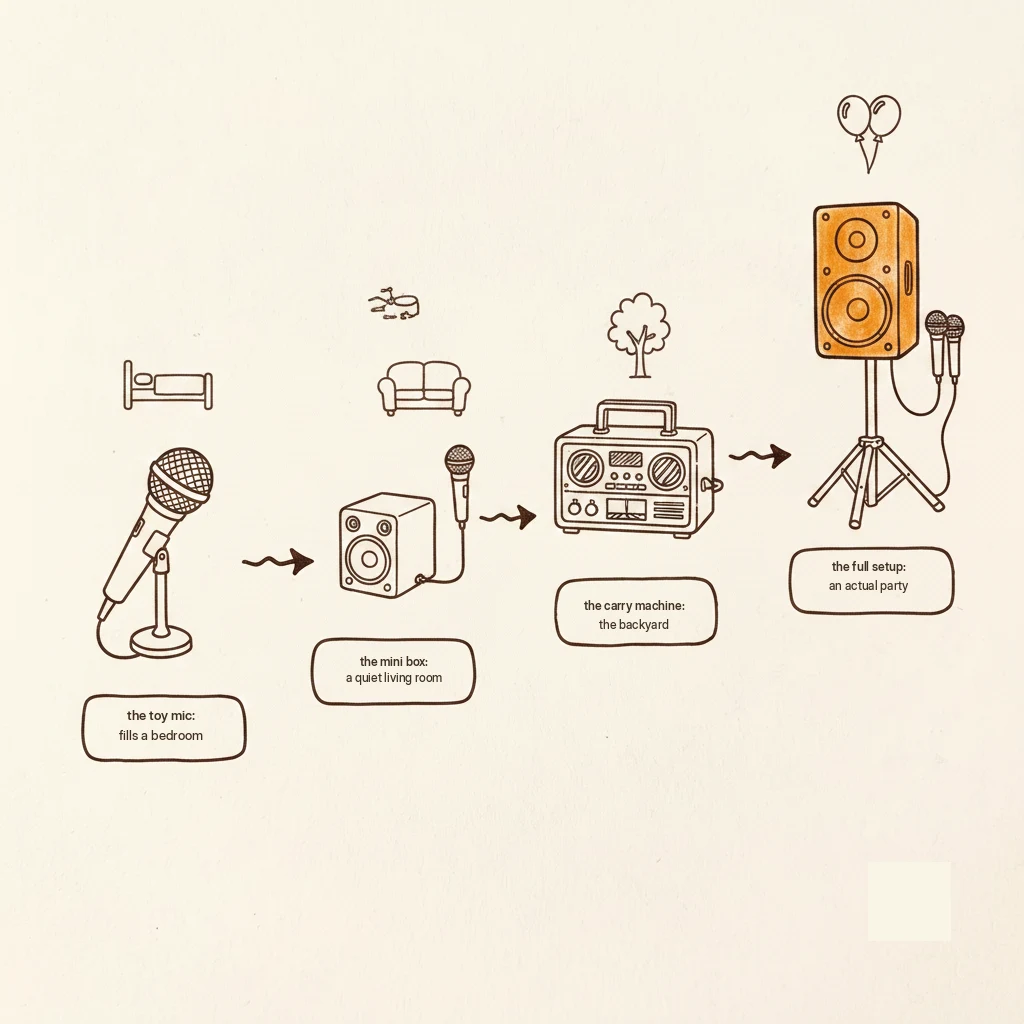
Think of it as rungs, and each rung is “when the last one gets outgrown.”
The toy mic, about twenty-five dollars, fills a bedroom. The mini box with two real mics, about sixty to a hundred and twenty, fills a living room. Above that is the portable party class, a hundred and fifty to three hundred, that fills a backyard, and then the full speaker-and-app stack for real parties.
At this little end, durability beats sound every time. The kid is going to drop it. That’s the spec no box prints, so buy for the drop. I hand this stuff to my niece, she’s eleven and sings into anything with a switch, and the mini tier is genuinely her gear. If it survives her, it’ll survive your kid.
Birthday gift? The toy mic, wrapped, done. It’s a twenty-five-dollar giggle machine and that’s the whole job. If it’s still getting used come Halloween, the eighty-dollar box with two real mics is the upgrade worth making. Don’t buy the big one first for a kid who might lose interest in a week.
If you buy through my links the site earns a little coffee money. Doesn’t change the price, doesn’t change my answer.
If you’re figuring this out, you’re probably also wondering:
Gus Harmon
Gus spent three decades running sound wherever somebody needed it: bar bands, weddings, school shows, and twelve years of Sunday mornings. He can't sing a note. He can make sure you're heard. Now he writes so normal people can buy the right thing the first time.