
← machines, mics, and family nights
Bluetooth Karaoke Microphones (What the Bluetooth Is For)
A Bluetooth karaoke mic uses Bluetooth two opposite ways, and only one is good: receiving music from your phone is fine, but sending your voice out over Bluetooth adds a delay you can hear.
 Gus Harmon · Updated July 8, 2026 · how I decide
If you buy through my links the site earns a little. It's never why I pick things.
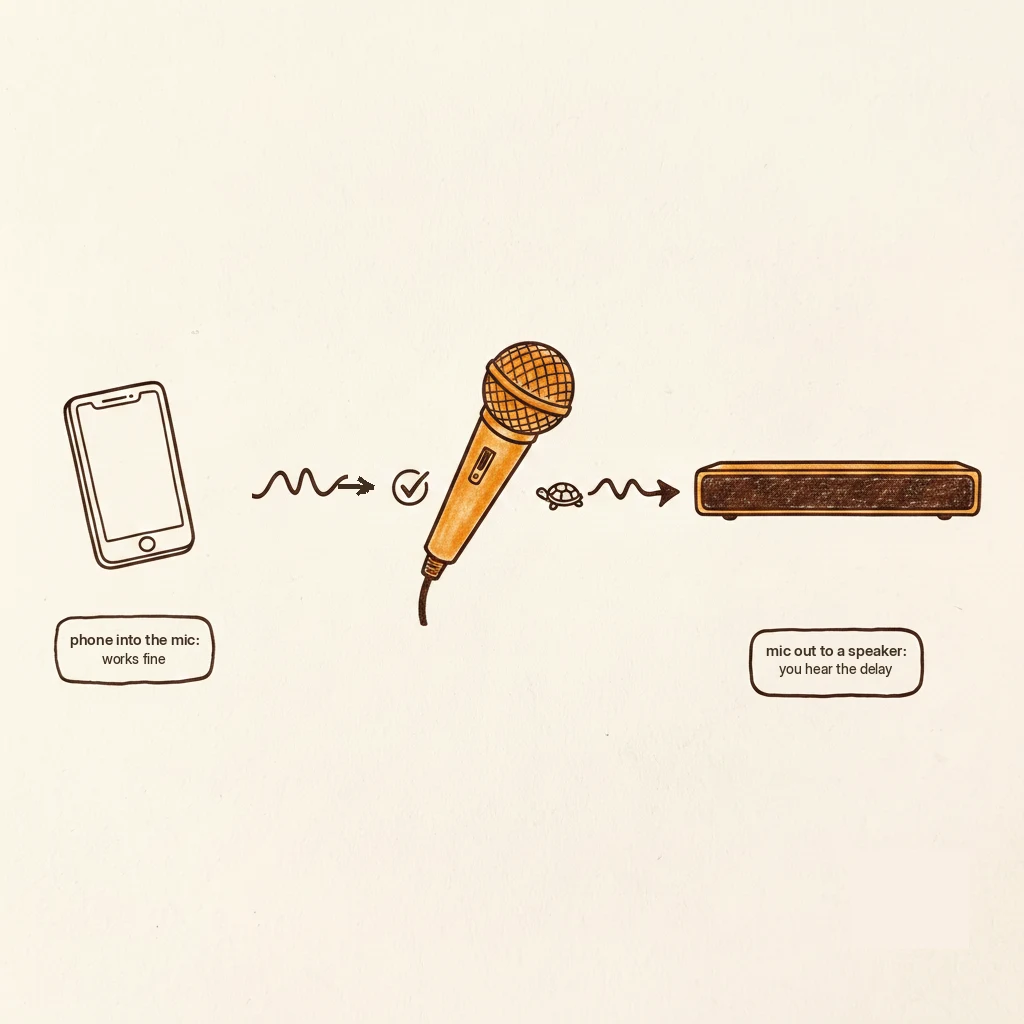
A "Bluetooth karaoke microphone" uses Bluetooth in two opposite directions, and only one of them is good. Good: the mic RECEIVES music from your phone and plays it through its own built-in speaker. That's the all-in-one handheld, and it's fine. Bad: sending your VOICE out over Bluetooth to a separate speaker, because Bluetooth adds a delay you can hear, and singing against your own late voice feels awful. If the mic sings INTO something else, you want wired or a real radio receiver, never Bluetooth.
The word “Bluetooth” is doing two jobs
Here’s the thing that trips everyone up. “Bluetooth” is printed on every karaoke mic listing, and people read it as a quality badge. It isn’t. It’s just describing a connection, and that connection runs in two directions that behave completely differently.
Direction one: music comes IN. Your phone sends the backing track over Bluetooth to the mic, and the mic plays it out its own speaker while you sing into it. This is how the popular all-in-one handheld mics work, and it’s totally fine. Pair, play, sing.
Direction two: your voice goes OUT. The mic tries to send YOUR singing over Bluetooth to a separate speaker or soundbar across the room. This is the trap.
Why sending your voice over Bluetooth is the trap
The wing's one iron rule: Bluetooth mics have severe lag on the voice, which makes singing miserable, so never buy one for that. Bluetooth takes a fraction of a second to move your voice to the speaker, and that tiny delay means you hear your own words a beat late, like singing into a canyon and getting an echo back. Your brain can't stand it. You slow down, you stumble, you feel drunk. It's not you and it's not the mic's quality. It's the connection.
So if you want a mic that feeds a speaker across the room, the voice has to travel by wire or by a dedicated radio receiver (the kind real wireless mic systems use), which is fast enough that you never hear the gap. Bluetooth is for the music coming in. Never for the voice going out. One more note: singing full volume through a TV soundbar can also strain it, since soundbars aren’t built to be PA speakers.
”KTV microphone” is the same thing
If you searched “Bluetooth KTV microphone,” that’s just the import wording for the same all-in-one handheld class. KTV is the karaoke-room style these came from. Same product, same answers. Your naive phrasing is fine.
Which one you actually want
Best simple gift or grab-and-sing
A Bonaok-class all-in-one (Bluetooth music in, own speaker) runs about $20 to $40 at Amazon. The phone streams the song to it, it plays and amplifies you, all in one handheld. Great cheap fun.
Flaws, said plainly: it's a little speaker, so it fills a bedroom, not a party hall. And it's the "music in" use of Bluetooth only.
Best for actually feeding a real speaker
A Fifine dedicated-receiver wireless set is about $60 to $70 at Amazon. Your voice travels by radio to a little receiver you plug into the speaker, so there's no lag to fight.
Flaws, said plainly: one more box to connect than an all-in-one, and it needs a speaker to plug into.
If you want zero lag and zero fuss and you already own a speaker with a mic input, a plain wired mic (an SM58-class runs $20 to $110) is the honest floor. A cable is mildly annoying. A laggy voice is worse.
Pairing, untangled
Pairing is the number-one thing people get stuck on, and it’s because there are up to three devices in the room. Remember which pairs to which: the MIC pairs to your PHONE (to get the music), and if you’re using a separate speaker, the SPEAKER pairs on its own connection. They don’t all join one big handshake. Sort out “phone to mic” first, get a song playing, then deal with the speaker.
Skip this unless you like the nerdy part. Why does Bluetooth ruin the voice but not the music? Because delay only bothers you when something's comparing. When the backing track streams in, a fraction of a second late doesn't matter, since nothing else is playing it at the same time to clash with. But your voice arrives at your own ears instantly through the air, AND a beat later through the laggy speaker, so now two copies are fighting, and your brain hears the smear. Same delay, but only the voice path has a race going.
If the speaker's inside the mic, buy it happy. If the speaker's across the room, the voice goes by wire or by real radio. Bluetooth is for the music coming IN, never the voice going OUT. Get that one rule right and you'll never buy the wrong karaoke mic again.
Questions people actually ask
Do Bluetooth karaoke microphones have lag?
When they send your VOICE over Bluetooth to a separate speaker, yes, and it’s bad enough to ruin singing. When they simply RECEIVE music from your phone and play it through their own built-in speaker, there’s no problem. So the all-in-one handheld type is fine; using Bluetooth to feed a distant speaker is the setup to avoid.
What’s the difference between a Bluetooth and a wireless karaoke mic?
A Bluetooth all-in-one receives music and plays you through its own speaker. A true wireless mic sends your voice by radio to a receiver plugged into a speaker, which is fast enough to have no noticeable delay. For feeding a real speaker across a room, you want the radio-receiver kind, not Bluetooth.
Why does my karaoke mic sound delayed through my soundbar?
Because your voice is traveling over Bluetooth, which adds a small delay, and you’re hearing it late against your live voice. Switch to a wired mic or a dedicated radio-receiver wireless set to remove the lag. Also, soundbars aren’t built for full-volume live vocals, so a proper speaker is kinder to your gear.
If you buy through my links the site earns a little coffee money. Doesn’t change the price, doesn’t change my answer.
Sorting out karaoke mics, you're probably also wondering:
Gus Harmon
Gus spent three decades running sound wherever somebody needed it: bar bands, weddings, school shows, and twelve years of Sunday mornings. He can't sing a note. He can make sure you're heard. Now he writes so normal people can buy the right thing the first time.