
← machines, mics, and family nights
Why Does My Karaoke Mic Echo?
There are two different echoes: the echo knob, which is added on purpose to flatter your voice and can be turned down, and the shrieking feedback howl, which is the mic hearing its own speaker, and both fix in about ten seconds.
 Gus Harmon · Updated July 8, 2026 · how I decide
If you buy through my links the site earns a little. It's never why I pick things.
Nothing is broken
You’re mid-party. It sounds wrong. And there’s a quiet voice in your head saying you bought junk, or you broke it.
You didn’t do either. Every person who has ever plugged in a microphone has hit one of these two things, including me, in front of two hundred people at a wedding, more than once.
Echo number one: the knob
Every karaoke mic and machine ships with echo turned on, out of the box, on purpose.
It’s reverb. It puts your voice in a bigger, prettier room than the one you’re standing in. It smooths out the cracks. Manufacturers know that a voice with a little echo sounds better than a naked one, and they’d rather you like what you hear the first time.
If you hate it, find the knob marked echo or reverb and turn it down. On the all-in-one mics with no knob, it’s a button you press to cycle through modes.
Echo number two: the howl
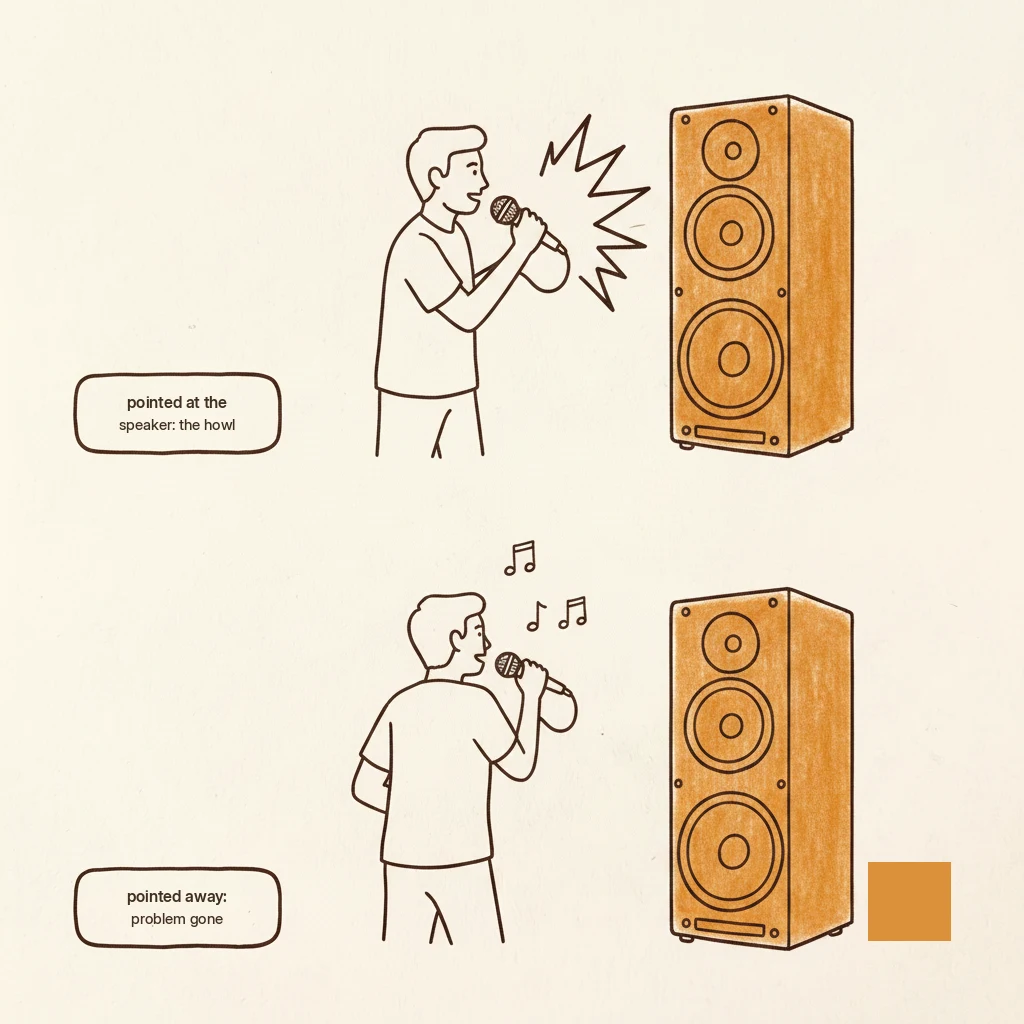
That rising screech that makes everybody grab their ears is feedback, and it’s a loop.
Your mic hears the speaker. The speaker plays what the mic heard. The mic hears that, louder. Around and around, a few thousand times a second, until it’s a howl.
Three fixes, in order of how well they work. Don’t point the microphone at the speaker, ever. Stand behind the speaker or off to its side, not in front of it. And turn the volume down a notch, because the loop needs loudness to keep going.
The other two things it might be
Cheap mics have a mode button, and it cycles. Somebody’s thumb found it. If your voice suddenly sounds like a robot or a chipmunk, that’s the voice changer or the autotune, not a malfunction. Press the button until you’re you again.
And if the sound is weird, crackly, or fading, before you conclude anything: batteries. It’s almost always batteries. A dying transmitter hisses and distorts and everybody blames the microphone.
The cupping myth
Wrapping your hand around the ball of the mic looks fantastic. Every rapper does it.
It also makes echo and feedback worse. That grille is shaped to hear what’s in front of it and ignore what’s beside it, and your palm cancels that shape. Hold the mic by the handle, point it at your mouth, and let the ball breathe.
If you're figuring this out, you're probably also wondering:
Gus Harmon
Gus spent three decades running sound wherever somebody needed it: bar bands, weddings, school shows, and twelve years of Sunday mornings. He can't sing a note. He can make sure you're heard. Now he writes so normal people can buy the right thing the first time.