← first chords, first songs, at any age
A Native American Flute for a Beginner (the Key Is the Decision)
A beginner Native American style flute should be a mid-tone key (G is the default) in cedar for about $140 to $250, and its secret is that pentatonic tuning means there are no wrong notes.
 Gus Harmon · Updated July 8, 2026 · how I decide
If you buy through my links the site earns a little. It's never why I pick things.
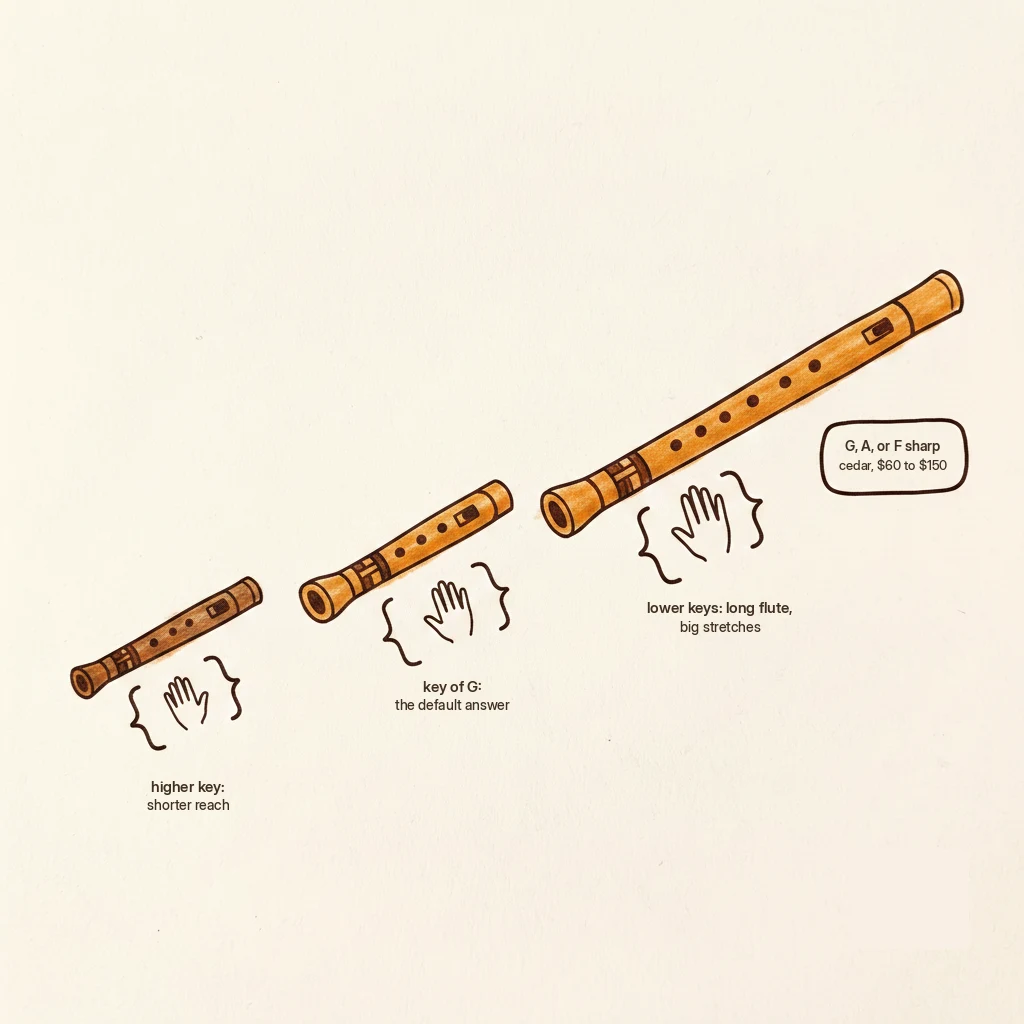
For a beginner, choose a mid-tone key: G, A, or F sharp, with the key of G as the default answer. Lower keys mean longer flutes and bigger finger stretches you'll fight. The instrument's secret is that it's the most forgiving wind instrument you can buy. It's tuned to a pentatonic scale, so there are no wrong notes and everything you play sounds like music on the first evening. A cedar beginner flute from a real maker runs about $140 to $250.
First, the thing that makes this instrument different
Here’s the thing you should hear before anything else, because it’s the whole reason this flute exists for people like you: there are no wrong notes.
The instrument is tuned to a pentatonic scale, five notes that all agree with each other, so any note you play sounds right against any other. That’s not a sales line. It’s the tuning. It’s exactly why the flute in those sleep-and-meditation videos sounds so peaceful, and why you, tonight, with no lessons and no theory, can make that same sound. You came to MAKE the sound, not to study music, and this instrument is built for precisely that.
The key is the real decision
Almost every beginner question about this flute is really a question about which key, so let’s make it simple. Bigger flute means a lower voice AND a wider reach between the finger holes. Smaller flute means a higher voice and an easier reach.
- High A: smallest, brightest, easiest for small hands.
- G: the default. Small and comfortable to hold, with a low, soft, soothing voice. When in doubt, this is your flute.
- F sharp: a popular, deeper voice, a little bigger in the hands. Owners keep landing on this one for meditation: in one thread it gets called “probably the most calming flute you can have,” still manageable for average hands.
- Anything lower than that: the finger holes spread wide, and a beginner fights the stretch. The deep flutes also drink more air (bigger bore, more lung), and the two-chambered drone flutes roughly double the air demand. Save the deep ones for your second flute.
Start with G and you get the classic soothing tone without the reach becoming a chore.
Buying it right (and respectfully)
A quick, honest word, because it matters. This instrument carries living cultural weight. Buy from real makers, and buying directly from Native makers is the best version of this purchase. You'll also see the label "Native American STYLE flute" on instruments made by non-Native makers, and that wording is the honest one: it tells you who made it without claiming what it isn't. Look for that honesty, and steer clear of the anonymous tourist bamboo, same décor trap as any flute.
Cedar is the standard starter wood, warm and forgiving. Good beginner flutes run $140 to $250, and some (like Stellar’s beginner G package) ship with a book to get you going. High Spirits is another well-regarded maker in the G and F sharp range.
Your first evening (this is the whole lesson)
Cover all the holes with the pads of your fingers. Breathe gently into the flute, not hard. Then lift one finger at a time and listen to the note change. That’s it. That’s lesson one, complete. There’s no fingering chart to memorize and no scale to drill, because every note already belongs. Play, and it sounds like music.
Skip this unless you like the nerdy part. "Pentatonic" just means five notes to the scale instead of the usual seven, and the two notes that get left out are exactly the ones that clash with the others. Remove the rub and what's left is five tones that harmonize in every combination, which is why you can't hit a wrong one. It's also the oldest scale humans use, showing up in folk music on every continent, because it's the one our ears find restful without being taught. You're playing something very, very old.
Key of G, cedar, from a maker whose name you know, and play it the first evening with the lights low. There are no wrong notes. That's not marketing, it's the tuning, so just breathe and lift your fingers one at a time.
Questions people actually ask
What key of Native American flute is best for beginners?
The key of G. It’s small enough to hold and reach comfortably, with the low, soft, soothing voice most beginners are after. High A suits the smallest hands, F sharp gives a deeper voice, and anything lower spreads the finger holes too wide for a first flute. Start with G.
Do you need lessons to play a Native American flute?
No, and that’s the point of it. It’s tuned so every note agrees with every other, meaning there are no wrong notes to learn around. Cover the holes, breathe gently, and lift one finger at a time. You’ll be making music the first evening with no theory, no chart, and no teacher.
How much does a good beginner flute cost?
About $140 to $250 for a cedar flute from a real maker, some of which include a starter book. Buying from a genuine maker, and ideally directly from a Native maker, is worth it over anonymous marketplace bamboo, which is often untuned decoration rather than a playable instrument.
If you buy through my links the site earns a little coffee money. Doesn’t change the price, doesn’t change my answer.
Chasing that peaceful wind sound, you're probably also wondering:
Gus Harmon
Gus spent three decades running sound wherever somebody needed it: bar bands, weddings, school shows, and twelve years of Sunday mornings. He can't sing a note. He can make sure you're heard. Now he writes so normal people can buy the right thing the first time.