← first chords, first songs, at any age
A Pan Flute for a Beginner (Curved, 15 Pipes, and Go)
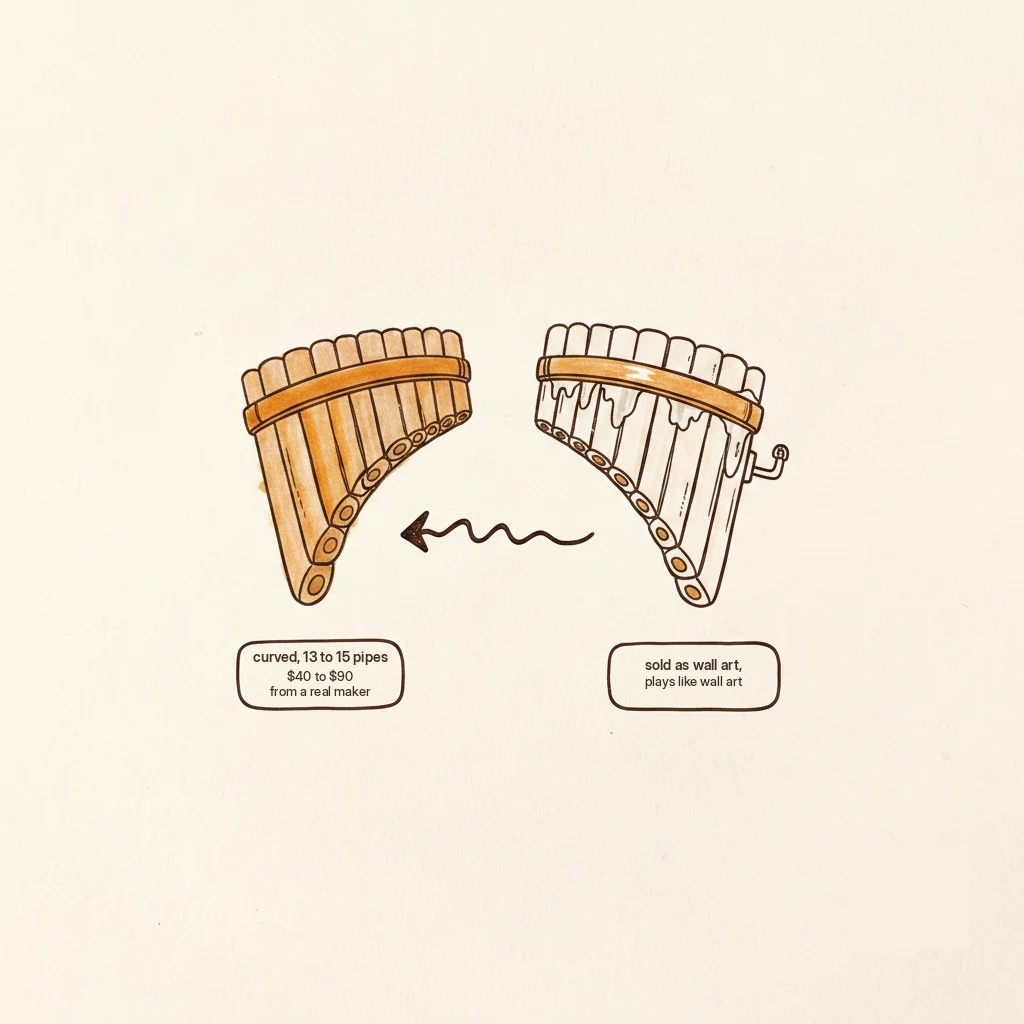
A beginner pan flute is curved, has 13 to 15 pipes, and costs about $40 to $90 from a real maker; skip the bamboo décor pipes, because if it's sold as wall art it plays like wall art.
 Gus Harmon · Updated July 8, 2026 · how I decide
If you buy through my links the site earns a little. It's never why I pick things.
A good beginner pan flute is curved, has 13 to 15 pipes (about two octaves), and costs $40 to $90 from a specialist maker. Curved because it follows the natural turn of your head, and 15 pipes because that covers most songs without overwhelming you. Skip the generic bamboo pipes at tourist shops. If it's sold as wall art, it plays like wall art. The one-question test: a real one names its key ("G major, 15 pipes"); décor doesn't.
You saw a video, and now you want one
Here’s the thing that brings most people to this page: you heard a pan flute in a movie score or a Zamfir or Leo Rojas video, something soaring and a little haunting, and you thought, I want to make THAT sound. You don’t need a music background. You do need to not get sold a decoration. Let’s make sure the forty bucks buys an instrument.
As one honest beginner put it, “I’m not asking for something professional, but I want to play most popular pan flute songs.” That’s exactly the right ask, and it’s very doable.
The buy spec, plainly
Three things make a pan flute a real starter instead of a souvenir.
Curved, not straight. A curved pan flute follows the arc your head makes as you turn, so each pipe meets your lips without you craning. Straight ones fight your neck.
13 to 15 pipes. That’s about two octaves, enough for most of the famous songs without a wall of pipes to get lost in.
A stated key. This is the whole tell. A real instrument’s listing says something like “key of G major, 15 pipes.” A décor piece says nothing about key, because nobody tuned it. Tunable models exist too, where you can adjust the pitch without tools, and those are worth it.
The two kinds, honestly
There are two styles, and they're genuinely different instruments. The traditional notched pan flute is the real thing: you blow across the top of each pipe like blowing across a bottle, and by tilting it you can bend notes, which is where all that expressive swooping comes from. The plastic "recorder-style" kind has a built-in mouthpiece that makes sound the instant you blow, but it can't bend a note. The plastic one is an honest tryout or a kid's rung. The notched one is the instrument you saw in the video.
Making your first sounds
You blow across the top edge of a pipe, not into it, the same bottle-top angle a regular flute uses. Work one pipe at a time until each speaks cleanly. The wetted-lip slide that bends notes comes later, once single notes are easy. Give it a couple of weeks and the famous tunes start showing up under your breath.
The good news on repertoire: most of the songs you’re chasing (El Condor Pasa, The Lonely Shepherd) live in one key, and a 15-pipe pan flute in G major covers that ground. So one right instrument, and the classics are open to you.
The picks
Best real starter
A specialist student pan flute, 15 pipes and curved, runs about $40 to $90 from a real maker (the Panex student line and similar). Buying from an actual pan-flute maker instead of a generic marketplace seller is how you avoid the wall-art trap.
Flaws, said plainly: less famous than the marketplace bamboo, and you may have to buy from a specialist site rather than one-click. Worth the extra step.
Best easy one-click starter
A Peru Treasure 15-pipe class is about $40 to $60 at Amazon. A curved, keyed starter you can get quickly, a reasonable entry into the real, notched style.
Flaws, said plainly: check the listing names a key before buying, since marketplace quality varies.
Best for a kid or a quick tryout
A fipple (plastic, recorder-style) pan flute runs about $20 to $30 at Amazon. It makes sound the instant you blow, so it's frustration-free for a child.
Flaws, said plainly: it can't bend notes, so it won't give you the expressive swoops of the real thing. A first step, not the destination.
Skip this unless you like the nerdy part. Tilting the pan flute bends the note because it quietly changes the length of the air column doing the work. When you tilt the pipe away, your breath effectively meets the air a hair higher up, shortening the vibrating column, and a shorter column rings higher. So that soulful slide isn't a trick of the lips alone, it's you literally resizing the instrument in real time by a few degrees of tilt.
The curved 15-pipe from a real maker, forty bucks, and El Condor Pasa by the end of the month, one pipe at a time like blowing across bottles. And if the listing doesn't name a key, it's furniture. Keep scrolling.
Questions people actually ask
How many pipes should a beginner pan flute have?
Thirteen to fifteen, which gives you about two octaves. That’s enough range for most famous pan-flute songs without overwhelming a beginner with pipes. Fewer than that feels limiting fast; many more is for advanced players. A curved 15-pipe in G major is the sweet-spot starter.
How can I tell a real pan flute from a decoration?
The key. A real instrument’s listing states its musical key, like “G major, 15 pipes,” because someone tuned it. Décor bamboo pipes say nothing about key, because they were never meant to be played in tune. Also look for a curve and tuning corks rather than a straight, glued row of tubes.
Is a pan flute hard to learn?
The first sounds take a little hunting, since you blow across each pipe like a bottle top rather than into it, but it comes within days. Because the famous songs sit in one key, a right-keyed 15-pipe lets a beginner play recognizable tunes within a few weeks. It’s one of the more approachable wind instruments.
If you buy through my links the site earns a little coffee money. Doesn’t change the price, doesn’t change my answer.
Drawn to the soothing-wind sound, you're probably also wondering:
Gus Harmon
Gus spent three decades running sound wherever somebody needed it: bar bands, weddings, school shows, and twelve years of Sunday mornings. He can't sing a note. He can make sure you're heard. Now he writes so normal people can buy the right thing the first time.