
← your kid's instrument: costs, rentals, sticking with it
Flute Fingering Chart for Beginners (B, A, G First)
Beginners only need the first corner of a flute fingering chart (B, A, and G), but the truth no chart shows is that the flute may make no sound for a week or two while the lip shape comes first.
 Gus Harmon · Updated July 8, 2026 · how I decide
If you buy through my links the site earns a little. It's never why I pick things.
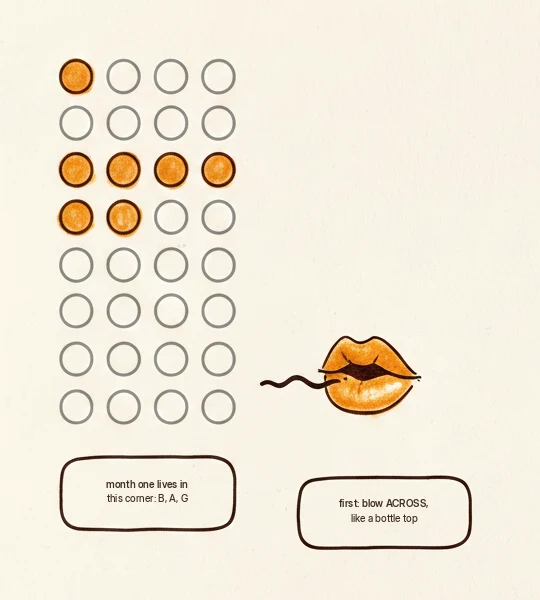
A flute fingering chart maps which keys each finger presses, and a beginner only needs its first corner: B, A, and G, the three left-hand notes every band method starts with. But here's the truth the chart can't show. For the first week or two, the flute may make no sound at all. The lip shape across the hole comes before any fingering matters, and blowing across a bottle top is the honest practice trick while it clicks.
The chart is step two, not step one
Here’s the thing that saves a lot of week-one heartbreak: a flute fingering chart is genuinely useful, and it is completely useless until sound comes out. You can hold B perfectly and get nothing but air, because on a flute the fingers don’t make the note. The lips do.
So before the chart matters at all, the job is the lip shape (the fancy word is embouchure, which just means how you hold your mouth across the hole). Band directors literally assign the first days as headjoint only, just the top piece of the flute, no fingering at all, working to get any clear tone.
How the sound actually happens
You don’t blow INTO a flute. You blow ACROSS the hole, the way you’d blow across the top of a bottle to make it hum. That across-the-edge angle is the whole secret, and it takes a bit of hunting to find. Lips firm but soft, a focused stream of air aimed across the opening, not down into it.
For about two weeks, a beginning flute is more air than sound, and that is the instrument, not your kid. Nobody's doing it wrong. The bottle-top hum is the exact same physics, so having them practice on a bottle is a real, band-director-approved way to find the feeling. The day a clear note finally happens is the day flute actually begins.
Then: B, A, G, and only those
Once notes are coming out, the chart’s first corner is all you need. B, A, and G are the three notes every method starts with, all left hand, very few keys. The chart reads like the clarinet’s or any woodwind’s: a filled circle means cover that key, an open one means leave it. Learn those three cold before you go looking further down the page.
And do ignore the rest of the chart for now. Those later pages, the high third-octave notes, are next YEAR. If your kid measures month one against page four of the chart, they’ll feel like they’re failing when they’re right on schedule.
When a note that worked stops working
One diagnostic worth knowing: if a note your kid could play suddenly stops speaking, it’s often not the fingers and not a skill slip. It can be a pad, one of the little cushions under the keys, not sealing. Pads wear and shift. That’s a repair thing, not a practice thing, and worth checking before anyone gets frustrated.
Where to get the chart
Free charts are everywhere: the National Flute Association has a beginner PDF, and most store sites offer printable ones. There are mobile chart sites too, handy if you don’t want paper on the stand. There’s also a color-coded laminated chart on Amazon for about $12 that’s perfectly fine if you’d rather buy a nice sturdy one. And the method book (Essential Elements Book 1, about $12) carries the first-year notes in the right order anyway.
Skip this unless you like the nerdy part. A flute speaks sideways because it doesn't use a reed or your lips as the vibrator, the way a clarinet or trumpet does. Instead, your stream of air hits the sharp far edge of the hole and splits, flickering above and below the edge fast enough to set the air in the tube vibrating. That splitting air IS the sound source, which is why the angle across the edge matters so much and why blowing across a bottle makes the same hum. You're building an invisible reed out of moving air.
Headjoint only for the first week, across not into, and don't even open the chart yet. The day a clear note happens, print the chart and circle B, A, and G. Fingering is the reward for the sound, not the other way around.
Questions people actually ask
What are the first notes to learn on flute?
B, A, and G, all played with the left hand and very few keys. Every band method starts there. But learn them only after sound is coming out reliably, because on flute the lip shape has to work before any fingering produces a note at all.
Why does my flute make no sound?
Because the sound comes from your lips and air, not the keys, and that takes a week or two to find. You blow across the hole, not into it, like humming across a bottle top. Expect “more air than sound” at first. That’s normal for every beginner, and it clicks with practice on the headjoint alone.
Do I need to memorize the whole fingering chart?
No, and please don’t try. A beginner needs only the first corner, B, A, and G. The rest of the chart, especially the high third-octave notes, is next year’s material. Judging month one against the full chart just makes a kid feel behind when they’re right on track.
If you buy through my links the site earns a little coffee money. Doesn’t change the price, doesn’t change my answer.
Getting through the first weeks, you're probably also wondering:
Gus Harmon
Gus spent three decades running sound wherever somebody needed it: bar bands, weddings, school shows, and twelve years of Sunday mornings. He can't sing a note. He can make sure you're heard. Now he writes so normal people can buy the right thing the first time.