← your kid's instrument: costs, rentals, sticking with it
Flute Songs for Beginners (What 'Easy' Actually Assumes)
True first flute songs are the five-note method-book tunes like Hot Cross Buns and Ode to Joy, because most 'easy' sheet music online is graded against players, not beginners.
 Gus Harmon · Updated July 8, 2026 · how I decide
If you buy through my links the site earns a little. It's never why I pick things.
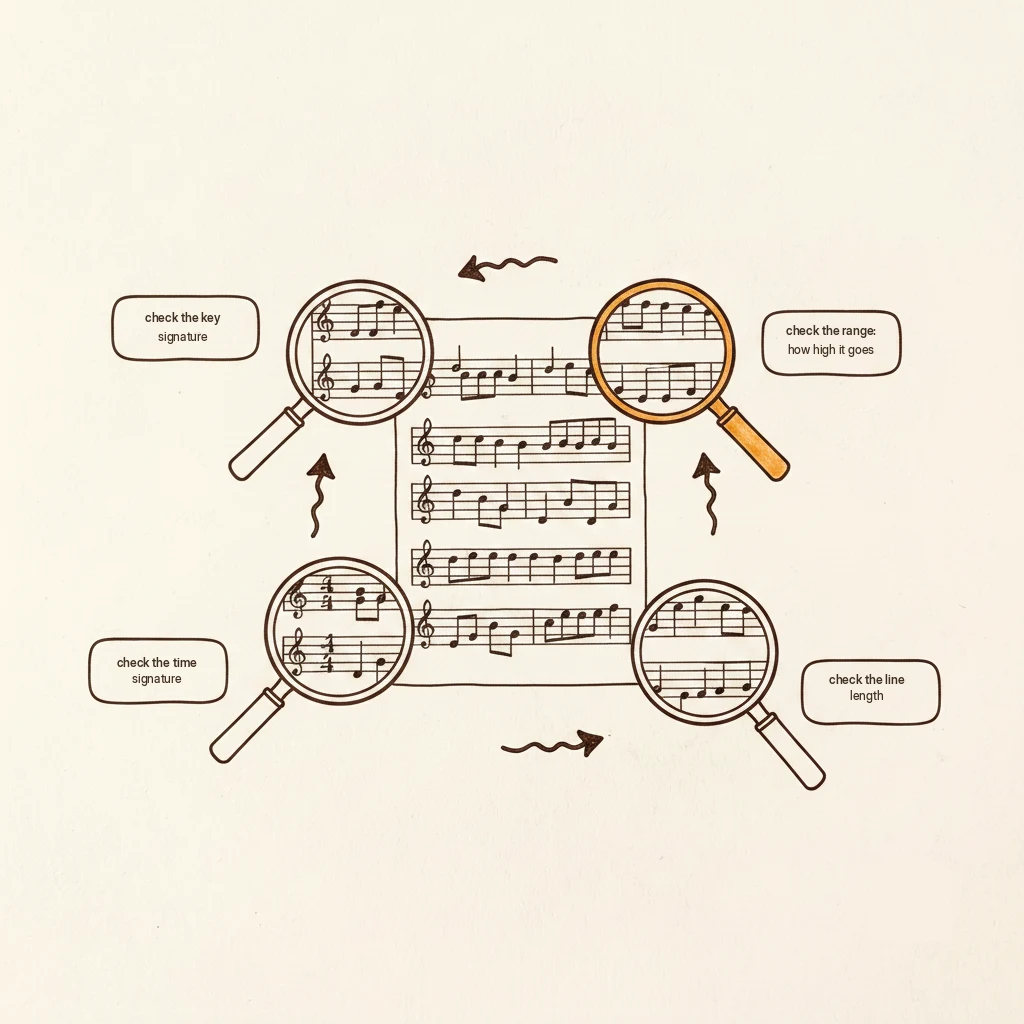
The true first flute songs are the five-note method-book tunes, Hot Cross Buns, Mary Had a Little Lamb, Ode to Joy, because most “easy” sheet music online is graded against players, not beginners. Before you believe a label, check the song’s range, key, and how long the notes are held. That’s what “easy” quietly assumes.
A flute player online said the quiet part out loud, and it explains a lot of month-two frustration: “‘Easy’ doesn’t necessarily mean beginner friendly.” They’d pulled up “easy” pieces from a free sheet library that “looked more than an easy difficulty,” and wondered if the grading was broken.
It wasn’t. The scale was just insider-relative. So before I hand you songs, let me hand you the thing that actually helps: how to tell if an “easy” flute song is really beginner-easy.
What “easy” is hiding
When a sheet library calls a flute piece easy, it usually means easy for a competent player. Three things hide inside that label and gate the real difficulty:
- Range. Does it stay in the comfortable middle, or does it reach up into the high third octave? The high notes take weeks of extra work to make speak cleanly.
- Key signature. More sharps or flats means more awkward fingerings a beginner hasn’t drilled yet.
- Long sustained lines. Holding a note soft and steady for four counts is genuinely hard on flute, because the instrument eats air.
If a piece needs the high octave, it is not a beginner piece, no matter what the site says. Being stuck below a mislabeled “easy” song means the label lied, not that your lungs failed.
The real first-song ladder
Start where every flute player actually starts, on about five notes.
- Hot Cross Buns, Mary Had a Little Lamb, Ode to Joy (staff version). The method-book melodies. Real tunes, tiny range.
- Amazing Grace-tier standards once your low and high notes both speak reliably.
Then, and only then, the by-difficulty free libraries (flutetunes.com is the genuinely useful one) have a real beginner tier. Use their actual-beginner list, not their “easy” list, and check the range on each before you commit.
The bar that reframes “slow”
Another player gave the honest standard for playing a piece “right”: the correct notes, in the correct time, held the correct length, in tune, at the correct volume. As they put it, “it’s easy to play anything badly.” That sounds harsh but it’s freeing, because it means slow progress isn’t failure. It’s you meeting a real standard. Nailing Hot Cross Buns on all five of those counts is a genuine accomplishment.
The trick for a kid with no one to play with
Play along to recordings. Pull up a recording of an orchestral piece, find the free score online (IMSLP has mountains of them), and play the flute line right along with the record. One flutist described it perfectly: “every single time I play, I’m the soloist.” It turns lonely bedroom practice into playing in a band, which is the thing that actually keeps a kid coming back.
Destination pieces (the carrots)
Keep these in view so the five-note phase has a horizon: Girl from Ipanema, Tico-Tico, and Carnival of Venice get named by players as genuinely fun flute pieces. They’re month-six-and-beyond goals, not week-one lists. And yes, Jethro Tull really did put a flute front and center in a rock band, if your kid needs proof the instrument can be cool.
About “songs with letters”
Letter-notation sheets, the ones that spell out the note names, are fine training wheels for week one. And here’s a small mercy specific to flute: the fingerings map directly to note names anyway, so the jump from letters to real notation is gentler than parents fear. Use the letters briefly, then let them fall away.
Hal Leonard’s First 50 Songs You Should Play on Flute. About $15. A sequenced beginner songbook so you’re not gambling on random internet PDFs of wildly different difficulty.
Flaws, said plainly: the free flutetunes beginner tier covers a lot of the same ground at no cost. The book’s value is having it curated and in order.
The flute’s hidden difficulty is an air budget. Unlike a clarinet or trumpet, where a reed or your lips do the vibrating, the flute makes sound by you blowing a fast, focused stream of air across the edge of the hole, and a lot of that air just escapes without becoming sound. So the flute is thirsty. A long, soft, sustained line is hard not because your fingers are busy, but because you’re rationing a limited tank of breath across a phrase while keeping the stream perfectly steady. That’s why “easy” pieces with long held notes trip up beginners: the notes are simple, but the breath management underneath them is an advanced skill. Short, busy tunes are actually kinder to a new player’s lungs than slow, pretty ones.
Check a piece’s range before you believe its label. If it climbs into the high octave, skip it for now, no matter what the website calls it. Start on the five-note method-book tunes, then work the flutetunes beginner tier. And when a working flute suddenly “gets hard” to play, look at the pads before blaming the kid. Worn pads that don’t seal make the whole instrument fight back.
If you buy through my links the site earns a little coffee money. Doesn’t change the price, doesn’t change my answer.
If you’re figuring this out, you’re probably also wondering:
Gus Harmon
Gus spent three decades running sound wherever somebody needed it: bar bands, weddings, school shows, and twelve years of Sunday mornings. He can't sing a note. He can make sure you're heard. Now he writes so normal people can buy the right thing the first time.