
← your kid's instrument: costs, rentals, sticking with it
What Instrument Should My Kid Play in Band?
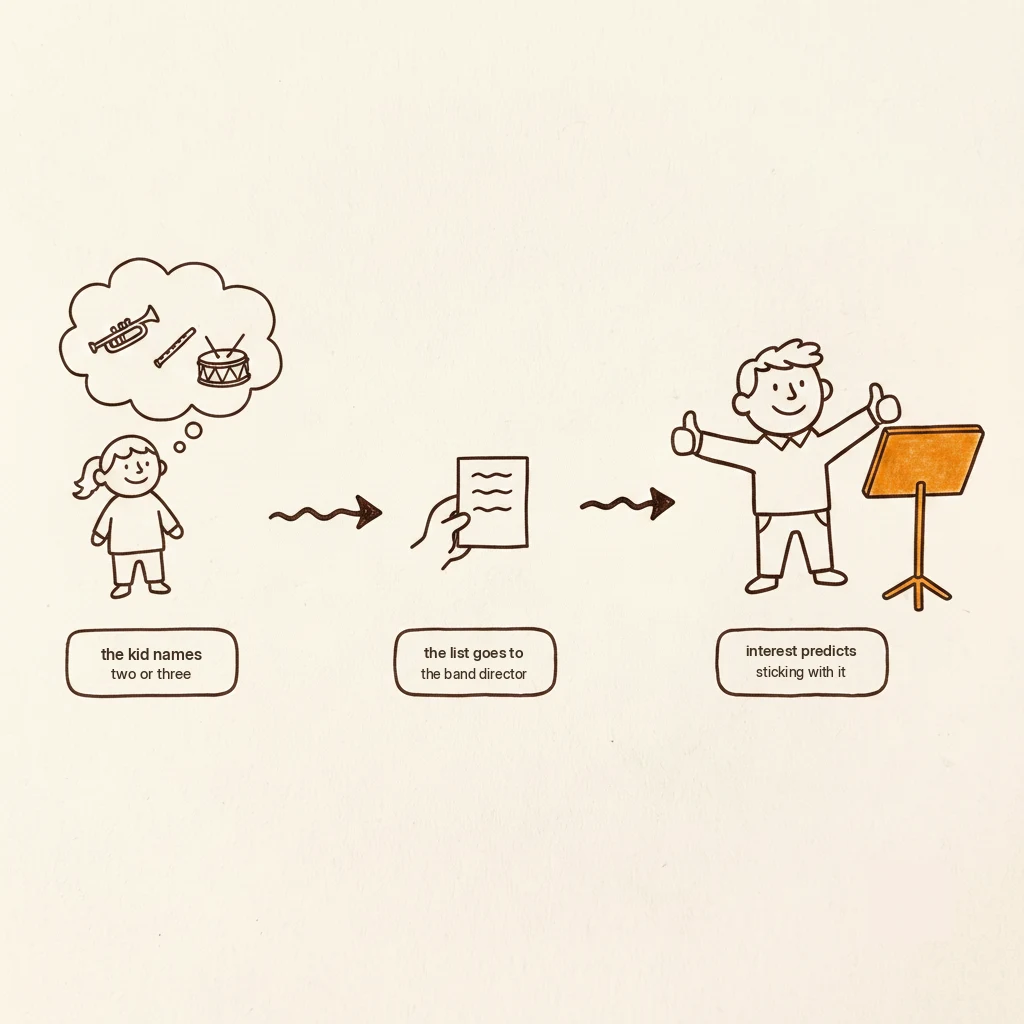
Let your kid name the two or three instruments they're actually drawn to and hand that list to the band director, because interest predicts sticking with it better than any fitting test does.
 Gus Harmon · Updated July 8, 2026 · how I decide
If you buy through my links the site earns a little. It's never why I pick things.
Two kids, same house
My daughter picked clarinet. She played it all the way through school.
My son picked trombone, but if I’m honest, we did most of the picking. He quit inside a year.
Same parents, same rules about practicing, same kitchen table. The difference was whose choice it was. I have thought about that a lot, and it’s most of what I know about this question.
There’s a fitting, and nobody tells parents
Here’s a thing that ambushes families every fall. In most beginning band programs, kids don’t simply choose. There’s a screening, sometimes called an instrument fitting: the director looks at teeth, hands, lip shape, and has kids try to make a sound.
It’s standard practice. It’s not a conspiracy, and it isn’t about your kid’s worth.
It can still sting. A parent watched her kid get steered off trumpet because he couldn’t buzz his lips without a mouthpiece, and it felt arbitrary, and honestly, it kind of was.
What actually predicts success
The line that every band director eventually says, and the one worth taping to your fridge: a kid should play the instrument they’re most interested in, because that’s the one they’ll be most successful on.
Not the one that’s easiest. Not the one that’s cheapest to rent. The one they keep touching at the music store.
Practical version, which several directors describe the same way: the kid ranks their top two or three. The teacher fits within that list. Everybody wins.
The factors that legitimately matter
Braces complicate brass. Pressing a mouthpiece against a mouth full of hardware hurts, and the lip shape a brass player builds gets rebuilt when the braces come off.
Hand size and reach matter for the bigger instruments. A small fifth grader and a full-size cello are a bad pairing, though rentals swap sizes as they grow.
And the band’s instrumentation matters. A band with fourteen flutes and no tuba needs somebody to move. Your kid may get that ask.
The thing that’s actually at stake
There are grown adults, decades out, still stinging from the moment a teacher told them they weren’t cut out for an instrument.
That’s the real risk here, and it’s much bigger than $40 a month. A kid who gets pushed off their pick can decide, quietly and permanently, that music isn’t for them.
So if the fitting goes against your kid’s first choice, be the person who says: they need a strong second choice, and you’d be great at this one. Don’t let the moment become a verdict on whether they’re musical.
Practical notes nobody hands you
Cellos and basses aren’t allowed on school buses, so schools generally keep loaner sets at school. Ask before you rule out a big instrument on logistics.
Schools also have financial-need arrangements they don’t advertise. Ask the director before you rule anything out on cost.
And whatever they pick, year one is a rental. The money side is here.
If you're figuring this out, you're probably also wondering:
Gus Harmon
Gus spent three decades running sound wherever somebody needed it: bar bands, weddings, school shows, and twelve years of Sunday mornings. He can't sing a note. He can make sure you're heard. Now he writes so normal people can buy the right thing the first time.