
← your kid's instrument: costs, rentals, sticking with it
How Much Does a Violin Cost?
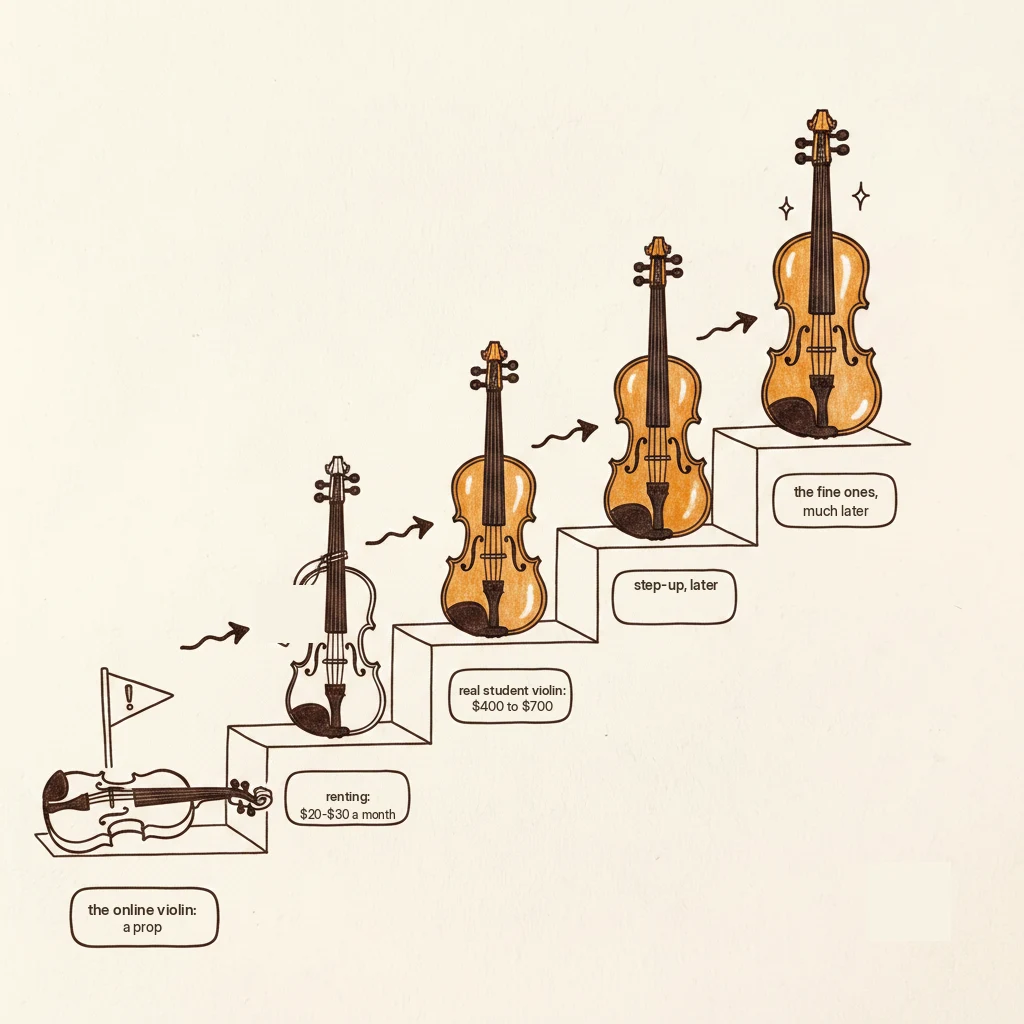
A first violin is usually rented, about $20 to $30 a month with free size swaps, and a decent shop-verified student violin costs about $400 to $700, while the $60 to $150 online violins are the ones teachers warn you about.
 Gus Harmon · Updated July 8, 2026 · how I decide
If you buy through my links the site earns a little. It's never why I pick things.
You’re afraid of being taken
Say it out loud, because it’s the actual emotion, and it’s reasonable.
Everybody who will happily answer your violin question sells violins. Search the price and you get dealer after dealer after dealer. The violin trade is old, subjective, and full of lore that a non-musician parent cannot evaluate.
I sell nothing on this page. So here’s what I’d tell you across the fence.
Decide on money, not on violins
You are not qualified to judge a violin. Neither am I, honestly, and I’ve been around instruments my whole life. Tone is subjective, the trade is biased, and a good story about a soundpost is worth nothing to your budget.
What you can judge is arithmetic. So judge that, and let the teacher judge the fiddle.
The numbers
| What it is | What it costs | What you should know |
|---|---|---|
| Online "outfit" | $60 to $150 | Pegs slip, strings won't hold a tune. Plays worse than any rental |
| Rental, sized | $20 to $30 a month | Free size swaps, repairs included, credit toward buying |
| Shop-verified student violin | $400 to $700 | The buy, once the kid is staying |
| A student bow | $50 to $150 | Yes, it's separate. Yes, it matters |
About $1,500 is the sane ceiling at the student stage. Above that you’re buying an instrument for a musician who doesn’t exist yet.
If you buy through my links the site earns a little coffee money. Doesn’t change the price, doesn’t change my answer.
Where to buy, when you do
A local luthier, which is a person who builds and repairs stringed instruments. Not a big-box guitar store.
Or, online, the reputable string houses. Shar and Fiddlershop both get named by people who know. Ask for the return window and use it.
The brand name on a student violin usually means very little. At this price, the same instruments come out of the same workshops and get badged by whoever imported them. What separates a good one from a bad one is the setup work done after it arrives.
The heirloom in the attic
Somebody’s grandmother has a violin in a closet. Everybody’s grandmother does.
Take it to a shop before anybody gets excited or dismissive. It might be a lovely instrument that needs a little work. It might need more work than it’s worth. It might be a factory violin from 1930 that’s worth exactly the sentiment. A luthier will tell you in five minutes, usually for free.
Ongoing costs, so nothing ambushes you
Strings wear out. Bows need rehairing. Rosin gets used up. None of it is large, and all of it is real, and the rental typically absorbs the repairs.
Ask the orchestra teacher first
Before you spend anything. They know which shop treats families decently, and they know the financial-need arrangements the school never puts in a newsletter.
They also don’t earn a nickel from your decision, which makes them the only such person you’ll meet in this process.
If you're figuring this out, you're probably also wondering:
Gus Harmon
Gus spent three decades running sound wherever somebody needed it: bar bands, weddings, school shows, and twelve years of Sunday mornings. He can't sing a note. He can make sure you're heard. Now he writes so normal people can buy the right thing the first time.