
← your kid's instrument: costs, rentals, sticking with it
Rent or Buy Your Kid's First Instrument?
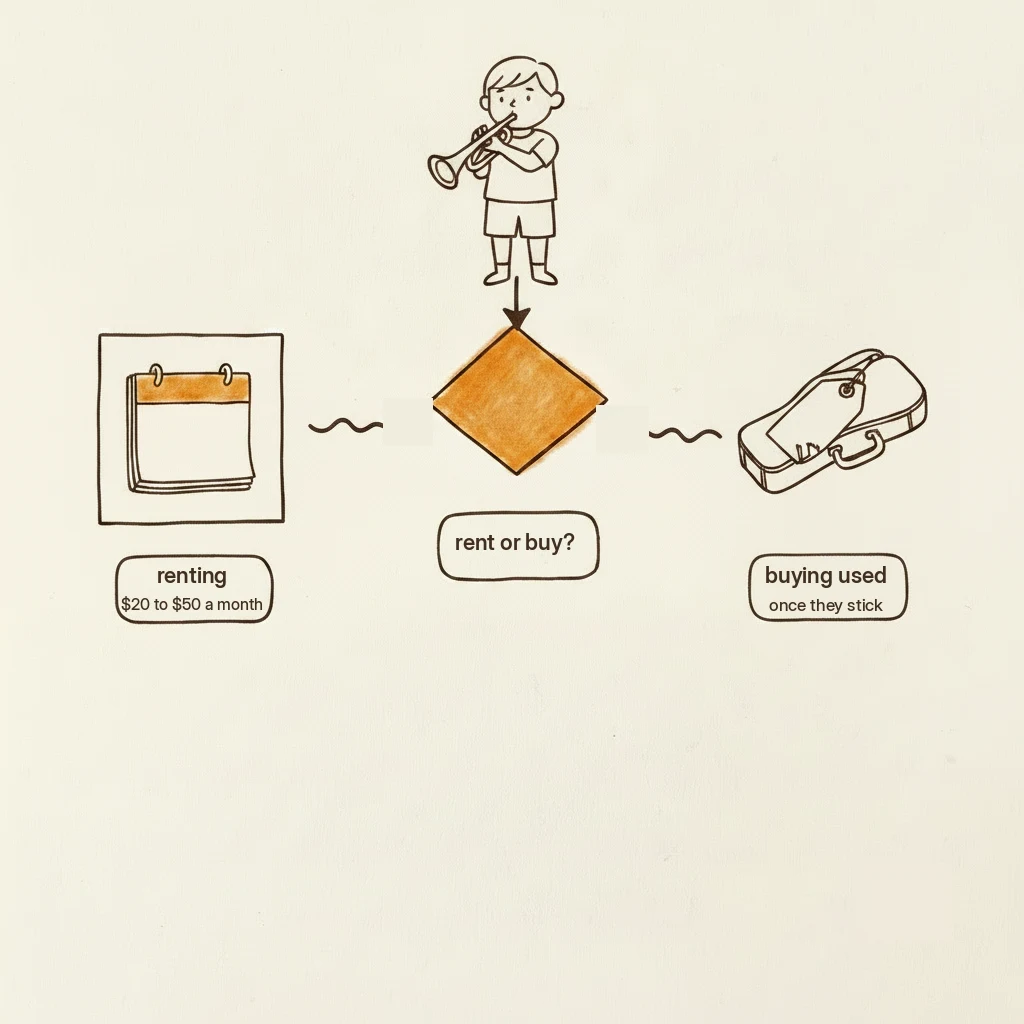
Rent for year one: a school instrument rents for about $20 to $50 a month with repairs and free size swaps included, most rentals build credit toward buying, and you only buy (used, shop-verified) once the kid has stuck with it.
 Gus Harmon · Updated July 8, 2026 · how I decide
If you buy through my links the site earns a little. It's never why I pick things.
What's on this page
I have funded an instrument nobody plays
My son picked trombone. He quit inside a year. My daughter picked clarinet and stuck with it.
Same house, same parents, same money. I’m not bitter about the trombone. I just know exactly what that particular hole in the budget feels like, and I’d like you to avoid it.
That’s the whole reason this page exists. Everybody else who will answer your rent-or-buy question is a company that rents instruments.
How renting actually works
You go to a music shop, you sign a contract, and you pay about $20 to $50 a month depending on the instrument. Violin runs $20 to $30. Flute is around $40. Cello about $35. Saxophone runs closer to $50. Trombone about $40.
That monthly buys you three things people don’t realize they’re buying.
Repairs and cleaning, included. A pad falls out in November, you take it back, they fix it. Size swaps, free, which matters enormously for string players whose kid grows two inches over the summer. And credit toward buying the instrument, if your contract does that.
If you buy through my links the site earns a little coffee money. Doesn’t change the price, doesn’t change my answer.
The crossover, in real dollars
Year one is roughly a wash between renting and buying used, unless the used instrument has been genuinely serviced by a shop.
After year one, ownership starts winning. That’s the whole math. About $500 for a shop-refurbished student instrument versus about $1,500 of rental accumulated over several years.
So the decision isn’t really about money. It’s about a probability: will this kid still be playing in June?
You don’t know. Neither did I. That’s what renting is for. Renting is not a worse deal, it’s an option to quit, and for a beginning band parent that option is worth $30 a month.
The honest case against renting
I’m not going to pretend this is unanimous, because it isn’t.
There’s a real camp of parents who say buy a decent used instrument outright. And where rentals run $50 a month, they have a point, because $600 a year buys a lot of trombone.
Here’s the concession, said plainly: the crossover depends on your local rental rate. At $25 a month, rent without thinking. At $50 a month, do the arithmetic on a verified used instrument, because you might be right.
What both camps agree on: the sub-$300 online instrument plays worse than any rental and resells for functionally nothing.
The one question to ask about your contract
Does the money build credit toward buying it?
If yes, sign. If no, walk out and go to another shop. A cellist who has done this a long time put it bluntly: rental must accrue credit or change shops. That’s the line.
Also read what happens if you return it early, and treat the insurance add-on with a clear head. It’s often a few dollars a month against a repair bill that the maintenance clause may already cover.
Everybody advising you sells instruments
Notice this when you search. The rental companies write the rent-versus-buy articles. The stores write the buying guides. The lesson schools write the which-instrument guides.
None of them are lying, exactly. They just all end at the same door.
Your one neutral advisor is the band director. They don’t make money on your decision, they know which local shop treats families well, and they know about financial-need programs the school never mentions in the newsletter. Ask them first.
One exception worth knowing
Trombone. No sizes to grow through, and one real failure point, which is the slide.
That makes it the instrument where a verified used one, for around $150, can genuinely beat renting. One dad did exactly that with a used Conn Director and came back to report that it worked. More on trombones here.
If you're figuring this out, you're probably also wondering:
Gus Harmon
Gus spent three decades running sound wherever somebody needed it: bar bands, weddings, school shows, and twelve years of Sunday mornings. He can't sing a note. He can make sure you're heard. Now he writes so normal people can buy the right thing the first time.