← first chords, first songs, at any age
Ukulele vs Guitar: Which Should You Learn?
The ukulele is easier to start: softer strings, four of them, one-finger chords, about $59 for a good one. The guitar owns rock and low melodies at about $200. The secret: uke skills ARE guitar skills, so starting small isn't a detour.
 Gus Harmon · Updated July 11, 2026 · how I decide
If you buy through my links the site earns a little. It's never why I pick things.
The detour that isn’t a detour
The fear behind this question is almost always the same: if I start on the ukulele, am I wasting time on a toy before the real instrument?
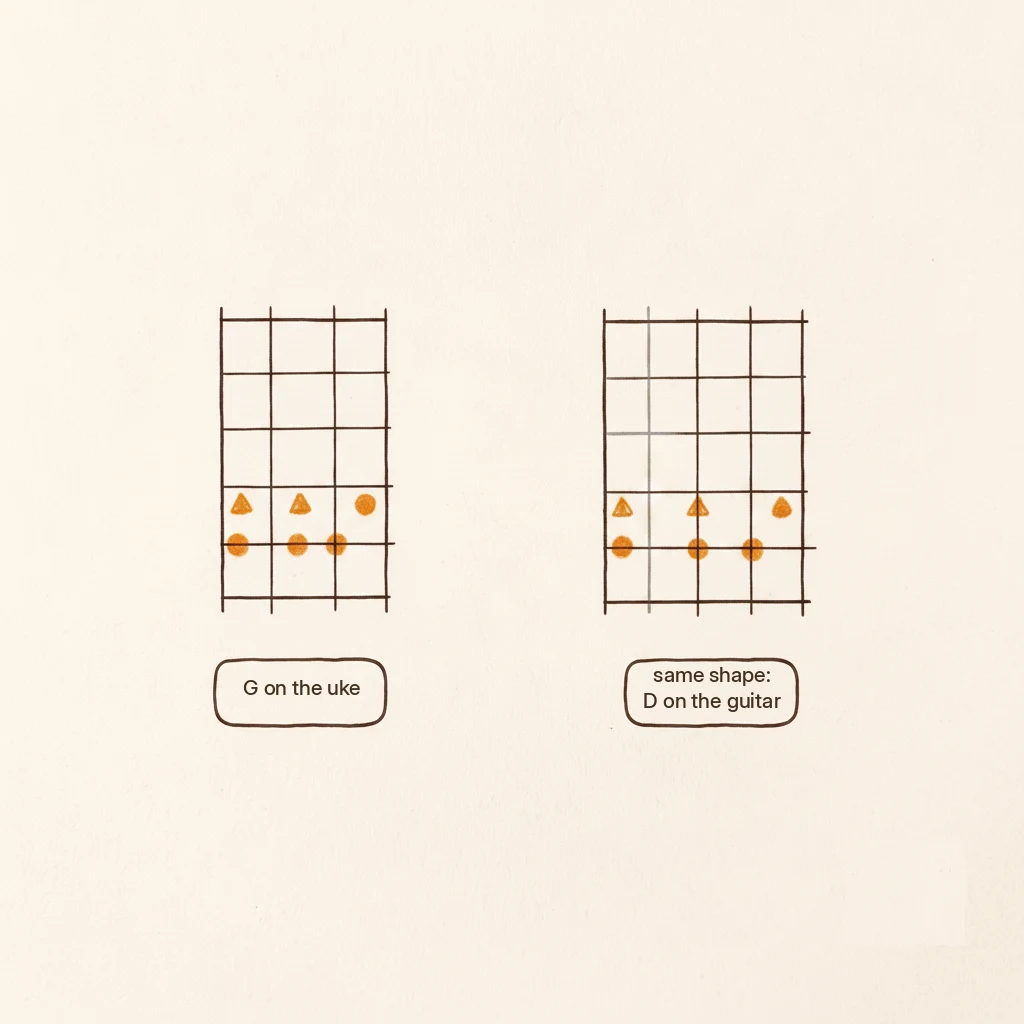
Here’s the math that should retire that fear. A ukulele’s four strings are tuned in the same relationships as a guitar’s top four strings. That means the chord shapes literally carry over, they just wear different names. Players who work both instruments spell it out: master G on the ukulele and your fingers already know D on the guitar. The uke’s F is the guitar’s C. And the uke’s C chord is ONE finger, versus three on a guitar.
So the ukulele isn’t a toy version of the guitar. It’s the guitar’s first four strings with the difficulty turned down. Everything you learn moves with you.
Why the uke wins the first three months
Your fingers. Nylon strings, low tension. The sore-fingertip month that ends so many guitar careers barely exists on a ukulele. For anyone with small hands, arthritis, or a memory of a failed guitar attempt, this is the whole ballgame.
The early wins come fast. The pattern in that thread repeats everywhere: people who stalled on guitar report singing whole songs on a uke within a couple of weeks. Early wins build the practice habit, and the practice habit is the actual instrument.
The price of finding out. A genuinely good starter uke, the Kala Makala Shark, runs $59. Finding out whether music sticks costs a third of what it costs in guitar-land.
Where the guitar honestly wins
The ukulele community itself will tell you: if the dream is rock, flamenco, low melodies, or anything that growls, the uke comes up short. Its four high strings can’t reach the basement. A kid who wants to sound like their favorite band’s guitarist should start on a guitar, full stop, and the acoustic-versus-electric fork is the next door over.
And about the “toy” slur: it exists because $25 wall-decoration ukes exist, the kind that won’t hold tune and can’t be set up. That’s a trap object, not an instrument. The $59 Shark is a real instrument. The gap between those two objects is where the reputation went wrong.
The middle path almost nobody mentions
There’s a version of this choice with the fork built out of it: the baritone ukulele. It’s the big one, and it’s tuned EXACTLY like a guitar’s top four strings, same notes, same names. It sounds warmer and deeper than a regular uke, it’s still gentle on fingers, and every chord you learn on it is already a guitar chord with no renaming. For a torn adult, it’s the best answer in the aisle, typically around $100 to $150.
If you buy through my links the site earns a little coffee money. Doesn’t change the price, doesn’t change my answer.
If you're figuring this out, you're probably also wondering:
Gus Harmon
Gus spent three decades running sound wherever somebody needed it: bar bands, weddings, school shows, and twelve years of Sunday mornings. He can't sing a note. He can make sure you're heard. Now he writes so normal people can buy the right thing the first time.