← first chords, first songs, at any age
A Ukulele for Beginners (Which One Actually Holds a Tune)
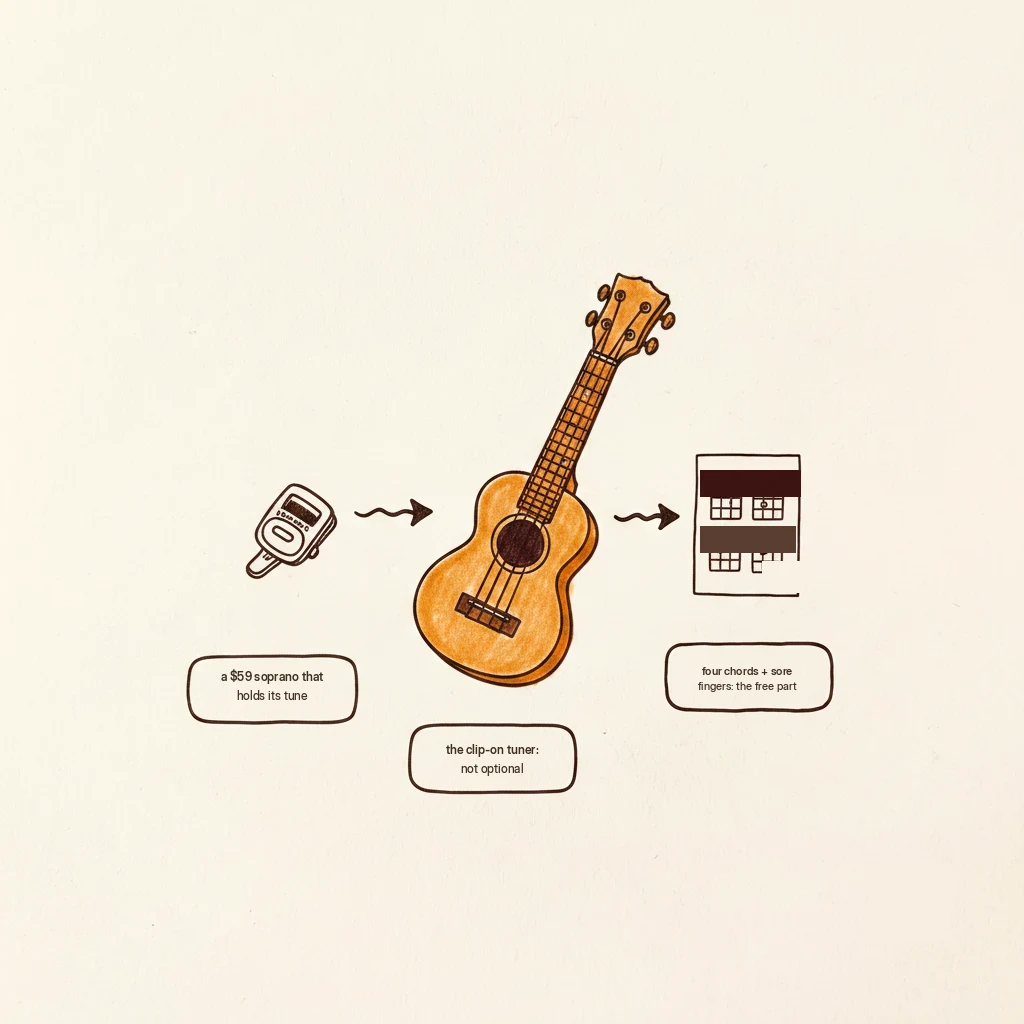
A real beginner ukulele runs about $50 to $100, and for a kid I'd get the $59 Makala Shark in soprano size.
 Gus Harmon · Updated July 8, 2026 · how I decide
If you buy through my links the site earns a little. It's never why I pick things.
For a first ukulele, spend $50 to $100 and get a soprano (the small one) for a kid, a concert size for most adults. The $59 Makala Shark has been through actual three-year-olds and lived. Skip anything under $40. It won’t hold a tune, and an instrument that sounds broken is how a kid quits.
Here’s the nice part about this question, and it’s rare on this site: there’s nothing to warn you about. The ukulele is the cheapest real instrument in music, and it’s the friendliest. Somebody in your house said they want to try one, and the honest answer is yes. Take the yes.
So let’s just get you the right one.
What a beginner ukulele actually costs
A real one runs $50 to $100. That’s about the price of three or four pizzas, for a thing that can last years and gets played on the couch instead of shoved under a bed.
The brands worth your money are a short list: Kala (and its Makala line), Ohana, Flight, and Enya. That’s most of it. You don’t need to memorize the market. You need to know that under about $40, you’re usually buying a wall decoration that won’t stay in tune, and a uke that won’t stay in tune sounds broken to a beginner. They think they’re doing it wrong. They put it down.
Soprano or concert? (the only size question that matters)
Two sizes cover almost everybody.
Soprano is the small classic ukulele, the one you’re picturing. It’s the right call for a kid. Small hands need the short neck, and honestly the size is more important than which brand you buy. A soprano that fits beats a fancier uke that doesn’t.
Concert is a little bigger, with more room between the frets. Most adults are happier here, especially if you’ve got larger hands. Same instrument, same chords, just a hair more space to land your fingers.
If you’re buying for a 7-year-old and a salesperson starts explaining why she really wants the bigger concert size, that’s an upsell. Get the soprano.
The ones I’d point you at
Makala Shark, soprano. About $59 on Amazon. It’s the durability mascot of beginner ukes, the one people mention surviving a three-year-old. Fun colors, geared tuners that hold pitch, sounds like a real instrument.
Flaws, said plainly: it’s an entry uke, so a serious player outgrows the tone eventually. That’s a year or two away, and by then you’ll know if this stuck.
Ohana soprano starter pack, from a shop that sets it up. Roughly $70 to $90 (worth verifying). Here’s the thing nobody tells first-time buyers: a cheap uke needs a setup, someone getting the strings sitting right, and a well-set-up $59 uke beats a $120 one straight out of an Amazon box. Buying from a shop that sets it up first (the ukulele crowd trusts a place called mimsukes) is money well spent.
Flaws, said plainly: costs a bit more than grabbing a box off Amazon, and you wait on shipping from a small shop. You’re paying for it to actually play in tune. Fair trade.
A concert-size Kala, Flight, or Enya. About $70 to $120. The extra room suits grown fingers, and the plastic-bodied Flight and Enya models are genuinely sturdy, come in good colors, and feel great to play. The sound is a touch thinner than wood, and I’ll say that plainly, but the feel wins a lot of new players over.
Flaws, said plainly: plastic bodies trade a little warmth for toughness. If tone is your thing, a wood concert uke in the same price band is there for you.
One thing to say out loud before day one
Fingertips get sore. Calluses take a couple of weeks to show up. If you don’t tell the kid that first, she’ll think the soreness means she’s failing, and that’s a quiet way to lose her in week one.
Tell her it’s normal, it passes, and everybody’s fingers do it. Twenty minutes a day beats an hour that hurts.
Yes, you can teach yourself
The uke is the one instrument where teaching yourself is the normal path, not the brave one. An adult can absolutely self-teach, and so can a motivated kid with a little help. Four chords, C, G, Am, and F, unlock a genuinely absurd share of pop songs. That’s a whole other page, but know that the on-ramp is that short.
The ukulele’s chords are easy for two boring, wonderful reasons: nylon strings and only four of them. Nylon is soft, so it takes less finger pressure to push a string down than steel does, which is why beginners’ fingertips survive. And four strings, tuned close together, means most beginner chords only ask you to hold down one, two, or three of them, often with fingers that are already near each other. Fewer strings, less tension, shorter reaches. The instrument is basically built to say yes to a new player. That’s not an accident of marketing. It’s geometry.
Get the $59 Makala Shark for a kid, or the Ohana pack from a shop that sets it up if you’d rather it arrive playing in tune. Add a clip-on tuner, and tell her about the sore fingertips before she starts. That’s the whole purchase.
If you buy through my links the site earns a little coffee money. Doesn’t change the price, doesn’t change my answer.
If you’re figuring this out, you’re probably also wondering:
Gus Harmon
Gus spent three decades running sound wherever somebody needed it: bar bands, weddings, school shows, and twelve years of Sunday mornings. He can't sing a note. He can make sure you're heard. Now he writes so normal people can buy the right thing the first time.