
← your kid's instrument: costs, rentals, sticking with it
Clarinet Notes for Beginners (the First Three, and the Break)
A clarinet fingering chart reads in filled and open circles, the first three notes are E, D, and C, and the awkward register jump every beginner hits around month two (the break) is normal and temporary.
 Gus Harmon · Updated July 8, 2026 · how I decide
If you buy through my links the site earns a little. It's never why I pick things.
A clarinet fingering chart reads in circles: a filled circle means cover that hole, an open one means leave it. The first three notes to learn are E, D, and C, starting with E because it takes the fewest fingers. Left hand lives on top with your thumb over the back hole, right thumb holds the horn up at the thumb rest. The one thing no chart mentions: the break, the awkward register jump around month two, is normal, has a name, and passes.
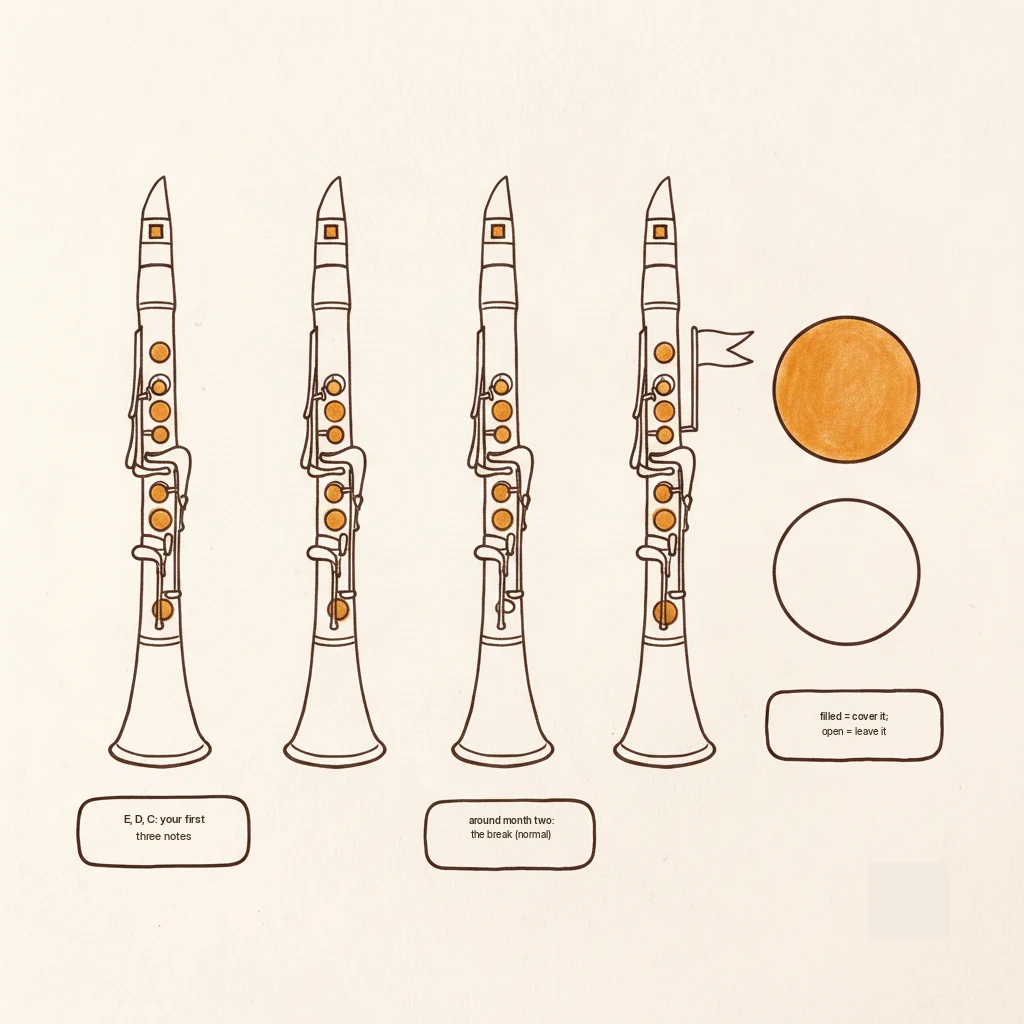
How to read the chart (it’s just filled and open circles)
Here’s the thing that makes a fingering chart look scarier than it is: it’s a picture of the clarinet, top to bottom, and every note is a little stack of circles. A filled-in circle means close that hole (cover it). An open circle means leave it open. That’s the entire code.
The chart lists every note the instrument can make, which is a lot, and that’s overwhelming on day one. Ignore most of it. You need the top corner. You’ll also see “alternate fingerings” for some notes, which are extra ways to play the same note. Beginners skip those entirely. One note, one fingering, for now.
Start on E, then D, then C
Band methods start on E for a simple reason: it needs very few fingers, so it’s the easiest to get out cleanly. From E you add fingers to reach D, then C. Three notes, and you can already play little tunes.
Get the hand geography right and everything else follows. Your left hand rides on top of the instrument, with your left thumb covering the hole on the back. Your right hand sits below, and your right thumb tucks under the thumb rest to hold the weight of the horn. Left on top, right on the bottom, always.
The break: the month-two wall nobody warns you about
Around month two, your kid crosses from the lower notes up to the next register, and it feels like starting the instrument over. Notes squeak, fingers fumble, morale tanks. This is called the break, and it is not your kid failing. It's the instrument's geometry. Every clarinet method book schedules a fight with it, because every clarinetist who ever lived had to cross it. Squeaks at the break are normal traffic, not a verdict.
So when October rolls around and practice suddenly sounds worse than September, don’t panic and don’t let them quit over it. Name it out loud: “this is the break, everybody hits it, it passes.” Because it does.
When the squeaks won’t stop, check the reed first
Speaking of squeaks: before you blame the fingers, blame the reed. A worn, chipped, or wrong-strength reed causes most squeak epidemics. A 2.5-strength reed is the standard starting point, and a fresh one fixes more problems than any amount of finger drilling. Keep spares.
Tonguing (how you start each note with your tongue) is its own small skill, and there’s more on that over on the clarinet songs page.
One heads-up for play-along parents
If you’re trying to play piano alongside your clarinet kid, you’ll notice you clash, and neither of you is wrong. The clarinet is a “B-flat” instrument, which means the note it calls C actually sounds as the piano’s B-flat. So its written music is shifted. To play together you either need clarinet-arranged music or an awareness of that shift. It’s a real thing, not a tuning problem.
Where to get the chart and the music
Free fingering charts are everywhere: Yamaha publishes a good one, and most music-store sites have printable PDFs. For sheet music, 8notes has a beginner clarinet tier, and MuseScore has plenty if you sort by rating. Honestly, though, the method book (the Essential Elements Book 1, about $12) IS the sheet music for the first year. It’s built in the right order. A laminated chart for the music stand runs about $10 and saves a lot of “what’s this note again” moments.
Skip this unless you like the nerdy part. The break exists because of one little key called the register key. On most wind instruments, opening a register key just bumps you up a neat octave. On a clarinet, the physics of its closed tube make that key jump you up an octave and a half instead, to a different set of notes with different fingerings. So crossing the break really is like the tube briefly becoming a new instrument, which is exactly why it feels that way to a beginner.
Print the Yamaha chart, circle E, D, and C in pencil, and when the break makes everyone miserable in October, tape a note to the music stand that says "this is normal and temporary." Because it is, and reading that on a bad day keeps a good kid from quitting.
Questions people actually ask
What are the first notes to learn on clarinet?
E, then D, then C. Start with E because it uses the fewest fingers and comes out cleanly, then add fingers to reach D and C. Those three notes let you play simple method-book tunes right away, which is the whole point of starting there.
How do you read a clarinet fingering chart?
It’s a top-to-bottom picture of the instrument. A filled-in circle means cover that hole, an open circle means leave it open. Ignore the “alternate fingerings” as a beginner and just learn one fingering per note. Left hand on top with the thumb on the back hole, right hand below.
Why does my clarinet squeak so much?
Usually the reed, not the fingers. A worn, chipped, or wrong-strength reed causes most squeaks, so start with a fresh 2.5-strength reed. Squeaks also spike around month two at “the break,” the register crossing, which is a normal phase every clarinetist goes through and passes.
If you buy through my links the site earns a little coffee money. Doesn’t change the price, doesn’t change my answer.
Working through month one, you're probably also wondering:
Gus Harmon
Gus spent three decades running sound wherever somebody needed it: bar bands, weddings, school shows, and twelve years of Sunday mornings. He can't sing a note. He can make sure you're heard. Now he writes so normal people can buy the right thing the first time.