← quieter kits and household peace treaties
Drums for Beginners (Used Deals and the $400 Question)
A new beginner drum kit runs about $300 to $500, but a complete used kit from a known brand around $300 to $400 is usually the better instrument, and cymbals are the first upgrade.
 Gus Harmon · Updated July 8, 2026 · how I decide
If you buy through my links the site earns a little. It's never why I pick things.
A complete new beginner drum kit, meaning drums, cymbals, and hardware, runs about $300 to $500. But a used kit from a person is usually the better instrument for the money: a complete used kit with hardware and cymbals around $300 to $400 from a known brand like Pearl, Gretsch, Tama, or Ludwig is a deal. That same money on a no-name Amazon kit buys worse drums. Budget one more round later, because cymbals are always the first upgrade.
Odds are you didn’t go looking for a drum kit. A friend is selling one, and now you’re standing in their garage trying to figure out if four hundred dollars is a good price when you know almost nothing about drums. That’s how the drum door usually opens: an offer, not a search. So let’s evaluate the offer.
Here’s the thing. I don’t play drums, and I’ll say so. But I mixed a hundred kits over thirty-five years running sound, so I know how to tell a good one from a boat anchor. And used drums are one of the two best used-gear deals there is. A complete kit from a known brand at a person’s price beats a shiny new no-name kit at the same money, and it isn’t close.
The $400-kit verdict
One parent posted exactly your situation: son wants to start, a friend’s selling a “little used” set for four hundred, and they know nothing. The drum forums identified it on sight as a Gretsch Energy, about eight hundred new, complete with hardware and cymbals, and told them to take it, maybe offer three hundred. That’s the pattern. A complete kit from a real brand for three to four hundred is a shake-hands deal.
Why is a used kit such a safe buy when a used mic or amp might scare you? Because the drums themselves, the wooden shells, basically last forever. Wood doesn’t wear out from being hit. What wears out are the consumables: the drumheads and the cymbals, because they’re thin metal and skin that get worked and fatigued over years. So a twenty-year-old kit usually has perfectly good shells and just needs fresh heads, which is cheap and which teaches the kid to tune. You’re buying the part that lasts and replacing the part that was always disposable.
The five-minute used-kit check
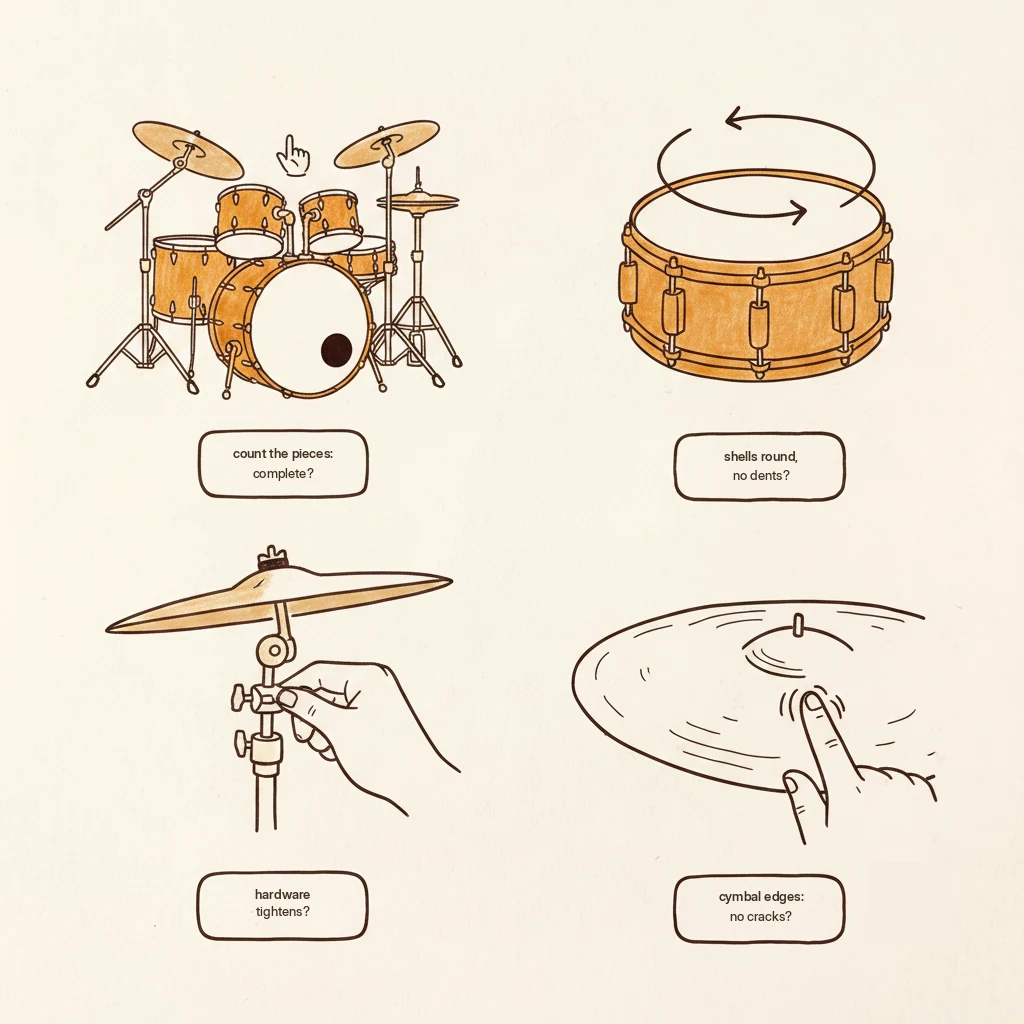
Walk up to it and check four things. Is it complete: drums plus hardware, meaning the stands, the pedal, and the throne, plus cymbals? Count them. Are the shells round and not cracked? Does all the hardware tighten and hold? And run a finger around each cymbal edge feeling for cracks. That’s it.
And know this going in: a used kit will need a cleanup and a re-setup, and it’ll probably want new heads. That’s normal, not a defect. It’s not a red flag, it’s Tuesday. Replacing the heads is how the kid learns to tune the thing anyway.
The money nobody warns you about: cymbals
Every beginner kit, new or used, cheaps out in the same place: the cymbals. It’s where the factory saves money. So the first real spend after the kit is always cymbals, usually two to four hundred dollars, and I want you to know that now, out loud, instead of being surprised by it in six months.
If you’d rather buy new, that’s a fair choice for the warranty and the not-abused peace of mind. The name you’ll see is Pearl: their budget Roadshow line is the three-to-five-hundred complete kit now, while the classic Export (the school band room staple for decades) has climbed to about $1,100 new. Ludwig, Tama, Mapex, and PDP round out the trustable badges.
Are drums easy to learn?
Honest answer: drums are the easiest instrument to START making music on, a kid can play a simple beat the first afternoon, and the hardest to make quiet. So they’re beginner-friendly in every way except the neighbors, and that noise part has its own pages, so go read those before the sticks come out.
There are beginner method books, and teachers assign them, so let the kid’s teacher pick the one they use rather than me guessing at a title.
A few traps. “Five-piece kit” listings that leave out the cymbals and throne and arrive unplayable. No-name Amazon kits priced like real brands. And “vintage” used as an excuse for rust.
Complete, known badge, everything moves, three to four hundred dollars: shake hands. Then take the hundred you saved and put it in an envelope marked “cymbals,” because you’ll need it by summer.
If you buy through my links the site earns a little coffee money. Doesn’t change the price, doesn’t change my answer.
If you’re figuring this out, you’re probably also wondering:
Gus Harmon
Gus spent three decades running sound wherever somebody needed it: bar bands, weddings, school shows, and twelve years of Sunday mornings. He can't sing a note. He can make sure you're heard. Now he writes so normal people can buy the right thing the first time.