
← quieter kits and household peace treaties
Quiet Drums (Four Ways to Keep the Peace, Cheapest First)
You can quiet an existing drum kit with low-volume cymbals and mesh heads for about $150 to $250, but nothing fixes the kick thump through the floor except a pad or a beaterless pedal.
 Gus Harmon · Updated July 8, 2026 · how I decide
If you buy through my links the site earns a little. It's never why I pick things.
There are four ways to make drums quieter, cheapest first: low-volume cymbals and mesh drumheads on the kit you own, about $150 to $250 and roughly 80% quieter; quiet-tip sticks, about $15, a mild helper; a practice pad, about $30, for hands practice; or an electronic kit with headphones, about $300 and up, the full fix. The one thing none of them fix by default is the kick pedal’s thump through the floor.
“Quiet drums” isn’t really a product search. It’s a household treaty. Somebody in the house needs to practice, and somebody else needs to live, and you’re the one negotiating between them. So let’s do it right.
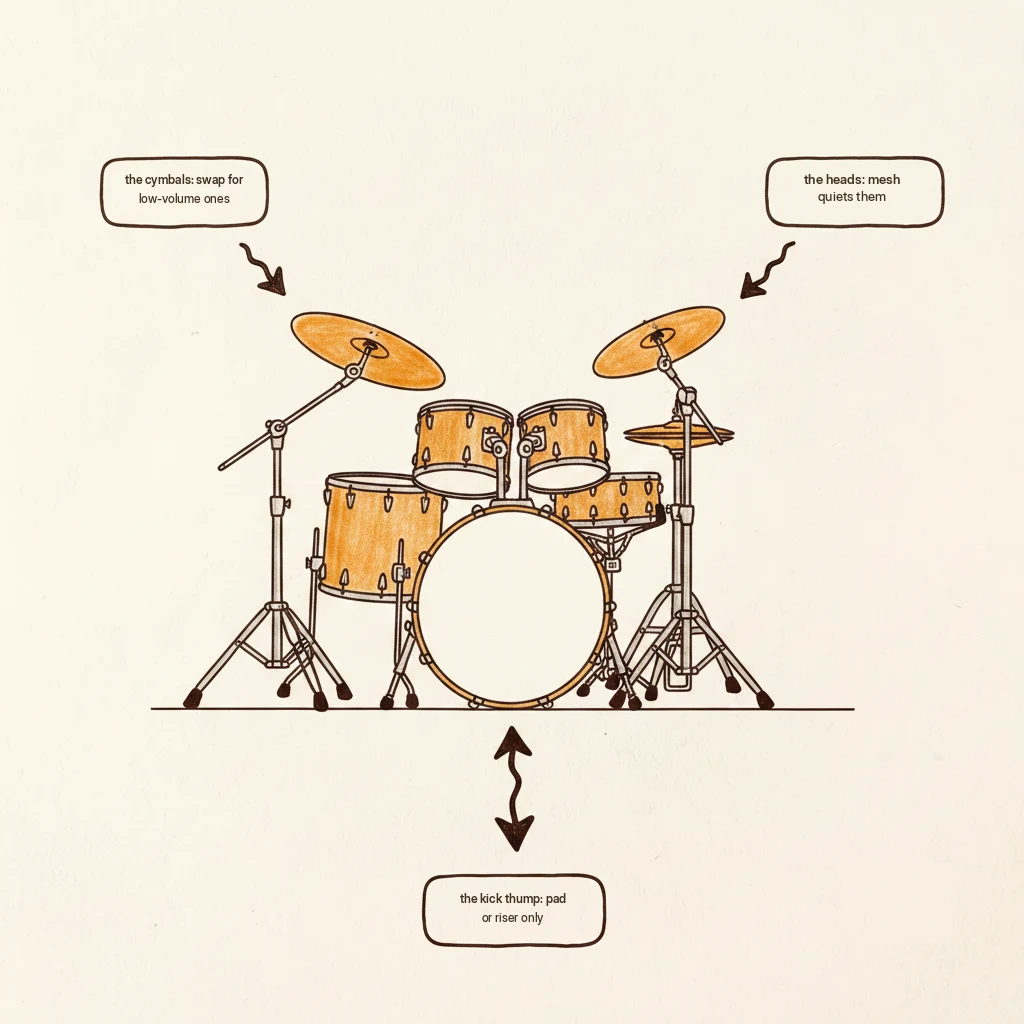
Here’s the thing to figure out first, before you buy anything: what’s actually loud? Drums make noise from three places. The cymbals, the drumheads, and the kick pedal. Each one has its own fix and its own price, and if you skip this triage you’ll spend money on the wrong noise.
The retrofit that drummers actually use
If your kid already owns a real acoustic kit, this is the move, and almost no parent knows it exists. Swap mesh heads onto the drums, and get a set of low-volume cymbals, the ones covered in little holes. Together that’s about a hundred fifty to two hundred fifty dollars, and it drops the volume roughly eighty percent. The kit is still a real kit, just practice-quiet. This is the standard drummer trick, hiding behind insider words you’d never search for.
Why do the holes make a cymbal quiet? A cymbal makes sound by vibrating and pushing air. Punch a few hundred holes in it and there’s simply less metal there to move air, so it rings out far softer, but it still has the same size, weight, and feel under the stick. So the drummer’s hands don’t notice much difference while the room gets most of its peace back. Less metal moving air, same swing. That’s the whole trick.
The kick truth, which is the whole point
Here’s the one that catches everyone. The pedal’s thump doesn’t travel through the air like the cymbals do. It travels down through the floor as vibration, and no head or cymbal swap touches it. Towels on the drums won’t help. Foam in the kick just kills the feel, not the thump.
The real fixes, in order: an isolation pad under the pedal, about forty dollars. A DIY riser, which is what one apartment drummer built out of MDF, carpet, and tennis balls after a year of complaints. Or a beaterless kick pedal, a Yamaha design that barely vibrates at all. If you’re above someone’s ceiling, this is the fix that actually keeps the peace, not the cymbals.
The smaller helpers, honestly
Quiet-tip sticks or rods, about fifteen dollars, take a little edge off. They’re a mild helper, not a solution, so don’t expect silence from a fifteen-dollar fix. A practice pad, about thirty dollars, is great, but it’s for hands practice and rudiments, not for playing actual songs quietly. Right tool for drills, wrong tool for “play the kit without a fight.”
And if you’re starting from zero with no kit at all? Skip all of this. Buy the electronic kit and play in headphones. Headphones win the whole argument.
Write the treaty
The real lesson from that apartment drummer’s year of misery: the product matters less than the agreement. Practice windows worked out with the household and the neighbors beat any gear. So put it on the fridge. The hours, the days, and a phone number the neighbor can call. A kid who practices four to six, weekdays only, with a way to reach you, is a kid nobody files a complaint about.
One buyer warning: “silent” is a marketing word on rubber pads that still tap audibly at two in the morning, and cheap mesh heads dent within a month. Buy the known stuff once.
Kid already has drums: low-volume cymbals plus mesh heads plus the forty-dollar kick pad, about two hundred fifty total, and write the practice-hours treaty on the fridge. Starting from zero: skip all of it and buy the electronic kit.
If you buy through my links the site earns a little coffee money. Doesn’t change the price, doesn’t change my answer.
If you’re figuring this out, you’re probably also wondering:
Gus Harmon
Gus spent three decades running sound wherever somebody needed it: bar bands, weddings, school shows, and twelve years of Sunday mornings. He can't sing a note. He can make sure you're heard. Now he writes so normal people can buy the right thing the first time.