
← quieter kits and household peace treaties
Electric Drums for Beginners (The Kit That Keeps the Peace)
An electric drum kit for a beginner runs about $400 to $600, and the near-universal pick is the Alesis Nitro with mesh pads, so the kid plays in headphones and the house hears tapping.
 Gus Harmon · Updated July 8, 2026 · how I decide
If you buy through my links the site earns a little. It's never why I pick things.
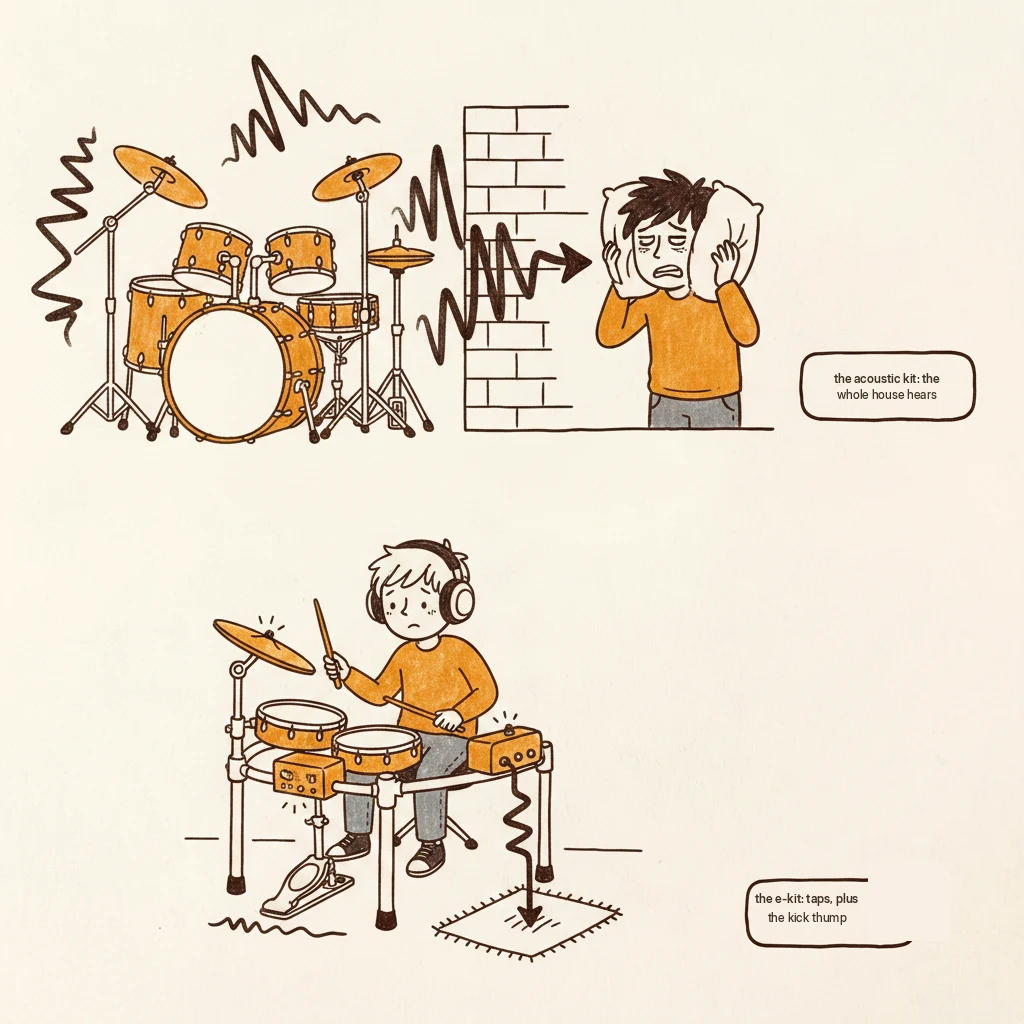
An electric drum kit for a beginner runs about $400 to $600, and almost everyone recommends the same one: the Alesis Nitro. It has quiet mesh pads, a headphone jack, and built-in lessons. The kid plays with headphones on and the house hears tapping, not drumming. It’s the instrument and the noise solution in one purchase.
Your kid asked for drums and the first thing you pictured was the neighbors. I get it. Here’s the good news: the electric kit solves the noise problem and the “how do they learn” problem at the same time, in one box.
First, let me clear up a name thing, no big deal. If you searched “drum machine,” that’s actually a little box for making beats, a different animal. What you want for a kid who wants to hit drums is an electronic drum kit, sometimes called electric drums, which is what this page is about. Your word’s fine, I just want you buying the right thing.
The one kit everyone names
I don’t drum. I’ll say that plainly. But I ran sound for drummers for thirty-five years, so I’ve mixed a hundred kits and I know what the people who DO drum keep saying. And across every list and every forum thread, they crown the same first kit: the Alesis Nitro, the mesh version, about four hundred and fifty dollars new. Mesh pads, a full kit layout, headphone jack, and coaching modes built in.
The fear I see most is “the reviews make it sound like a toy you give a ten-year-old at Christmas.” Here’s a real answer from a fifty-three-year-old who bought one to learn on: it’s definitely not a kids’ toy, it’s a real e-drum kit at about thirty percent of the price of the high-end ones. And when he was done? He sold it for almost what he paid. That resale is the safety net under the trombone-in-the-closet fear: if the kid quits, a Nitro moves fast on the used market. Which is also why, for a maybe-committed kid, buying one used is the smartest play. It holds value both directions.
Why mesh pads and not the cheaper rubber ones? Mesh is a woven fabric stretched like a real drumhead, and you can tune its tension, so a stick bounces off it the way it bounces off a real drum. That rebound is how a drummer’s hands learn timing and control. Rubber pads bounce wrong, so the technique a kid builds on rubber doesn’t fully transfer to a real kit later. Mesh technique does. That’s the whole reason to care, and it’s why “mesh” is the word to look for on the box.
The part mesh does NOT fix
Be honest with yourself about the floor. Mesh quiets the hands and the pads beautifully. But the kick pedal still thumps, and that thump travels down through the floor as vibration, not through the air as sound. On a ground floor or in a house, no problem, ignore it. In an apartment over someone’s ceiling, that thump is the thing that gets you a complaint.
The fixes: a Yamaha kit with a beaterless kick, which barely vibrates, or a forty-dollar isolation pad under the pedal. That pad is the store-bought version of what one apartment drummer spent a year DIY-ing with a homemade riser and tennis balls. Save yourself the year.
Why the electric kit before a real one
Simple. A volume knob and headphones mean the practice actually happens every day, instead of only in the half-hour when the house is empty. It fits in four feet by four feet. And you skip the expensive surprise of acoustic kits, where the cymbals and heads bleed money later.
The one fair knock from real drummers: e-kits feel a little different from acoustic, the rubber cymbals, the pad bounce. True, and it doesn’t matter for year one. And if the kid ends up in school jazz band, the technique carries over, precisely because you bought mesh and not rubber.
A few traps. Rubber-pad kits priced like mesh ones. “Five-piece” counts that sneakily include the module box. Kits that arrive without a kick pedal. And forgetting the throne, the drum seat, which is sold separately and which the kid needs on day one.
The Alesis Nitro Max, a throne, and twenty-dollar headphones, about five hundred all-in. If you’re in an apartment, put the Yamaha beaterless-kick kit on the shortlist and drop a forty-dollar pad under the pedal either way. Buy it used if you can, so a quitter costs you almost nothing.
If you buy through my links the site earns a little coffee money. Doesn’t change the price, doesn’t change my answer.
If you’re figuring this out, you’re probably also wondering:
Gus Harmon
Gus spent three decades running sound wherever somebody needed it: bar bands, weddings, school shows, and twelve years of Sunday mornings. He can't sing a note. He can make sure you're heard. Now he writes so normal people can buy the right thing the first time.