
← first chords, first songs, at any age
Electric Guitar for Beginners (What to Actually Put in the Cart)
A good first electric guitar costs $200 to $350 in the Squier class, plus a small $100 practice amp and a $65 to $145 setup that stops beginners from quitting.
 Gus Harmon · Updated July 8, 2026 · how I decide
If you buy through my links the site earns a little. It's never why I pick things.
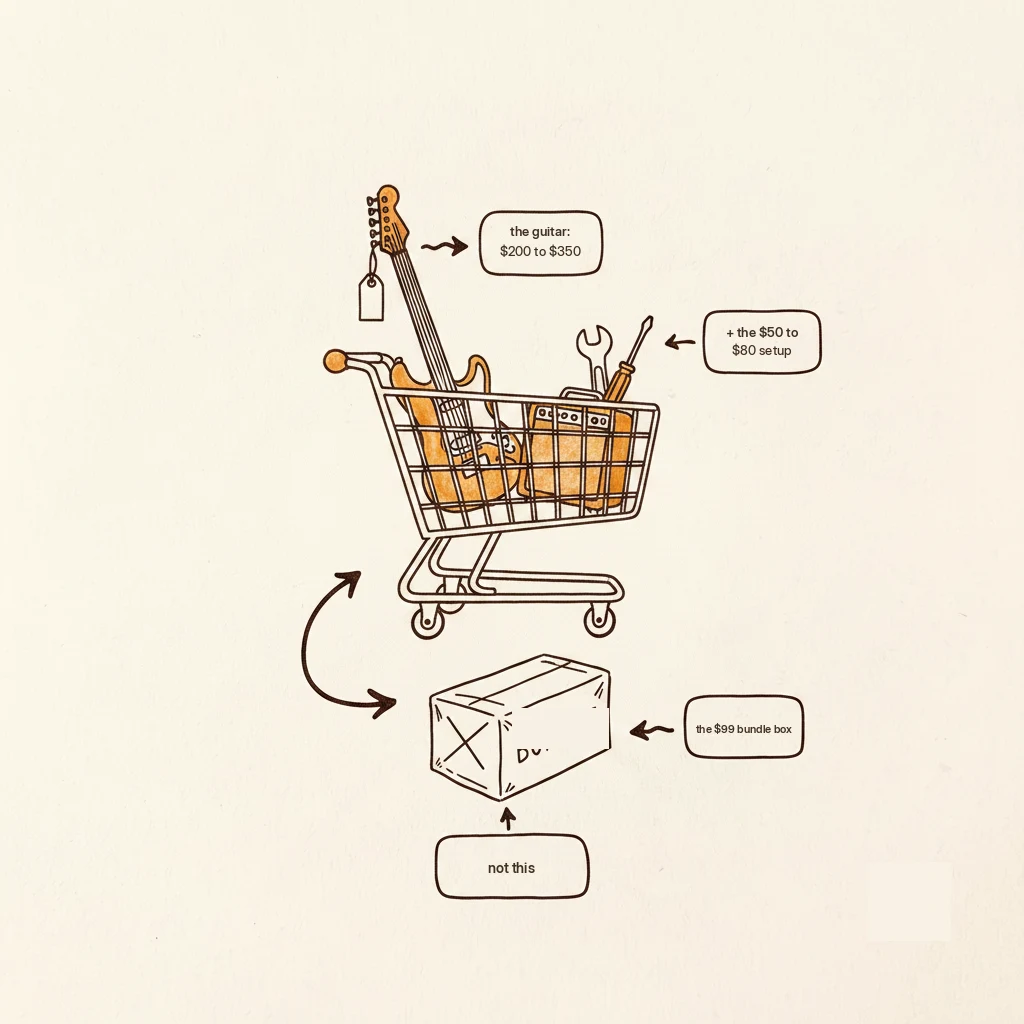
A good first electric guitar costs $200 to $350, the Squier class, which is Fender’s student brand. Then two things nobody puts in the cart: a small practice amp, about $100, and a professional setup, about $65 to $145. An un-set-up guitar is physically harder to play, and that’s why beginners quit. Electric is actually easier on the fingers than acoustic.
Maybe the kid handed you a half-translated wish list, “three pickups, absolutely no flying Vs,” and you’re zero percent musical and buying blind. Or maybe you’re an adult finally buying the guitar you wanted at fourteen. Either way, sit down next to me, because guitar’s my own instrument. I played one in a bar band through my twenties and thirties, and I bought my first electric purely for the way it looked. Kept it thirty years.
Here’s the thing. That kid’s spec sheet isn’t a spec sheet, it’s a picture. “Three pickups” almost always means the Stratocaster shape, because that’s the silhouette his heroes play. So the real first move isn’t decoding numbers. It’s asking what the kid watches, and buying that shape.
The three things that are actually the purchase
Nobody tells you a first electric is three items, not one. Miss any of them and the start goes badly.
The guitar, $200 to $350. The default is a Squier, which is Fender’s student line, in the shape the kid’s heroes play. Safe, proven, good. There’s also a sleeper worth knowing: Schecter’s lower-end guitars punch above their price, around three to four fifty, if you want to spend a touch more for quality.
A practice amp, about $100. This is the forgotten half. An electric guitar makes almost no sound on its own, it needs an amp. Get a little practice amp, and get one with a headphone jack so the kid can shred at midnight and the house hears nothing. Same peace-keeping logic as the drum world.
A setup, $50 to $80. This is the one that saves the whole thing, so stay with me.
The setup law, which nobody warns you about
Factory guitars ship with the strings sitting too high off the neck. That means pressing them down hurts, and a beginner with sore fingertips concludes they’re just bad at guitar and quits. They’re not bad at guitar. The guitar is fighting them.
A professional setup, fifty to eighty bucks at any real shop, fixes that. It’s the difference between an instrument that helps and one that hurts, and it’s the single most-repeated piece of advice from experienced players. Do not skip it.
What does a setup actually adjust? Three things, and the idea behind all of them is making the guitar meet your fingers halfway. It lowers the action, the gap between the strings and the neck, so notes take less force to press. It sets the intonation, so the guitar plays in tune all the way up the neck instead of only near the bottom. And it tweaks the truss rod, a metal bar inside the neck that fine-tunes how straight the neck sits. Two guitars of the exact same model can feel like different instruments purely because one’s been set up and one hasn’t. That fifty dollars is the cheapest upgrade in all of music.
The myth worth killing
You’ve probably heard you should “start on acoustic to toughen up.” That’s folklore. Electric guitars have lighter strings and sit lower under the fingers, which makes electric the gentler start, not the harder one. If the kid wants electric, electric is genuinely the easier place to begin. Don’t make them suffer through an acoustic first for character.
Two traps. Skip the ninety-nine-dollar boxed “starter packs,” they’re two okay things bundled with three bad ones, and the guitar in them fights you. And read the wish list: do not come home with the Flying V the kid specifically vetoed.
The Squier in the shape his heroes play, the little amp with a headphone jack, and the eighty-dollar setup. About four hundred all-in. Skip the boxed starter pack, and get the setup before the kid ever picks it up.
If you buy through my links the site earns a little coffee money. Doesn’t change the price, doesn’t change my answer.
If you’re figuring this out, you’re probably also wondering:
Gus Harmon
Gus spent three decades running sound wherever somebody needed it: bar bands, weddings, school shows, and twelve years of Sunday mornings. He can't sing a note. He can make sure you're heard. Now he writes so normal people can buy the right thing the first time.