
← first chords, first songs, at any age
How Much Does a Guitar Cost? (And the Line Item Nobody Mentions)
A real beginner guitar costs about $150 to $250 acoustic or $200 to $350 electric plus a $100 amp, used ones run half that, and always budget $50 to $80 for a setup.
 Gus Harmon · Updated July 8, 2026 · how I decide
If you buy through my links the site earns a little. It's never why I pick things.
A real beginner guitar costs about $150 to $250 for an acoustic or $200 to $350 for an electric, plus roughly $100 for an amp on the electric side. Decent used ones run about half that. The numbers above $1,000 are for players who already know why. Budget one hidden line item either way: a professional setup, about $50 to $80, the difference between a guitar that helps and one that hurts.
You want the honest floor before you let yourself want this. Fair. You’re scared of both directions: wasting money on a kid who quits in a month, or crippling the start with junk that makes them quit. Let me give you the real numbers so you can stop guessing.
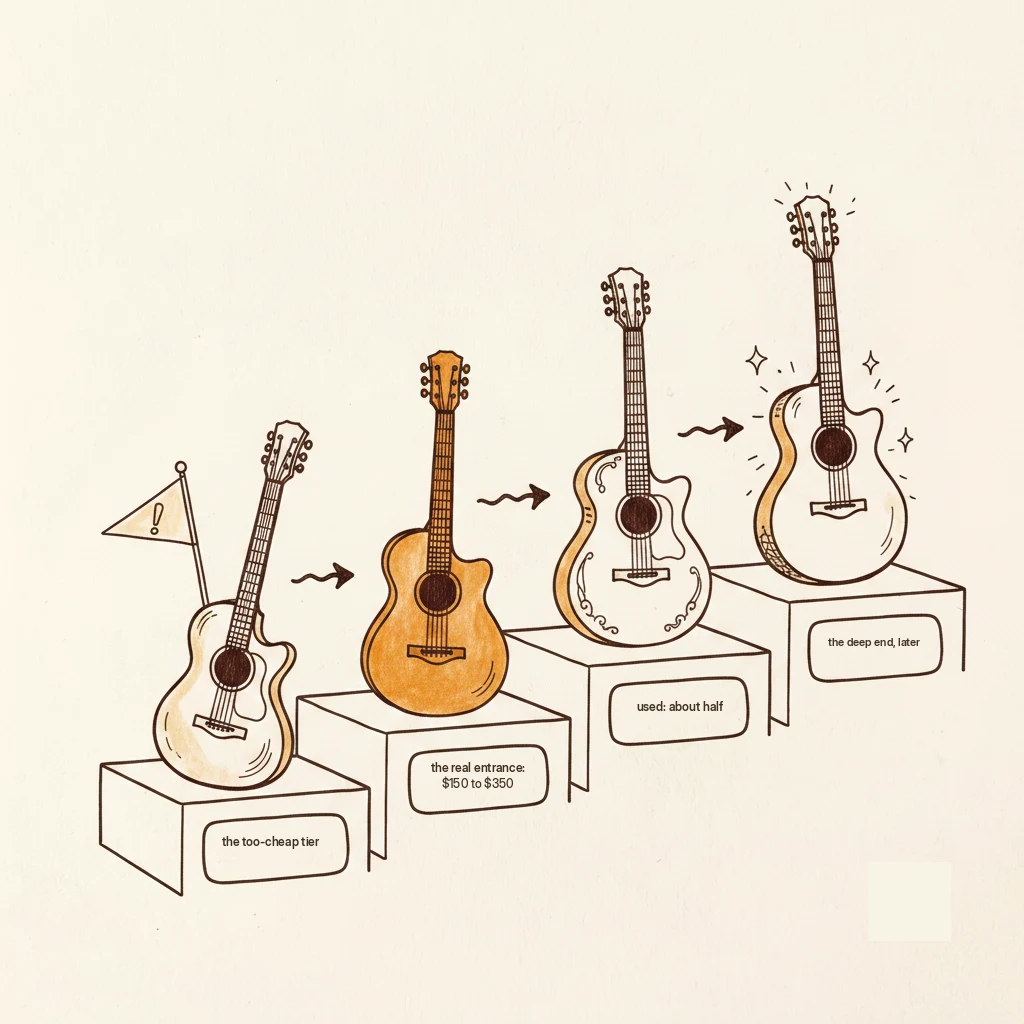
Here’s the thing. Guitar prices look like they run from thirty dollars to thirty thousand, and that spread paralyzes people. But the ladder actually has clear rungs, and only the bottom two matter to you right now.
The cost ladder
The ninety-nine-dollar boxed kits are the quit-machines. Skip them. They’re built to a price, they fight your fingers, and they teach a beginner that they’re bad at guitar.
The real entrance is $150 to $350, the Yamaha and Squier class. This is where actual instruments start, the ones that play in tune and don’t hurt.
Five hundred to a thousand buys nicer wood and better hardware, but it plays the same songs. It’s a want, not a need, for a beginner.
Four figures is the deep end of a hobby, not the door into it. Ignore it entirely for now.
The line item nobody puts on the price tag
Here’s the number the cost pages leave out, and it’s the whole reason this one exists: a professional setup, fifty to eighty dollars.
Cheap guitars ship with the strings too high off the neck, which makes them hard and painful to play. A setup lowers that and transforms the instrument. I learned this the hard way with an eighty-dollar pawn-shop guitar that played like a chain-link fence, until a tech went through it and suddenly it played like butter. Same guitar. The setup is not optional. It’s the cheapest upgrade in music.
Why can two guitars of the identical model, same brand, same year, feel like completely different instruments? Two reasons. One is factory tolerance: on a budget line, the machines are allowed a little slop, so one neck comes out a hair straighter than the next purely by luck of the draw. The other is setup, the hand-adjustment of the strings and neck that most guitars never receive before they’re boxed and shipped. So the “magic” guitar in the shop that felt amazing usually wasn’t better wood. It was a lucky body that also happened to get set up. The good news: you can buy that same feel on any guitar for sixty bucks.
The used move
Guitars, especially electrics, survive for decades, which makes used a genuinely smart buy. A used brand-name guitar, a Squier or an Epiphone, at a hundred to a hundred fifty, plus an eighty-dollar setup, beats a new ninety-nine-dollar kit every single time. And a real brand holds its resale, so if the kid quits, you get most of it back. The used deal is the safety net under the whole worry.
If you’re going electric, remember the amp, another hundred or so, which puts an honest electric entry around four hundred dollars all-in. Acoustic skips the amp cost but is a bit harder on beginner fingers, so that’s the fork.
A few traps. “Guitar plus amp plus everything” mega-bundles. “Vintage” pricing on what’s really a dusty wall-hanger. And Amazon no-name brands charging Squier money for worse guitars.
New: a $200-class Yamaha or Squier plus the $80 setup. Used: about half that, same setup rule, no exceptions. The setup is not optional. It’s the cheapest upgrade in music, and it’s what keeps a beginner from quitting.
If you buy through my links the site earns a little coffee money. Doesn’t change the price, doesn’t change my answer.
If you’re figuring this out, you’re probably also wondering:
Gus Harmon
Gus spent three decades running sound wherever somebody needed it: bar bands, weddings, school shows, and twelve years of Sunday mornings. He can't sing a note. He can make sure you're heard. Now he writes so normal people can buy the right thing the first time.