
← a microphone for singing, at home or on stage
Headset Mic Parts and Accessories (the Connector Maze)
Headset mic accessories solve three owner problems: the foam cover is an $8 to $12 consumable, the connector maze comes down to matching the plug to your gear, and good brands sell replacement booms.
 Gus Harmon · Updated July 8, 2026 · how I decide
If you buy through my links the site earns a little. It's never why I pick things.
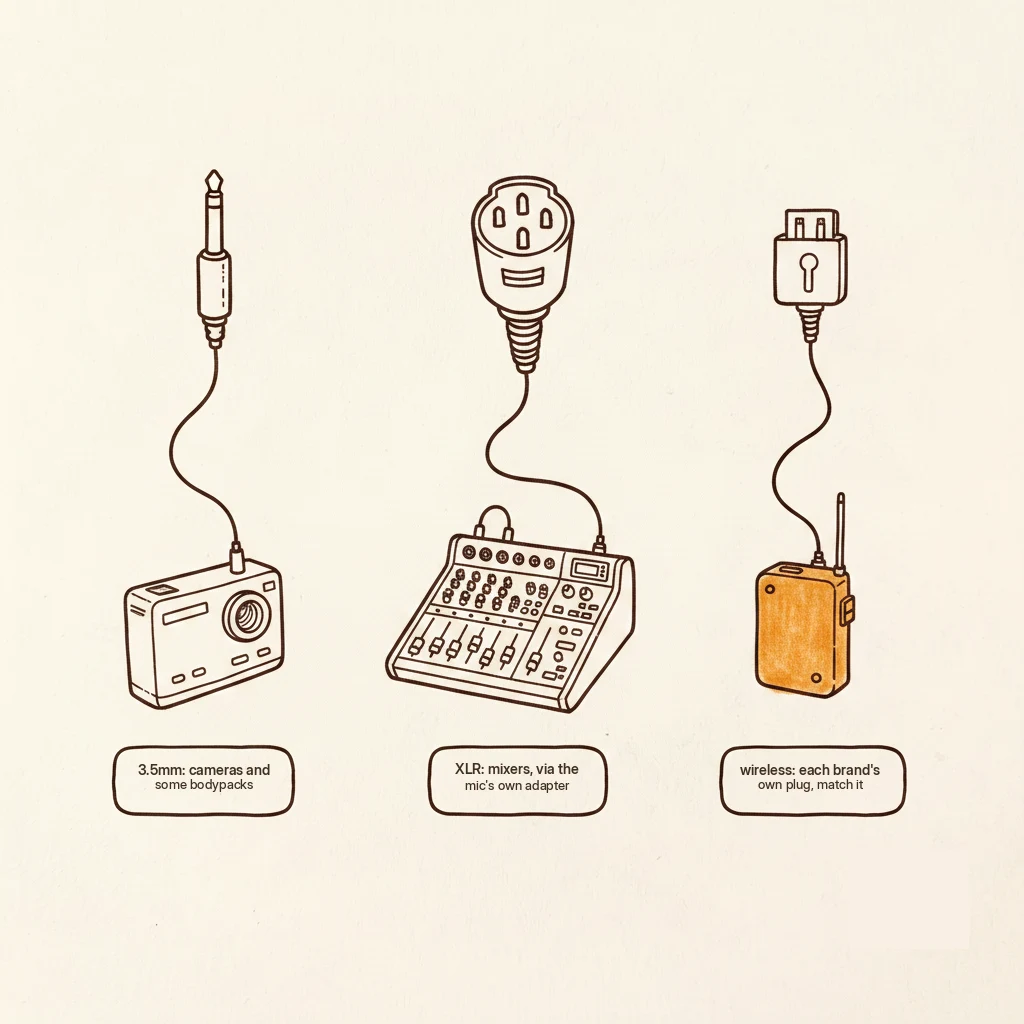
Headset mic accessories solve three owner problems. The foam cover (windscreen) is an $8 to $12 consumable: replace it when it flattens or after an illness, and buy the size that fits YOUR capsule. The connector maze: a 3.5mm plug fits cameras and some bodypacks, XLR fits mixers but usually needs the mic's own adapter, and every wireless brand uses its OWN plug. Match the plug to your transmitter, not to the price. And good brands sell replacement booms and cables, which is half the reason to own one.
The one question that solves half of this
Here’s the thing that saves you from buying the wrong part twice: before you order anything with a connector, answer one question. What does it plug INTO? Almost every headset-accessory headache is really a plug-matching problem, and once you know what’s on the other end, the maze straightens right out.
Let me take the three things people actually come here for.
The foam cover (the cheap consumable everyone forgets)
That little foam ball over the mic tip is a windscreen, and it’s a consumable, like a toothbrush, not a permanent part. It does three jobs at once: it blocks wind and breath pops, and it’s a hygiene barrier for your mouth.
Replace it when it flattens out or gets crushed, and definitely after you’ve been sick. Here’s the diagnostic nobody mentions: a flattened, dead foam actually changes your sound, making it harsher and more trebly. If your headset suddenly sounds thin, check the foam before you blame anything expensive. Buy a multi-pack, and match the foam’s size to your mic’s capsule diameter so it actually fits.
By the way, if you searched for a “pop filter” for a headset, the foam IS your pop filter. Same job, different word. You want the foam.
The connector maze, untangled
This is where the money gets wasted, so read this twice. There are three worlds of headset plugs, and they don't mix. A 3.5mm plug (the little round headphone-size one) fits cameras, phones, and some wireless bodypacks. XLR (the chunky three-pin mixer plug) fits a soundboard, but an electret headset usually needs its own adapter or a phantom-power converter to work there. And every wireless brand uses its OWN proprietary plug: Shure packs use one called TA4F, Sennheiser uses a locking 3.5mm, and so on. Match the plug to the TRANSMITTER you own, never to the cheapest listing. The brand lock is real, and it's the single most expensive mistake here.
Replacement booms and cables (and why they matter)
Here’s a quiet upside of owning a good-brand headset: when the thin arm (the boom) or the cable finally gives out, you can buy just that part, about $20 to $40, instead of a whole new mic. The toy-tier headsets are sealed disposables. When one breaks, it’s landfill.
So the very fact that you’re searching for a replacement part is a good sign. It usually means you bought the repairable kind. Nice work.
Skip this unless you like the nerdy part. Why does every wireless brand force its own plug instead of a universal one? It's not pure greed, though it's convenient for them. These tiny headset capsules need a specific small voltage fed up the cable to work (called bias or phantom power), and each brand wires that voltage across the pins its own way. Plug a headset built for one scheme into another brand's pack and, best case, it's silent; worst case, you damage it. The oddball connector is partly a safety interlock so you can't cross the voltages. Partly. Then keep a note of your plug type and move on.
Buy foams three at a time, and write your plug type inside your case lid the day you learn it, TA4F, say. Because you'll be standing in a music store in two years pointing at your own handwriting, and it'll save the trip.
Questions people actually ask
What is the foam cover on a headset mic for?
It’s a windscreen doing three jobs: blocking wind, softening breath pops, and acting as a hygiene barrier for your mouth. It’s a consumable, so replace it when it flattens or after an illness. A crushed foam also makes the mic sound harsh and thin, so swap it if your sound changes. Match the size to your capsule.
How do I know which cable or plug my headset mic needs?
Match it to what it plugs into. A 3.5mm plug suits cameras, phones, and some wireless packs; XLR suits mixers (often with an adapter for electret headsets); and each wireless brand has its own plug, like Shure’s TA4F. Identify your transmitter or device first, then buy the matching connector. Don’t shop by price.
Can you replace the boom or cable on a headset microphone?
On good-brand headsets, yes. Manufacturers sell replacement booms and cables for about $20 to $40, so a broken arm or worn cable doesn’t mean a new mic. Cheap toy-tier headsets are sealed and disposable, so the fact that parts exist for yours is a sign you bought the repairable kind.
If you buy through my links the site earns a little coffee money. Doesn’t change the price, doesn’t change my answer.
Sorting out your headset, you're probably also wondering:
Gus Harmon
Gus spent three decades running sound wherever somebody needed it: bar bands, weddings, school shows, and twelve years of Sunday mornings. He can't sing a note. He can make sure you're heard. Now he writes so normal people can buy the right thing the first time.