
← a microphone for singing, at home or on stage
Shure Headset Microphones, Sorted by Job, Not by Number
Shure's headset mics sort by the job: the SM35 (about $99) for performing musicians, the WH20 (about $90 to $125) for aerobics-tough duty, and the BLX wireless bundles (about $400 to $520) for church and fitness.
 Gus Harmon · Updated July 8, 2026 · how I decide
If you buy through my links the site earns a little. It's never why I pick things.
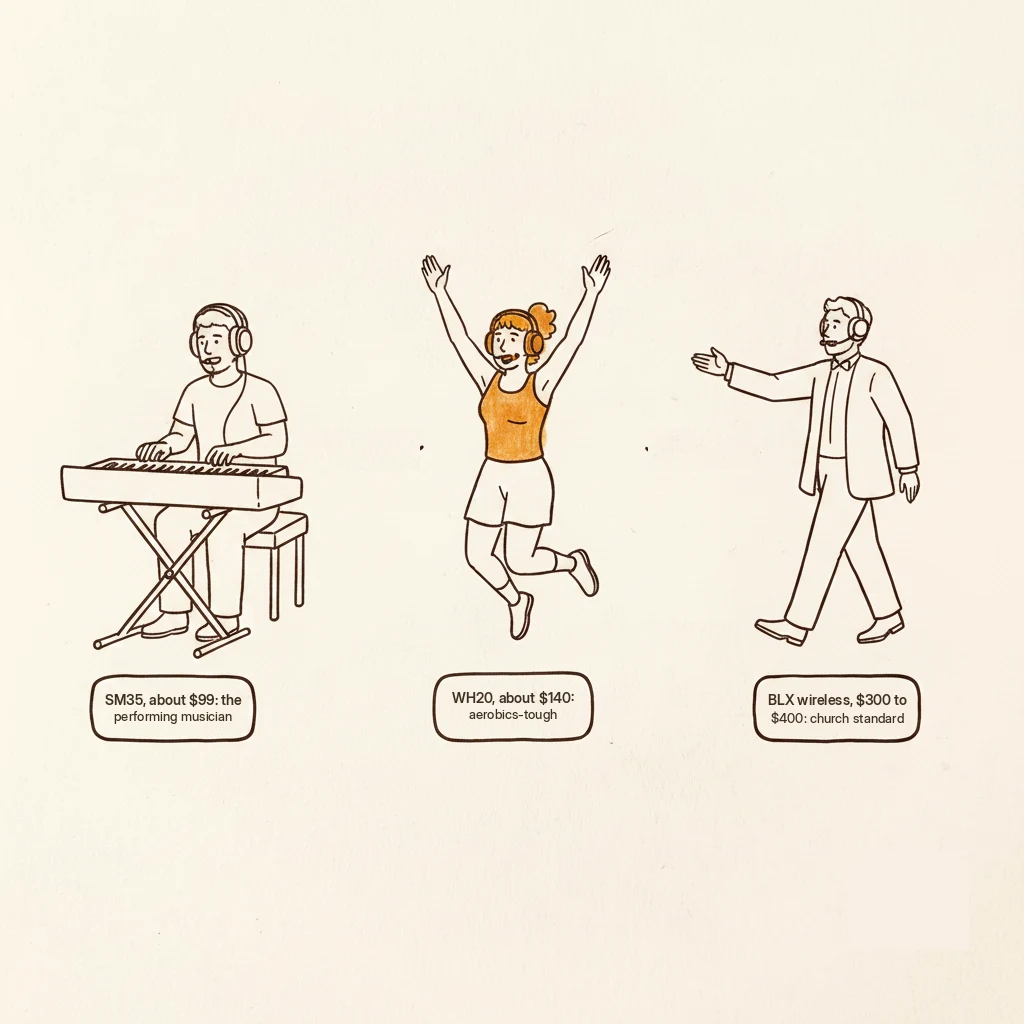
Shure's headset mics sort by the job, not by the model number. The SM35 (about $99) is the performing musician's headset, for singers who play and worship leaders. The WH20 (about $90 to $125) is the tough one built for aerobics-instructor duty. The BLX14 wireless bundles (about $400 to $520) are the church and fitness standard. And the premium touring earsets live in professional rigs, not on your shelf. One catch: Shure wireless uses a plug called TA4F, so the headset you buy must match the transmitter you own.
Shure is the name, so let’s translate the numbers
Here’s the thing. Shure is the brand every corner of the music world points to, the boring, reliable name that doesn’t cut out on you. That’s exactly why people search for a “Shure headset mic” without knowing which one they need, and then get hit with a $99-to-$400 spread and no explanation. So let’s sort them by the human using them, not the part number.
The SM35: the performing musician’s headset
If you sing while your hands are busy (playing keys, playing guitar, leading worship), the SM35 (about $99, wired) is your headset. It’s a condenser tuned for a performer’s voice, and it’s the standard answer for the sing-and-play crowd. Pair it with a wireless pack later if you need to roam.
The WH20: the workhorse for movement
If the job is loud, sweaty, and physical (an aerobics or spin instructor shouting over music for an hour), the WH20 (about $90 to $125) is built for it. It’s a dynamic mic, which just means it’s tougher and better at handling volume and abuse than the delicate condenser. It takes a beating and keeps working.
The BLX bundles: the wireless standard
For most church and fitness setups, you want the whole wireless package, and the BLX14 headset bundle (about $400 to $520) is the one people mean when they say "the reliable one." This is that boring-brand-that-doesn't-drop-out promise, delivered. You get the headset, the transmitter you wear, and the receiver, all matched and ready. When the sermon or the class can't afford a dropout, this is the safe money.
The premium touring earsets you see on big stages exist too, but they’re pro gear for productions, named here so you know they’re out of the shopping conversation, not something a fan or a small church buys.
The plug warning (do not skip this)
If you buy a Shure headset by itself to use with a wireless pack, it terminates in a plug called TA4F, made to fit Shure’s own transmitters. So buying the headset alone means matching that plug to the pack you already own. Buy the matched bundle and this is handled for you. Buy the pieces separately and you have to check. This is the one mistake that sends headsets back.
If your real job is just speaking
Honest steer, against a sale: if you're standing at a lectern giving a presentation and not moving around, a Shure music headset is often NOT your cheapest good answer. A simple voice-amplifier setup or a fixed podium mic serves a stationary speaker for less money. Shure headsets earn their price when you MOVE and still have to be heard loud, on a stage, walking a class, roaming a sanctuary. If you stay put, spend less elsewhere.
Why Shure, and the budget floor
The reason to pay Shure prices is the same reason the SM58 is legendary: durability, easy replacement parts, and strong resale. These things outlive the gig and the next one. And a budget note in the honest house style: the $99 SM35 genuinely beats every $40 marketplace headset, where a bad one leaves you unable to tell if the fault is the mic, the cable, or you. If even $99 is too much right now, you’re better served by a plain wired vocal mic than by a cheap headset.
Skip this unless you like the nerdy part. Ever notice a headset mic doesn't sit right in front of your lips, but off to the side near the corner of your mouth or the cheek? That placement is on purpose. The hardest blasts of air come straight out the front of your mouth on "p" and "b" sounds (the plosives), and if the mic sat dead center it would catch every one as a thump. Tucked off to the side, those air blasts shoot right past the capsule instead of into it, so your speech stays clean while your voice still reaches the mic. It's aimed to dodge the punch and keep the voice.
The SM35 if there's a cable's reach of stage. The BLX bundle if they roam. And write TA4F inside the case lid like I keep telling everyone. Below a hundred bucks, buy a wired SM58 and a stand instead. It'll outlive the gig.
Questions people actually ask
Which Shure headset microphone should I buy?
Match it to the job. The SM35 (about $99) suits a performing musician who sings while playing. The WH20 (about $90 to $125) is the tough choice for aerobics and physical, loud use. The BLX14 wireless bundle (about $400 to $520) is the reliable church-and-fitness package. If you buy a headset alone, match its TA4F plug to your transmitter.
What’s the best headset microphone for speaking?
If you stand still at a lectern, a Shure music headset is often overkill. A voice-amplifier setup or a podium mic does the job for less. Headsets earn their keep when you move around and still need to be heard, like teaching a class or walking a stage. For a stationary speaker, spend the money elsewhere.
Is a Shure headset mic worth the money?
For the right job, yes. You’re paying for durability, replaceable parts, and gear that doesn’t drop out mid-performance, which is exactly what a church service or a fitness class needs. The $99 SM35 clearly outperforms cheap marketplace headsets. But if you don’t move while you talk, a simpler, cheaper setup may serve you better.
If you buy through my links the site earns a little coffee money. Doesn’t change the price, doesn’t change my answer.
Choosing a headset, you're probably also wondering:
Gus Harmon
Gus spent three decades running sound wherever somebody needed it: bar bands, weddings, school shows, and twelve years of Sunday mornings. He can't sing a note. He can make sure you're heard. Now he writes so normal people can buy the right thing the first time.