
← how singers and sound actually work
The Pop-Star Headset Costume (A Prop, or the Real Thing?)
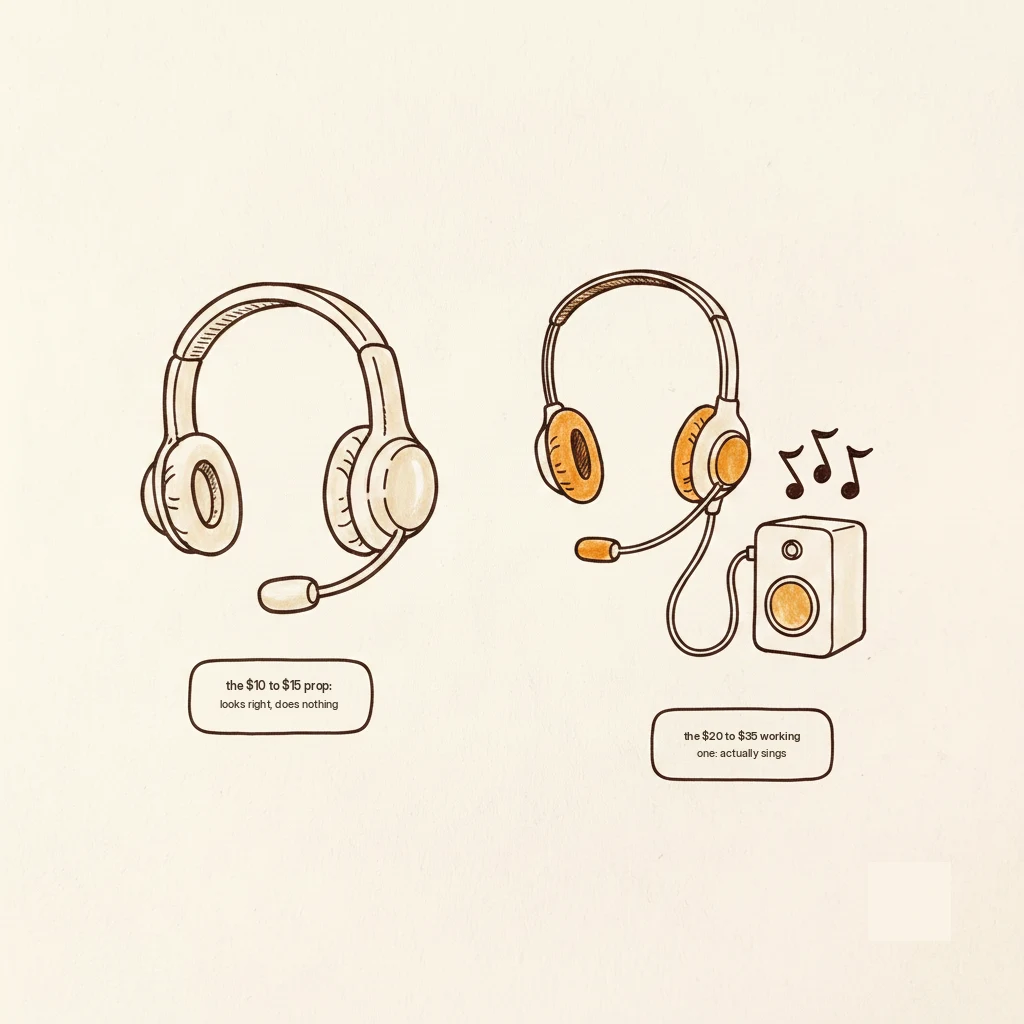
For a pop-star costume you can get a $10 to $15 plastic prop headset that looks right but does nothing, or a working headset mic for about $20 to $35 that makes the costume actually sing.
 Gus Harmon · Updated July 8, 2026 · how I decide
If you buy through my links the site earns a little. It's never why I pick things.
For a pop-star costume you’ve got two options. A plastic prop headset, about $10 to $15, that looks right with a swivel mic and does nothing. Or an actually-working cheap headset mic, about $20 to $35, plugged into a small speaker so the costume sings. The prop wins for comfort and all-night wear. The working one wins the party.
The outfit’s in the cart and you just need the finishing piece, that pop-star headset with the little mic that swings around to your mouth. Simple question with a fun fork in it, so let me lay it out.
Here’s the thing nobody on the Amazon shelf tells you: there are two completely different products that look almost identical in the photos. One is a hollow plastic prop. The other actually works. Which one you want depends on whether you just need to LOOK like a pop star or you’re planning to actually do a bit.
The prop tier
Ten to fifteen dollars gets you a molded plastic headset. It’s a costume piece, pure decoration, no electronics inside. And honestly, for most costume purposes that’s exactly right. The one feature that sells the whole look is the swivel boom, the mic arm you can flip up when you strike the pose, that big Madonna-Britney gesture. It’s feather-light, so you can wear it all night without it digging in, and they make kid sizes. If you just want to be recognizable at the party, this is your buy.
The make-it-real tier
Now, if you’ve got a lip-sync number or a karaoke bit planned and you want the costume to actually sing, that’s where I can help, because this is my world. Cheap working headset mics really do exist, about twenty to thirty-five dollars. Plug one into a mini speaker, or into the karaoke box you already own, and suddenly your costume performs. Nobody on the prop shelf mentions this option, and it’s the one that wins a talent show.
Honest warning, though: a cheap headset mic sounds like a cheap headset mic. Thin, a little tinny. That’s completely fine, because it’s a bit, not a world tour. Just don’t expect concert audio out of a twenty-five-dollar part.
Why does a real stage headset cost five hundred dollars and up when the costume prop is twelve? Two reasons, and I’ve fitted a lot of the real ones on a lot of sweaty performers. First, the actual microphone element in a pro headset is a capsule about the size of a grain of rice, machined to catch a voice cleanly from the corner of the mouth while ignoring the band. Second, and this is the unglamorous part, it’s sweat-proofed and armored to survive a two-hour show under hot lights without dying. The prop has to survive a car ride to a party. That’s the whole price gap: a rice-grain microphone and waterproofing.
Why they wore them in the first place
Quick cultural note, since you might wonder: pop stars started wearing these so they could sing hands-free while dancing all over the stage. The Janet and Britney era made it iconic. There’s a whole story there if you want it, but that’s the short version.
If you’d rather make your own, the TikTok DIY route with pipe cleaners and wire is a genuinely fun craft project for a kid’s costume. Bless it, go for it.
A couple of traps. Some props are listed like electronics, and buyers expect sound out of a twelve-dollar hollow shell, so read the listing. Ignore “works with Bluetooth” claims on decorative items. And the thin prop antenna and boom snap easily, so don’t pack it at the bottom of the bag.
Costume contest, just the look: the twelve-dollar prop, and flip the boom up when you strike the pose. Talent-show bit where you actually perform: the twenty-five-dollar working headset into whatever speaker’s already at the party, and practice the flip so it looks easy.
If you buy through my links the site earns a little coffee money. Doesn’t change the price, doesn’t change my answer.
If you’re figuring this out, you’re probably also wondering:
Gus Harmon
Gus spent three decades running sound wherever somebody needed it: bar bands, weddings, school shows, and twelve years of Sunday mornings. He can't sing a note. He can make sure you're heard. Now he writes so normal people can buy the right thing the first time.