
← a microphone for singing, at home or on stage
The Best Cordless Microphone for Singing (What That Word Buys)
Cordless covers three different things, and for singing around the house the Fifine pair into any speaker at about $60 is the one I'd hand you.
 Gus Harmon · Updated July 8, 2026 · how I decide
If you buy through my links the site earns a little. It's never why I pick things.
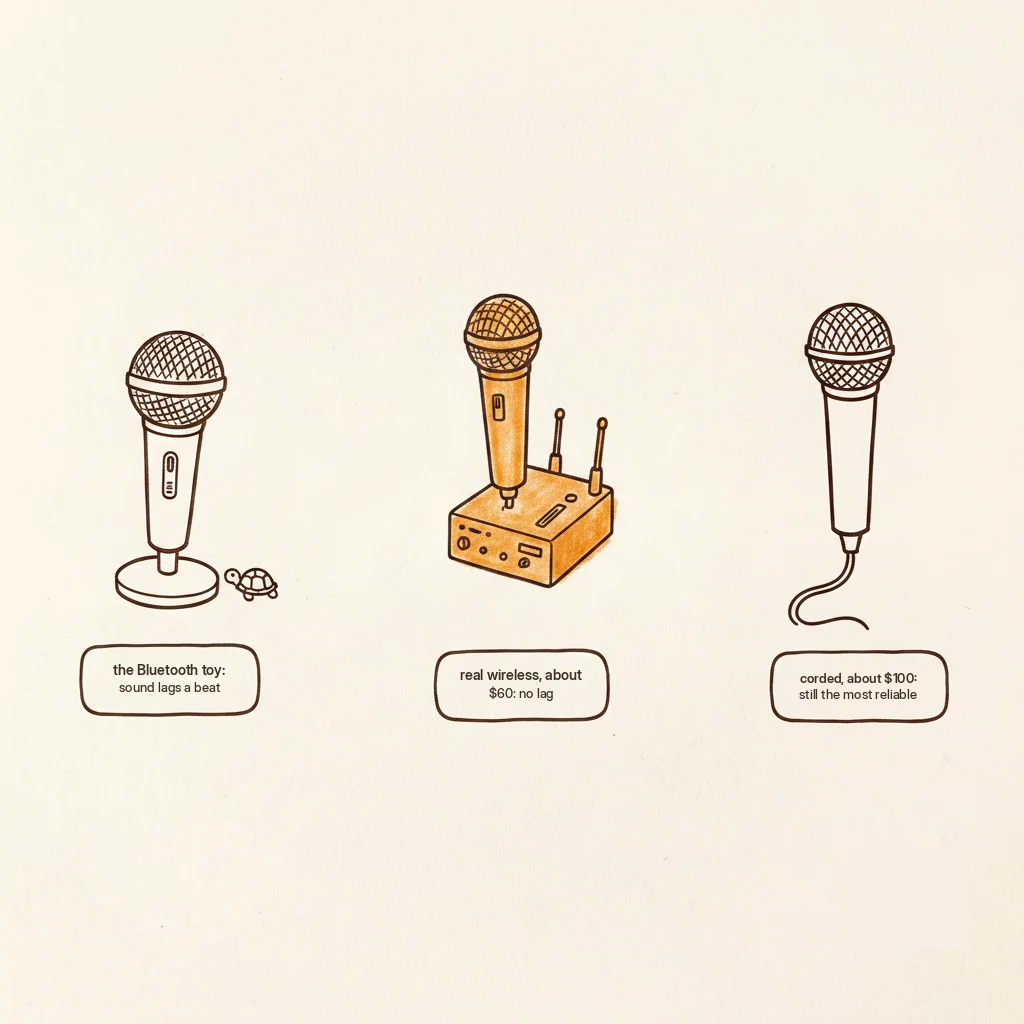
A “cordless microphone” for singing is really three different things wearing the same name. There’s a Bluetooth toy mic, which is fun but the sound lags a beat behind your mouth. There’s a real wireless system with a little receiver box, around sixty dollars, no lag. And there’s a plain corded mic, around a hundred, still the most reliable.
Cordless is a perfectly good word. The stores just don’t use it, so searching for it feels like you asked wrong. You didn’t.
Here’s what you actually need to know: which one you want comes down to one question. Are you singing around the house, or performing?
The one thing that trips people up
The cheap “cordless mic” on Amazon, the shiny one with the speaker built into the handle, is almost always Bluetooth. And Bluetooth mics lag. You sing, and the sound comes out a beat behind you. It makes singing genuinely annoying, and no product listing will ever mention it.
That’s not a defect you can return your way out of. It’s just how Bluetooth works. So if somebody already bought one of those and it echoed and felt off, that wasn’t you being bad at it. It was the mic.
Bluetooth was built to move a file or a song across the room, not to be instant. It gathers up a little bundle of sound, waits, then sends it, and that waiting is the lag.
A real wireless system, the kind with a receiver box, uses a purpose-built radio that just shoots the signal straight through with no waiting. That’s the whole difference, and it’s why the sixty-dollar system beats the thirty-dollar toy for singing every time.
The three things, plainly
The Bluetooth toy mic. Fine as a toy, great for a kid goofing off. Not for actually singing. If that’s the vibe you want, that’s its own thing (see the karaoke handheld page).
The real wireless system. This is the one most people actually mean. The Fifine K036 comes as two mics plus a receiver for about fifty to sixty-seven dollars, roughly four pizzas, and it plugs into whatever speaker you already own. No lag.
It’s the pick people keep coming back to. There’s also the Phoenix Pro, around seventy to a hundred, that folks say sounds close to the expensive stuff for home use.
The honest cord. For singing at home, plenty of people find they never actually minded the cable. A Shure SM58, about ninety-nine dollars, plus a fifteen-dollar cable, and you have the most reliable mic there is.
Cables are annoying. Dropouts are worse.
One household tip that keeps coming up: whatever wireless set you get, run it as a pair with one mic always on the charger. Nothing kills a sing-along faster than a dead battery mid-song.
Singing around the house: the Fifine pair, into whatever speaker you own. Done. Performing, walking a stage: a 58 and a cable, until the day someone’s paying you to move around the room. Then you buy wireless, and not a day before.
If you buy through my links the site earns a little coffee money. Doesn’t change the price, doesn’t change my answer.
If you’re figuring this out, you’re probably also wondering:
Gus Harmon
Gus spent three decades running sound wherever somebody needed it: bar bands, weddings, school shows, and twelve years of Sunday mornings. He can't sing a note. He can make sure you're heard. Now he writes so normal people can buy the right thing the first time.