
← how singers and sound actually work
How Do Singers Actually Make Money? (The Part Nobody Sees)
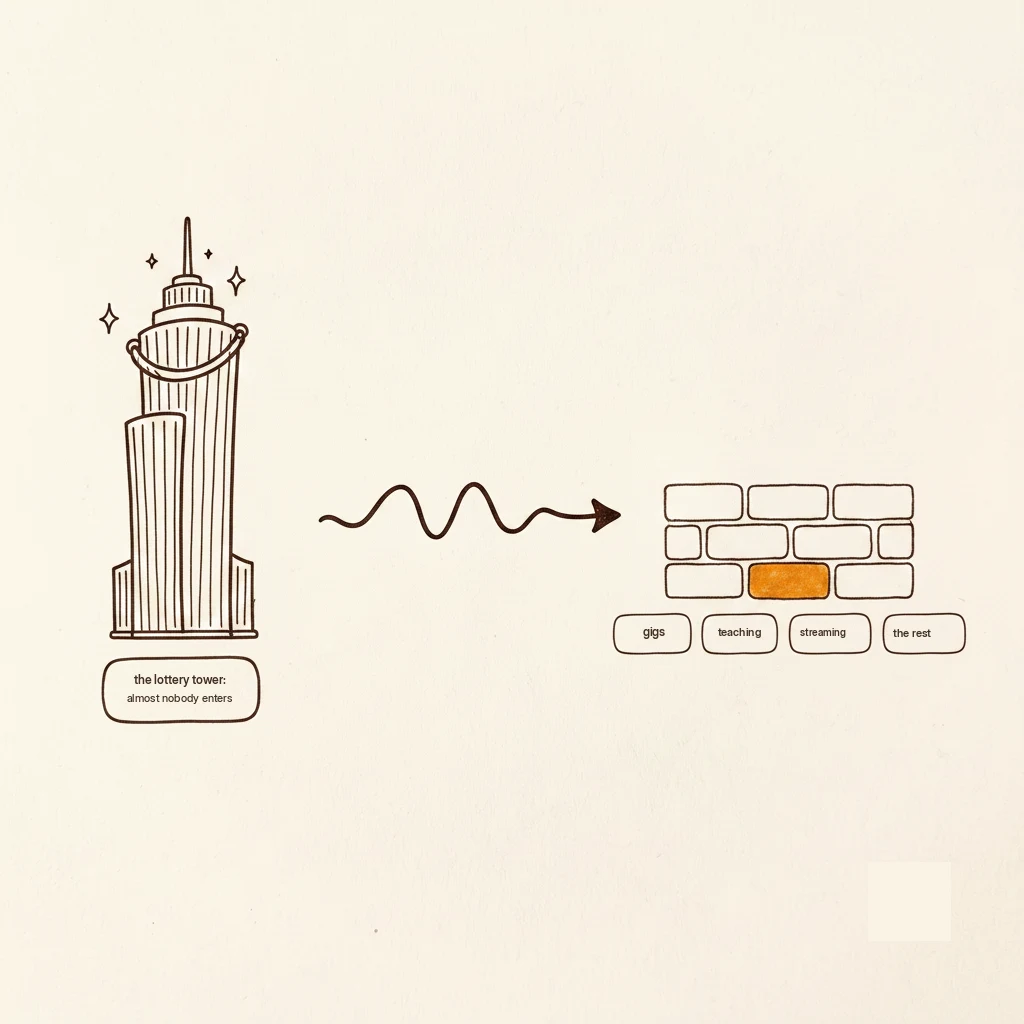
Most working singers make a living from a stack, live shows first, then teaching, then thin streaming money, while the famous-artist economy is a separate lottery almost nobody enters.
 Gus Harmon · Updated July 8, 2026 · how I decide
If you buy through my links the site earns a little. It's never why I pick things.
Most working singers earn a living from a stack, not a hit: live shows first (the biggest slice by far), teaching second, then streaming (wide but thin, thousands of plays per latte), plus merch and wedding or corporate gigs. The famous-artist money, arena tours and brand deals, is a different economy that almost nobody enters. The working-musician stack is a real job thousands of people quietly hold.
Maybe you’re a fan doing napkin math on those streaming headlines. Or maybe someone you love wants to sing “for real,” and you’re quietly wondering if that’s a life or a heartbreak. Either way, I can help, because I watched this economy up close from behind the sound board for thirty-five years.
Here’s the thing that makes the whole subject confusing: there are two completely different economies wearing the same word. Mix them up and nothing adds up.
The two economies
One is the visible economy. Arena tours, brand deals, the handful of names in the headlines. That’s a lottery. Almost nobody enters it, and no one, truly no one, knows the formula for getting in. When you read that a song got a million streams and earned pocket change, that headline feels like a lie because it’s quietly comparing you to that lottery.
The other is the working economy, and this is the real one. The Friday bar gig that pays each player a couple hundred bucks. The wedding band. The church gig. The teaching studio with a dozen students a week. This economy is enterable. It’s a real job that thousands of people hold, and nobody writes headlines about it because it isn’t glamorous. It’s just a living.
The stack, ranked
Working singers almost never live on one thing. They stack several, and the stack goes roughly like this.
Live shows are the biggest slice for most working musicians, by a lot. Playing out is the engine.
Teaching is the steady second leg. Lessons pay reliably and they pay when you’re home, which is why so many gigging singers teach.
Streaming is wide but thin. Lots of people are on it, and it pays fractions of a penny per play.
Here’s the math that reframes everything, from a guy who spent years standing next to the merch table. A single twenty-dollar t-shirt at the merch table, after the shirt cost, nets the band maybe twelve, fifteen bucks. To make that same fifteen dollars from streaming, that song needs somewhere around eight thousand plays. Eight thousand. So the band that sells forty shirts at a Friday show just out-earned a streaming number that would look impressive on a screenshot. That’s why working musicians talk about merch and gigs, not Spotify. The money was never in the plays. It was always at the table by the door.
Then merch, which is genuinely back, and the invisible middle class of music: session work, jingles, weddings, corporate gigs. Unglamorous, steady, real.
Do they have day jobs? Do singers get famous?
Honest answers to the two questions under the questions. Yes, plenty of working singers have day jobs, or teach, or gig on weekends around a Tuesday-through-Friday life, and there’s no shame in any of it. And getting famous? Nobody knows how. The only path anyone can actually walk is the working stack, and here’s the thing worth knowing: almost every famous singer passed through that stack first. The bar gigs and the teaching aren’t the consolation prize. They’re the road.
I’ll tell you my own version straight. My band never made it. And half of us made a living in music anyway, off that stack, for years. Nobody tells you that’s allowed, so I’m telling you.
One trap to name, gently: ignore anyone selling a course promising you’ll quit your job on streaming royalties. That’s the lottery dressed up as a plan.
If someone you love wants to sing for a living, believe them, and get practical. The stack is real: gigs, teaching, weddings. Ask them which two legs they’re building this year, not when the hit is coming. That’s the question that actually helps.
If you’re figuring this out, you’re probably also wondering:
Gus Harmon
Gus spent three decades running sound wherever somebody needed it: bar bands, weddings, school shows, and twelve years of Sunday mornings. He can't sing a note. He can make sure you're heard. Now he writes so normal people can buy the right thing the first time.