
← a microphone for singing, at home or on stage
Is the Rode NT-USB Good for Singing?
Yes: the Rode NT-USB (about $170) is one of the best plug-in-and-sing computer mics, with clear sound and a pop screen in the box, but it's the wrong buy if you want to hold the microphone or sing away from a desk.
 Gus Harmon · Updated July 8, 2026 · how I decide
If you buy through my links the site earns a little. It's never why I pick things.
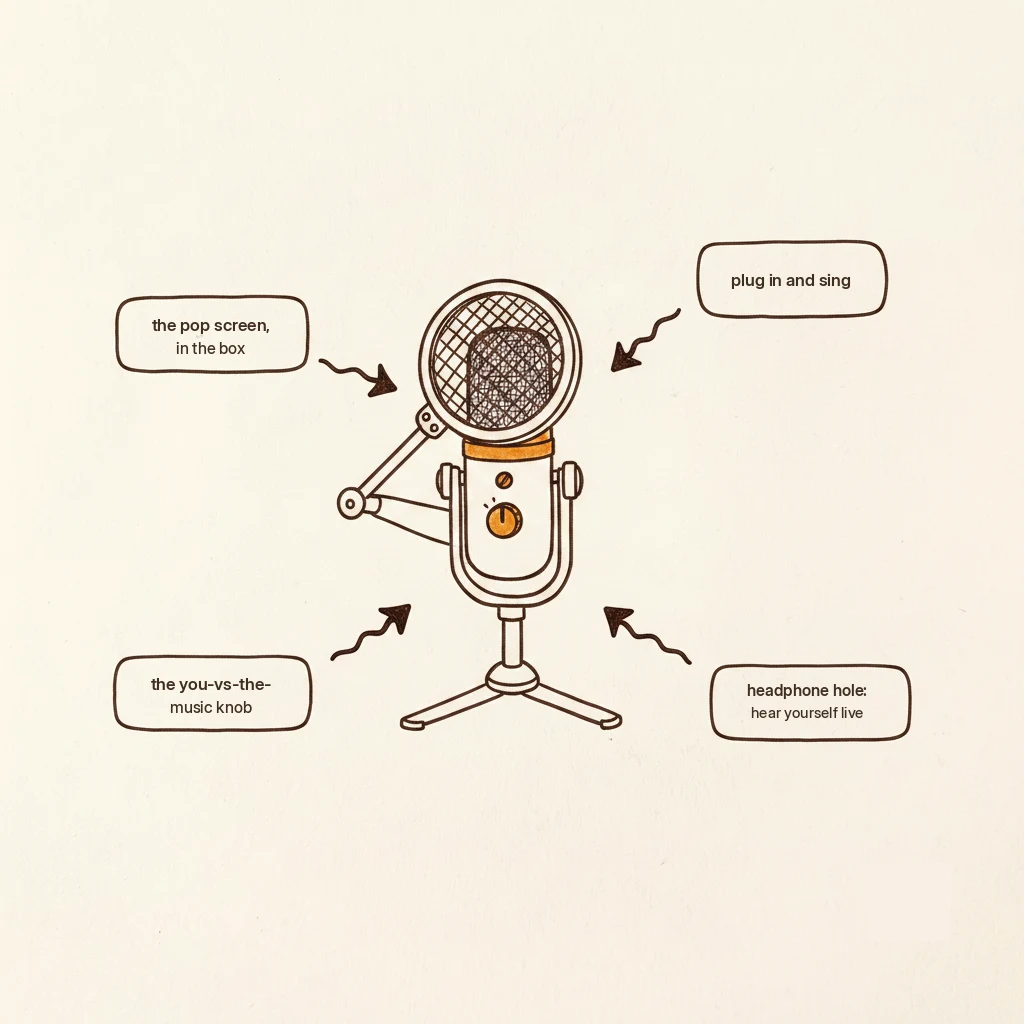
The short version, and then the honest version
Somebody recommended it, or you saw it on sale, and now $170 is sitting in a cart while you try to find out whether it’s for people like you or for people with a soundproof room.
It’s for people like you, if you sing at a computer. That’s the whole condition.
What you actually get for $170
Three things matter and none of them are on the spec sheet.
It comes with the pop screen. That’s the little round shield that stops the puff of air on your P sounds from thumping the recording. On most mics that’s a separate purchase and an argument with a clamp.
It comes with a desk stand, so the mic has somewhere to live the minute you open the box.
And it has a headphone hole in the mic itself, which is the one that changes how you sing.
Who should buy something else
The NT-USB sits on a desk and you come to it. If your singing looks like standing up, holding a microphone, and moving, this mic will fight you every session.
For that person there’s a $80 answer that also plugs into a computer: the Samson Q2u. It’s a handheld stage-style mic with a USB plug on the bottom. You hold it, it feels like a real microphone, and it costs a hundred dollars less.
Rode NT-USB, about $170. Ten pizzas. Plug in the cable, plug headphones into the mic, sing. Nothing else to buy.
Flaws, said plainly: it's desk-bound, and it's USB only, so it can never grow into a stage mic later.
Samson Q2u, about $80. Handheld, plugs into the computer today, plugs into a PA speaker in five years. It's both kinds of mic at once.
Flaws, said plainly: it isn't as detailed as the Rode on a quiet close-up recording, because it's the tough kind of mic, not the sensitive kind.
If you buy through my links the site earns a little coffee money. Doesn’t change the price, doesn’t change my answer.
If you're figuring this out, you're probably also wondering:
Gus Harmon
Gus spent three decades running sound wherever somebody needed it: bar bands, weddings, school shows, and twelve years of Sunday mornings. He can't sing a note. He can make sure you're heard. Now he writes so normal people can buy the right thing the first time.