
← hear yourself back, without a studio
What Do I Need to Record Myself Singing at Home?
You need your phone, and that's the whole list: a voice memo tonight, a free app when you want the music behind you, and a USB mic (about $80) only when the phone stops being good enough.
 Gus Harmon · Updated July 8, 2026 · how I decide
If you buy through my links the site earns a little. It's never why I pick things.
Nobody wants to hear this, so I’ll say it first
You don’t need to buy anything.
A person who teaches voice for a living put it plainly and it stuck with me: a beginner might not need to buy a thing, because a phone voice memo is enough to start hearing yourself. That’s what recording is for at the start. Not publishing. Hearing.
I sell microphones by writing about them, and I’m telling you to go use the phone in your pocket tonight.
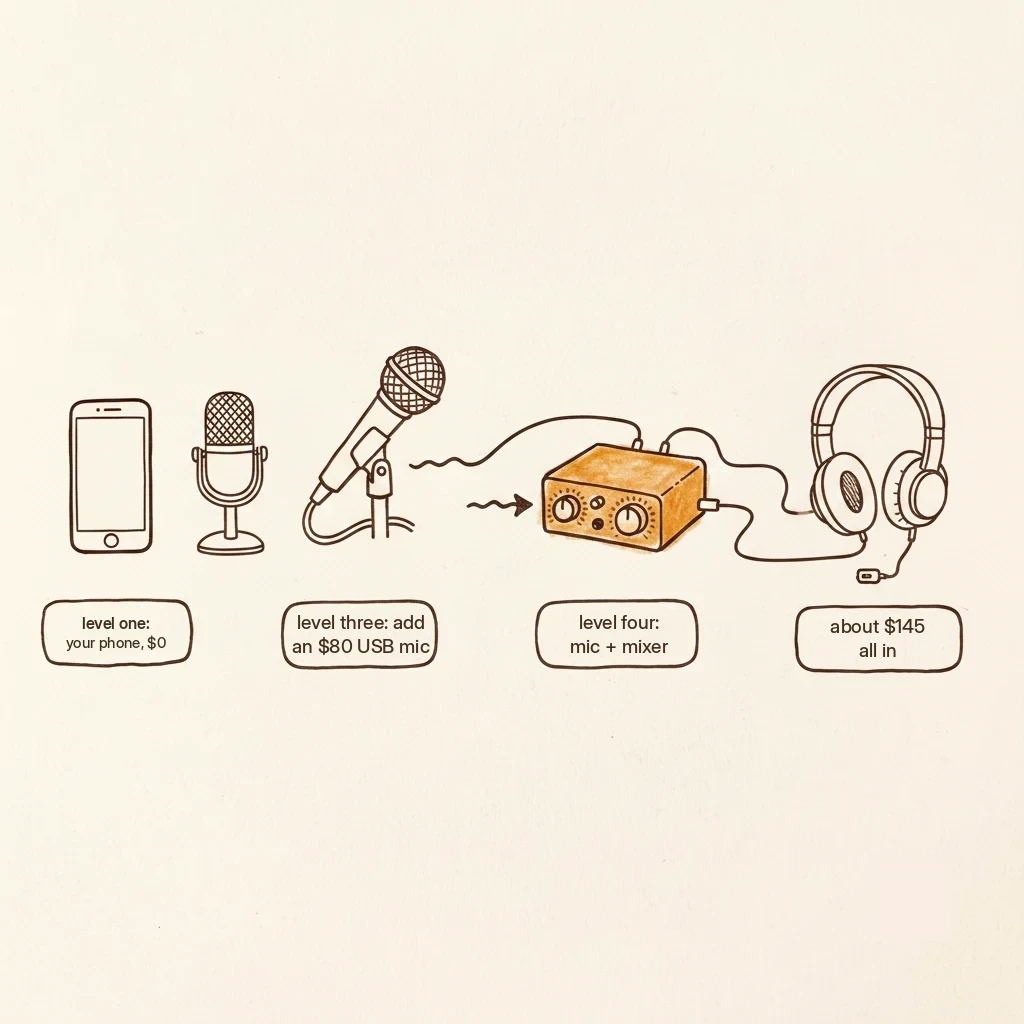
Level one: the phone, tonight, for $0
Voice memo app. One song. Listen back once.
Hold the phone at chest height, a foot or so away, off to one side of your mouth rather than straight in front of it. Sing normally. Don’t fix anything yet.
If you want the music behind you: play the backing track out loud, and yes, the phone will record that too, all mushed together. That’s fine for hearing yourself. When it stops being fine, put earbuds in and use a free app.
Level two: a free app, still $0
An app to record voice is the thing most people are actually searching for, and the free ones are genuinely good.
On an iPhone, GarageBand is free and probably already on the phone. On anything, BandLab is free. Both let you play a backing track into your earbuds while you sing, so the mic records only your voice, cleanly, on its own track.
That’s the whole difference and it’s a big one. The music stays out of the microphone.
Level three: about $80, when you’re ready
If you’re still recording in a month, and the phone starts annoying you, buy one thing: a USB mic that plugs straight into a computer.
Samson Q2u, about $80. A handheld stage-style mic with a USB plug on it. You hold it like a real microphone, and it plugs into the computer with no other box to buy.
Flaws, said plainly: you'll want headphones and a place to put it. And if you never record again, it was $80. More on USB mics here.
Get a tough mic (a dynamic, like the Q2u) rather than a sensitive one (a condenser). The sensitive mic hears your kitchen. The tough mic hears you. In a normal untreated room, that’s the whole ballgame.
If you buy through my links the site earns a little coffee money. Doesn’t change the price, doesn’t change my answer.
Level four, if you get serious
A small mixer (about $65) sitting between you and your headphones, so you hear yourself with a little reverb while you sing. That’s the “more me” fix, and it’s what makes singing into a microphone feel good instead of clinical.
That’s the end of the ladder for a home. Past that you’re buying a room, not gear.
If you're figuring this out, you're probably also wondering:
Gus Harmon
Gus spent three decades running sound wherever somebody needed it: bar bands, weddings, school shows, and twelve years of Sunday mornings. He can't sing a note. He can make sure you're heard. Now he writes so normal people can buy the right thing the first time.