
← a microphone for singing, at home or on stage
Singing Microphone for iPhone
Microphones that plug straight into an iPhone do exist, and the only thing that really matters is the port (older iPhones take Lightning, newer ones USB-C), with clip-on mics around $20 and plug-in vocal mics running $60 to $100.
 Gus Harmon · Updated July 8, 2026 · how I decide
If you buy through my links the site earns a little. It's never why I pick things.
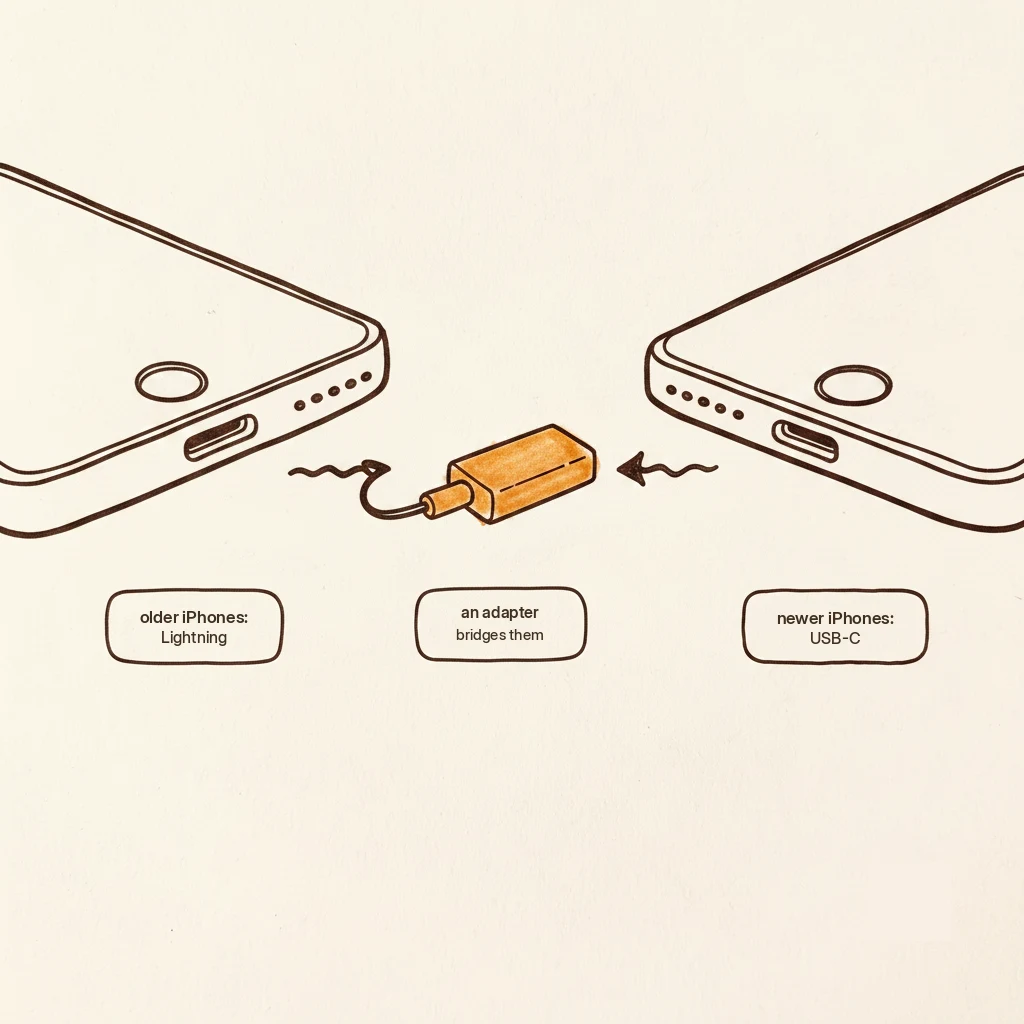
Check the hole before you check the price
Turn your phone over and look at the bottom.
If it’s a flat wide slot, that’s Lightning, and it’s the older iPhones. If it’s a small oval that’s the same on both sides, that’s USB-C, and it’s the newer ones. Some very old iPhones also have a round headphone hole on the bottom edge.
Write down which one you have. That’s step one, and skipping it is how people end up with a microphone in a drawer.
The three kinds you’ll see
The little clip-on mic, about $20 to $30. It clips to your shirt and it’s built for talking, not for singing. Fine for a video of a school concert. It will not flatter a voice.
The plug-in vocal mic, about $60 to $100. This is the one for singing into a phone: a real microphone with the right plug on the end. Rode and Shure both make lines for iPhones, and the models change often, so the rule that holds is simple: match the plug to your phone and buy the current model.
Or the third path: a regular USB microphone plus an adapter. It works, and if you might one day plug it into a computer instead, it’s the more useful $100 you’ll ever spend. That’s the USB page.
If you buy through my links the site earns a little coffee money. Doesn’t change the price, doesn’t change my answer.
The free option is genuinely good
The iPhone’s own microphone is better than you think, and the honest floor here is that it plus decent technique beats a $20 gadget every single time.
Hold the phone a foot away at chest height, off to one side of your mouth. Put earbuds in and play your backing track into your ears rather than out loud. Record. The whole free method is on this page.
Do that first. If it stops being enough, come back and spend the $80.
Headset mics and iPhones
People search for this too, usually because they want their hands free while they sing or dance.
Same rule, no exceptions: the plug decides. A headset mic with a Lightning plug on a USB-C phone is a paperweight. Get the adapter or get the matching version. More on headset mics for singing here.
If you're figuring this out, you're probably also wondering:
Gus Harmon
Gus spent three decades running sound wherever somebody needed it: bar bands, weddings, school shows, and twelve years of Sunday mornings. He can't sing a note. He can make sure you're heard. Now he writes so normal people can buy the right thing the first time.