
← your kid's instrument: costs, rentals, sticking with it
Trumpet Music for Beginners (Real Sheet Music for Five Notes)
Beginner trumpet music lives on about five notes (C, D, E, F, G), the free libraries are full of real tunes in that range, and the short valve chart hides the truth that trumpet fingering is half air.
 Gus Harmon · Updated July 8, 2026 · how I decide
If you buy through my links the site earns a little. It's never why I pick things.
Beginner trumpet music lives on about five notes: C, D, E, F, and G in the staff. The free libraries (8notes' beginner tier, MuseScore, public-domain sites) have dozens of real tunes inside that range. The valve chart is short too: three valves, seven combinations. Here's the catch nobody prints: the same fingering plays different notes as the lips firm up, which is why trumpet "fingering" is really half air.
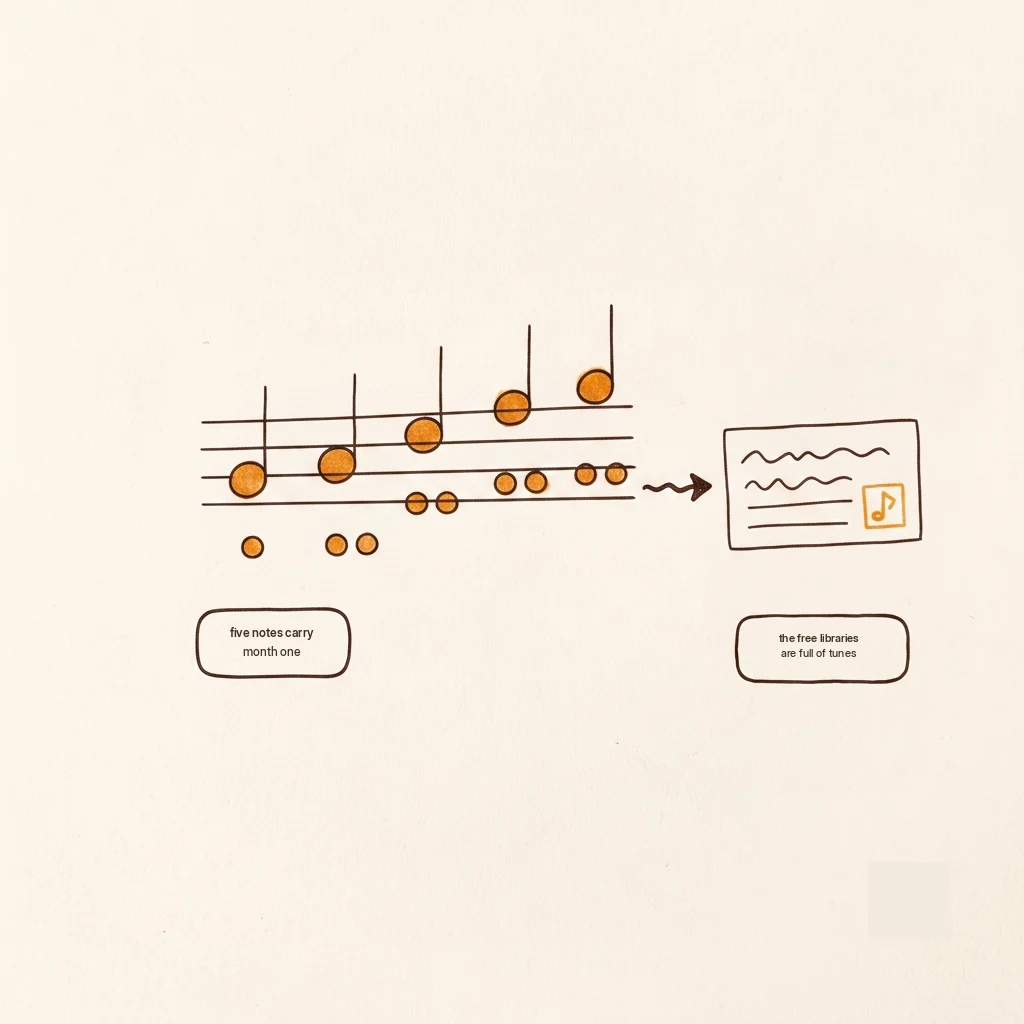
Five notes is a whole repertoire
Here’s the thing that surprises new trumpet parents: your kid can play real music on almost nothing. The first months live on five notes, C, D, E, F, and G, and that’s not a limitation to apologize for. Those five carry the entire early method book AND a surprising stack of real tunes in the free libraries.
So when the method book starts feeling thin around week three and the kid wants MORE, you don’t need to buy anything. There’s a shelf of five-note songs waiting, free.
Where the free music is
- 8notes has a beginner trumpet tier, dozens of graded pieces, sorted so you don’t pick something too hard. This is your default.
- MuseScore has tons more, uploaded by users, so sort by rating to skip the junk.
- Capotasto and MakingMusicFun have public-domain and kid-friendly tunes.
Bookmark the 8notes beginner shelf and you’re set for months.
The valve chart, demystified
The valve chart looks technical and isn’t. Three valves give you exactly seven combinations: open (no valves), and then the six ways to press one, two, or three of them. That’s the whole map. A kid memorizes it in an afternoon.
Now the part that confuses everyone, kid and parent both. The same valve combination plays several different notes. How? Your lips. Firm them up and speed the air, and the same fingering jumps to a higher note. Loosen and slow down for a lower one. So on trumpet, the valves pick a family of notes and your lips pick which one. Fingering is half air. That's why practice is as much about the face as the fingers.
That’s also why long tones (holding single steady notes) stay the warmup all year. No amount of fancy fingering fixes a fuzzy, unfocused buzz. The buzz comes first, always.
One heads-up for play-along parents
If you sit at the piano to play along, you’ll clash, and it’s not a tuning problem. The trumpet is a “B-flat” instrument: the note it reads as C actually sounds as the piano’s B-flat. So its written music is shifted to match. To play together, use trumpet-arranged music (the libraries already handle this) or just know about the shift going in.
A word on the rough patches
Two things will make the tone suddenly get worse, and neither is the music’s fault. Braces, when they arrive, can crash a trumpet kid’s tone for a while as the lips relearn against the metal. And a tired or unfocused buzz makes everything fuzzy. Keep long tones as the warmup, be patient through the brace months, and the tone comes back.
Skip this unless you like the nerdy part. Seven valve combinations producing dozens of notes isn't a trick, it's the harmonic series. A tube of a given length naturally rings at a whole ladder of pitches, not just one, and your lips choose which rung by how fast they buzz. The valves just add length to the tube to reach the notes that fall between the rungs. So a bugle, with no valves at all, still plays several notes (think of every cavalry call) purely on lip changes. The trumpet adds three valves to fill in the gaps.
Bookmark the 8notes beginner shelf and let the kid pick the NEXT tune themselves. Choice is fuel at month one. And keep the long tones first every session. The tune is the dessert, not the meal.
Questions people actually ask
What are the basic notes on a trumpet?
The first five are C, D, E, F, and G in the staff. Those cover the early method book and plenty of real beginner tunes. Because the same valve combination can sound several notes depending on your lips, learning these five is as much about a steady buzz as it is about which valves you press.
Where can I find free beginner trumpet sheet music?
8notes has a graded beginner trumpet tier that’s the easiest place to start. MuseScore has far more (sort by rating), and Capotasto and MakingMusicFun offer public-domain and kid-friendly pieces. All free, all full of tunes that fit inside the first five notes.
How does the trumpet finger chart work?
Three valves, seven combinations: open, plus the six ways to press one, two, or three valves. That’s the whole chart, and it’s quick to memorize. The twist is that each combination plays several notes depending on how your lips buzz, so the chart is only half the story. Air and lips do the rest.
Working through month one, you're probably also wondering:
Gus Harmon
Gus spent three decades running sound wherever somebody needed it: bar bands, weddings, school shows, and twelve years of Sunday mornings. He can't sing a note. He can make sure you're heard. Now he writes so normal people can buy the right thing the first time.