← your kid's instrument: costs, rentals, sticking with it
Trumpet vs Trombone: Which One for Your Kid?
Neither is easier overall: the trombone gives up first sounds sooner (bigger mouthpiece), the trumpet is easier to hold and to advance on (valves beat a slide). Size, braces timing, and the kid's own ear break the tie.
 Gus Harmon · Updated July 11, 2026 · how I decide
If you buy through my links the site earns a little. It's never why I pick things.
The two halves of “easier”
Ask which brass instrument is easier and you’ll get confident answers in both directions. Both sides are right. They’re just talking about different months.
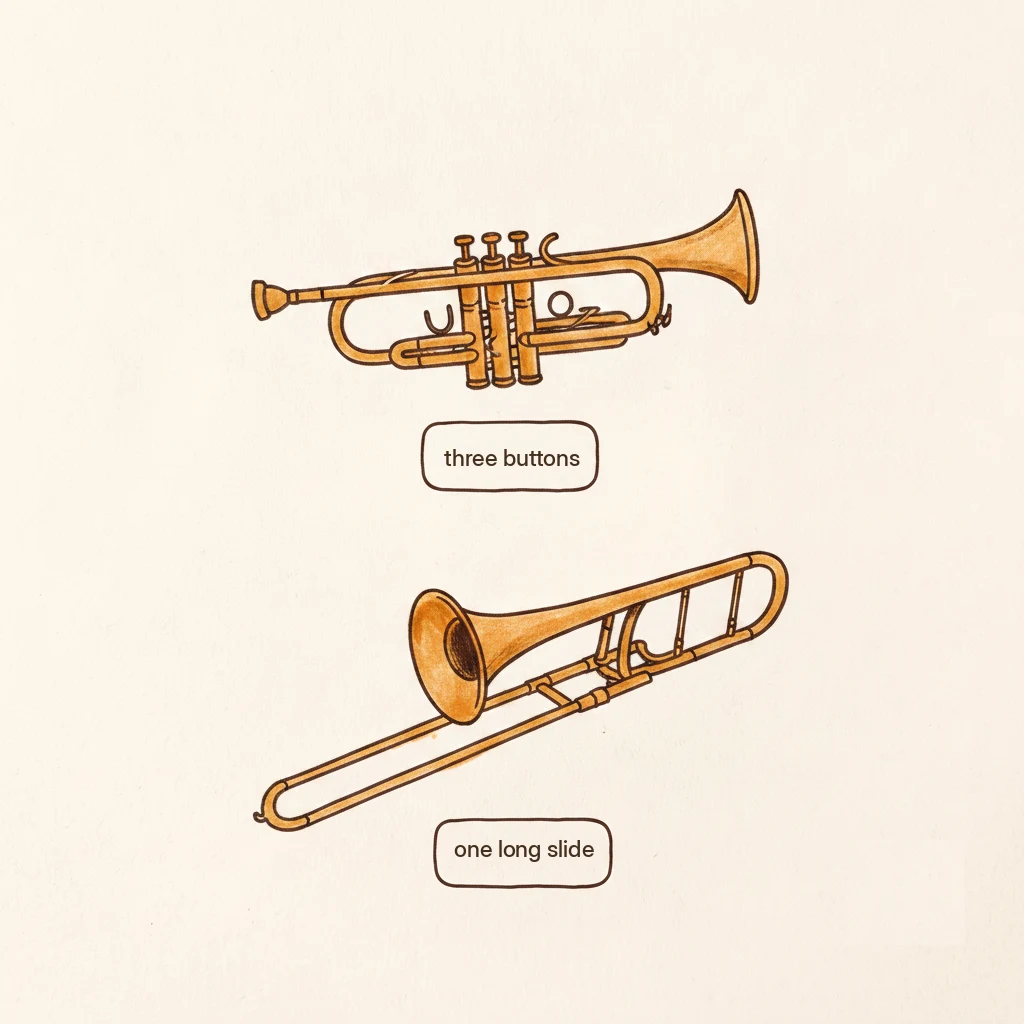
The plastic-instrument maker pBone, which lives and dies on beginners, splits it cleanly: the trombone is easier to get your first sounds on, because the larger mouthpiece makes the buzz easier, while the trumpet is easier for progression, because valves are simpler to operate than a slide.
So: easier week one, trombone. Easier month six, trumpet. Pick which end of that you’d rather struggle with, because every brass player struggles with one of them.
The differences that actually decide it
Size and carry. Yamaha’s own comparison says it gently: the trombone is larger and somewhat more cumbersome for beginners. Watch a small sixth grader haul a trombone case to the bus and you’ll say it less gently. The trumpet is the friend of small kids and long walks.
Arm reach. The trombone’s far slide positions genuinely require arm length. Short-armed beginners can’t reach the end of the slide, which is why compact models with a valve assist exist. If the kid is small for their age, the trumpet removes the problem entirely, or ask the band director about a compact trombone.
Braces. Braces complicate all brass playing for a season, and they hit the trumpet’s small mouthpiece hardest, since it concentrates pressure on a smaller patch of lip. If braces are six months out, that’s worth a sentence with the band director before choosing.
Precision vs ear. Valves are yes-or-no: press the right combination and the note is in tune-ish. The slide has no clicks, no frets, no markings that matter; the player’s EAR is the tuning system. That builds phenomenal musicianship over time. It also means the trombone’s learning curve hides inside the family’s listening curve.
The part that outranks all of that
Here’s what a big thread full of band directors kept coming back to when they argued about how kids get matched to instruments: a kid should play what they’re most interested in, because that’s the instrument they’ll be most successful on.
The instrument fitting at band signup is useful for narrowing. It should not be the decider. And one more thing worth knowing about that table: school bands always need low brass, so a “you’d be a great trombone player!” sometimes translates to “I have nine trumpets already.” That’s not a scam, it’s a band director doing their job. It’s just not the same thing as your kid’s answer.
If you're figuring this out, you're probably also wondering:
Gus Harmon
Gus spent three decades running sound wherever somebody needed it: bar bands, weddings, school shows, and twelve years of Sunday mornings. He can't sing a note. He can make sure you're heard. Now he writes so normal people can buy the right thing the first time.