
← how singers and sound actually work
What Singer Do I Sound Like? (Find Out for Free, Honestly)
Which singer you sound like comes down to your range and your timbre, and you can find out for free by recording one song on your phone and checking a free range test.
 Gus Harmon · Updated July 8, 2026 · how I decide
If you buy through my links the site earns a little. It's never why I pick things.
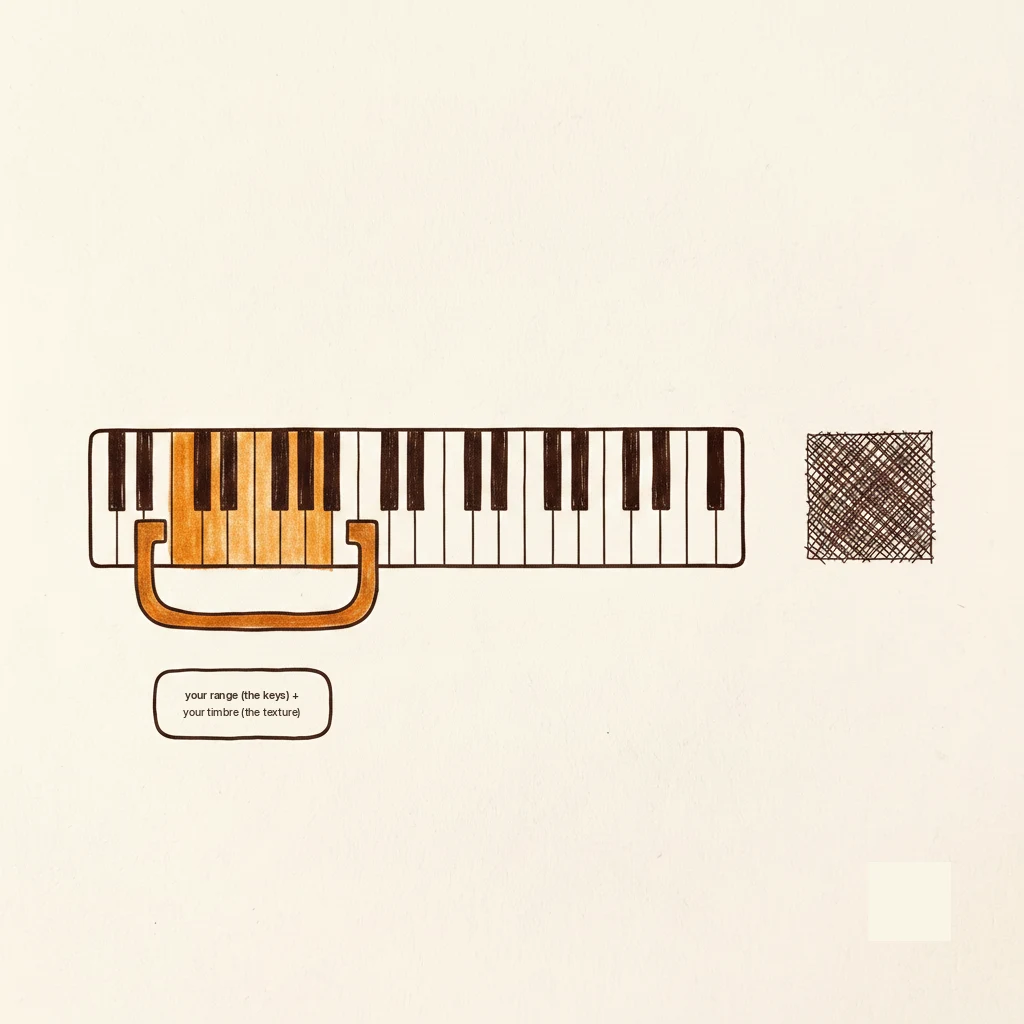
Two things decide which singer you sound like: your range (how high and low you sing, which sorts you into the same bins as famous voices) and your timbre (the texture that’s yours alone). The free way to find out: record yourself singing one song on your phone, listen back once without flinching, and check your range with a free online range test. The apps that “match” you to a celebrity are measuring exactly those two things, with confetti on top.
I’ll tell you something up front so you know I’m playing straight: I can’t sing a note. Thirty-five years of making other people sound like themselves, and not one of them was me. So I’ve got no dog in the “who do you sound like” race, which makes me a pretty honest guide to it.
Here’s the thing the celebrity-match apps don’t explain while they’re throwing confetti at you. Your question actually has two parts, and once you separate them it gets simple and free.
Part one: your range
Range is just how high and how low you can sing. It’s measurable, it takes about five minutes, and it’s the thing that sorts you into the same bin as famous voices, bass up to soprano. A free online range test, or even a piano app where you match notes, tells you this today for zero dollars.
But here’s the trust line: sharing a range with a famous singer means you can reach the same notes, not that you make the same sound. Those are completely different things. And chasing someone else’s sound, trying to force your voice to be theirs, is exactly how hobby singers strain and hurt themselves. Find your range. Don’t try to move into somebody else’s.
Part two: your timbre
Timbre is the texture, the grain, the thing that makes your voice recognizably yours on the phone even when you’re just saying hello. Two people can have the identical range and sound nothing alike, and that difference is timbre. You can’t test this with a number. You find it by listening back to a recording of yourself.
Which brings us to the free method, and it’s the same one I give everybody: record one song you love on your phone’s voice memo app, then listen back one time, all the way through, without cringing away from it.
Your recorded voice sounds wrong to you, thinner and higher than the voice in your head, and everybody hates their first playback. Here’s why: when you talk, you hear yourself two ways at once, through the air AND through the bones of your own skull, and the bone path adds a low, warm richness only you get to hear. The recording only captures the air part, the part everyone else has always heard. So the “wrong” voice on the phone isn’t wrong. It’s the real you, the one the whole world hears, and the singer you actually sound like is the one on that recording, not the one in your head.
One trap, and it’s not about money
There’s no gear to buy here, so the only trap is a mental one: don’t let a quiz result become a cage. “I’m an alto, so I can’t sing that song” is the kind of thing a confetti app plants in your head, and it’s not true. A range is a starting point, not a fence. Use it to know yourself, not to shrink.
One voice memo, one song you love, one honest listen-back, then a free range test. Total cost zero, and you’ll know more about your own voice than any celebrity-match quiz will ever tell you.
If you’re figuring this out, you’re probably also wondering:
Gus Harmon
Gus spent three decades running sound wherever somebody needed it: bar bands, weddings, school shows, and twelve years of Sunday mornings. He can't sing a note. He can make sure you're heard. Now he writes so normal people can buy the right thing the first time.