← your kid's instrument: costs, rentals, sticking with it
Why Are Saxophones So Expensive?
A saxophone is hundreds of hand-fitted moving parts that must seal air-tight, which is why student horns start near $1,000, and why renting first and buying used is the smart play.
 Gus Harmon · Updated July 8, 2026 · how I decide
If you buy through my links the site earns a little. It's never why I pick things.
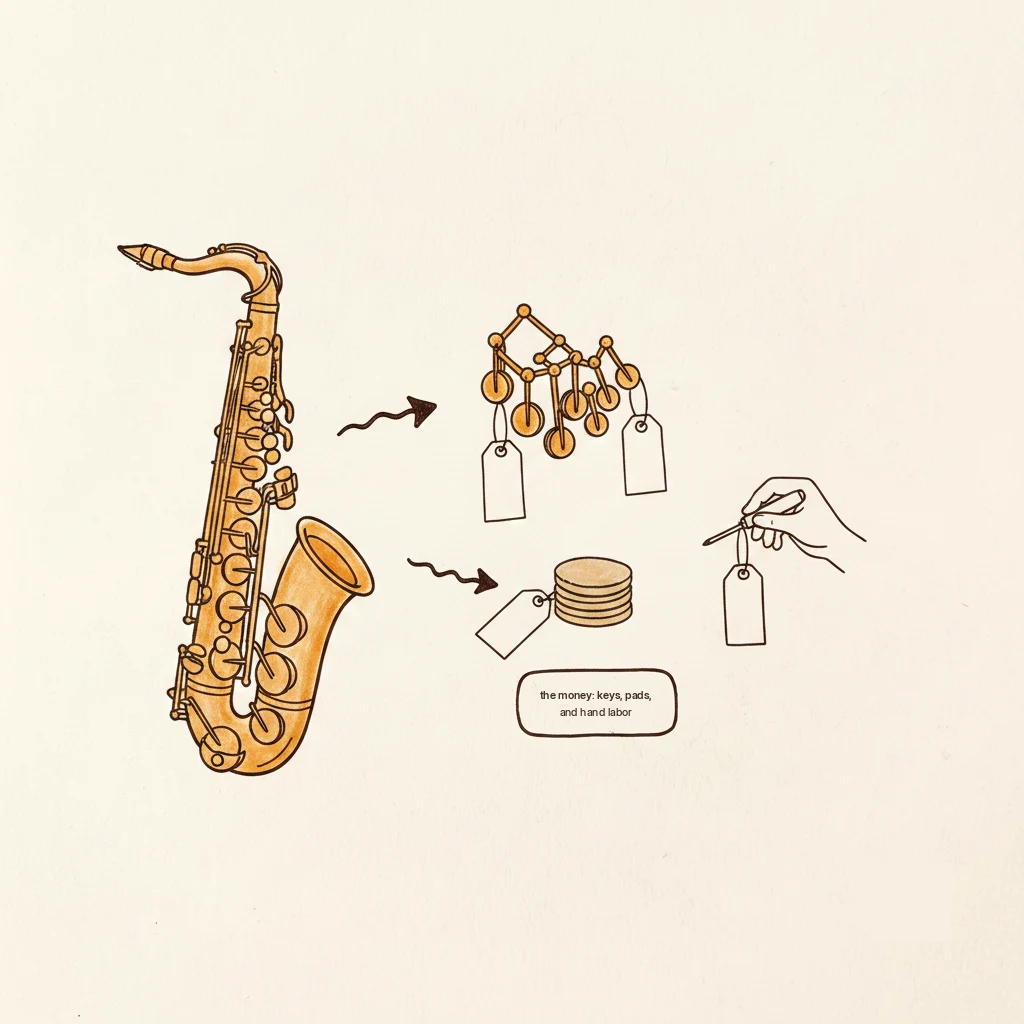
A saxophone is hundreds of hand-fitted moving parts (rods, posts, and pads that must seal air-tight), so even student horns start around $1,000 new and pro horns pass $5,000. The money is in the keywork and the labor, not the brass. That’s why the smart moves are renting first, then buying a used pro horn.
You got the quote, or you saw the price tag, and something in your chest tightened. A grand for a beginner instrument? Let me tell you exactly where that money goes, because once you see it, two smart moves fall right out of the answer.
Where the money actually is
Pick up a saxophone and look at the top of it. That forest of little levers, rods, springs, and pads is the keywork, and it’s most of what you’re paying for.
A sax has hundreds of moving parts, and they don’t just get bolted on, they get hand-fitted and adjusted so that every pad closes over its hole and seals perfectly air-tight. One tiny leak and the low notes stop speaking. That fitting is skilled hand labor, plus the hours of quality checking to make sure it all works. The brass tube itself is the cheap part. The machine of keys riding on top is the expensive part.
So a saxophone isn’t overpriced brass. It’s a precision mechanism that happens to be wrapped around a horn.
The other half of the answer: they last forever
A good saxophone is priced like it’ll outlive you, because it will. Players say it plainly: “Yamaha horns last forever.” A well-kept horn plays for thirty years or more, and that longevity is baked into the price. It’s also the key that unlocks the smart way to buy: because these things last, a used pro horn beats a new cheap one at the same money. The depreciation already happened. The quality didn’t go anywhere.
The move that saves you the most
Here’s the buying path that comes straight out of understanding the cost:
- Rent the first year. About $30 to $50 a month while you find out if the kid sticks. No commitment, no sticker shock.
- When they stick, skip “intermediate” entirely. The used market is your friend. A used Yamaha 62 runs about $1,500 to $1,600, and it’s named again and again by players as the horn you buy once and keep through college auditions.
- Spend on the mouthpiece, not the badge. A 40-year player put the whole truth here: past the well-made student tier, the instrument matters less than the player, and the mouthpiece shapes the sound more than horn spend does. You’re mostly buying consistency and resale value, not tone.
And avoid the trap that runs both directions: the $300 Facebook-marketplace horn that needs a $600 overhaul to seal again, and the shiny “intermediate” markup that a student horn plus a better mouthpiece quietly beats.
If you bought the cheap one already, no lecture
One player wrote, five years later, about the $250 horn he bought in seventh grade: “Yes, I know that was stupid, but seventh-grade me didn’t even know if he was serious about band.” Here’s the thing, that wasn’t stupid. That was a reasonable bet on an unknown. You don’t drop a grand on a maybe. If that’s where you are, rent-or-repair the current one enough to get through the deciding, then buy used and right when you know.
A used Yamaha 62 (alto). About $1,500 to $1,600 on the used market. Five separate players in one thread named this exact horn as the one that ends the upgrade cycle. Buy it once, play it for years.
Flaws, said plainly: buying used means checking the pads and getting it looked at, ideally by a tech. Budget a little for a setup, and it’s still the best value in the room.
And the fun one: did the Vatican really ban the saxophone?
Sort of. In 1903 the Vatican put out an instruction on sacred music that banned the piano from church by name, along with “noisy or frivolous instruments,” and kept bands out of the building entirely. The saxophone never actually gets named in it, but everybody understood which side of that line it lived on. So the ban-by-name is folklore, and the exile was real. It fits either way, the sax has always been a little too cool for the room.
Questions people actually ask
How much should a good saxophone cost?
A solid student horn is around $1,000 new. A used pro horn like a Yamaha 62 runs about $1,500 to $1,600 and is the better buy for a committed player. Under about $500 new, you’re usually looking at a horn that costs more to keep sealing than it’s worth.
What is the lifespan of a saxophone?
Decades. A well-made, well-maintained horn plays for thirty years and beyond, which is exactly why they’re priced the way they are and why used pro horns are such good value.
Are expensive saxophones worth it?
Past the well-made student tier, you’re buying consistency and resale, not a better tone by itself. A great player on a good student horn with the right mouthpiece beats a beginner on a $5,000 horn every time.
A saxophone makes sound by turning your air into a vibrating column inside the tube, and the length of that column decides the pitch: open a hole partway down and you shorten the column and raise the note. For that to work, every hole you’re not using has to be sealed completely shut by its pad. A single pad that doesn’t seal, even slightly, is a leak in the column, and the notes below it go weak or won’t sound at all. That’s why one bad pad can kill the low end of an entire horn, and why “just needs pads” on a cheap used sax can mean a $600 overhaul, they have to re-seal the whole air column, pad by pad, by hand. The sealing is the instrument.
Rent the first year. When they stick, skip “intermediate” entirely: a used Yamaha 62 and a good mouthpiece, and that’s the last horn you buy until college auditions come knocking.
If you buy through my links the site earns a little coffee money. Doesn’t change the price, doesn’t change my answer.
If you’re figuring this out, you’re probably also wondering:
Gus Harmon
Gus spent three decades running sound wherever somebody needed it: bar bands, weddings, school shows, and twelve years of Sunday mornings. He can't sing a note. He can make sure you're heard. Now he writes so normal people can buy the right thing the first time.