
← how singers and sound actually work
Why Do Singers Wear Earpieces? (What They're Hearing)
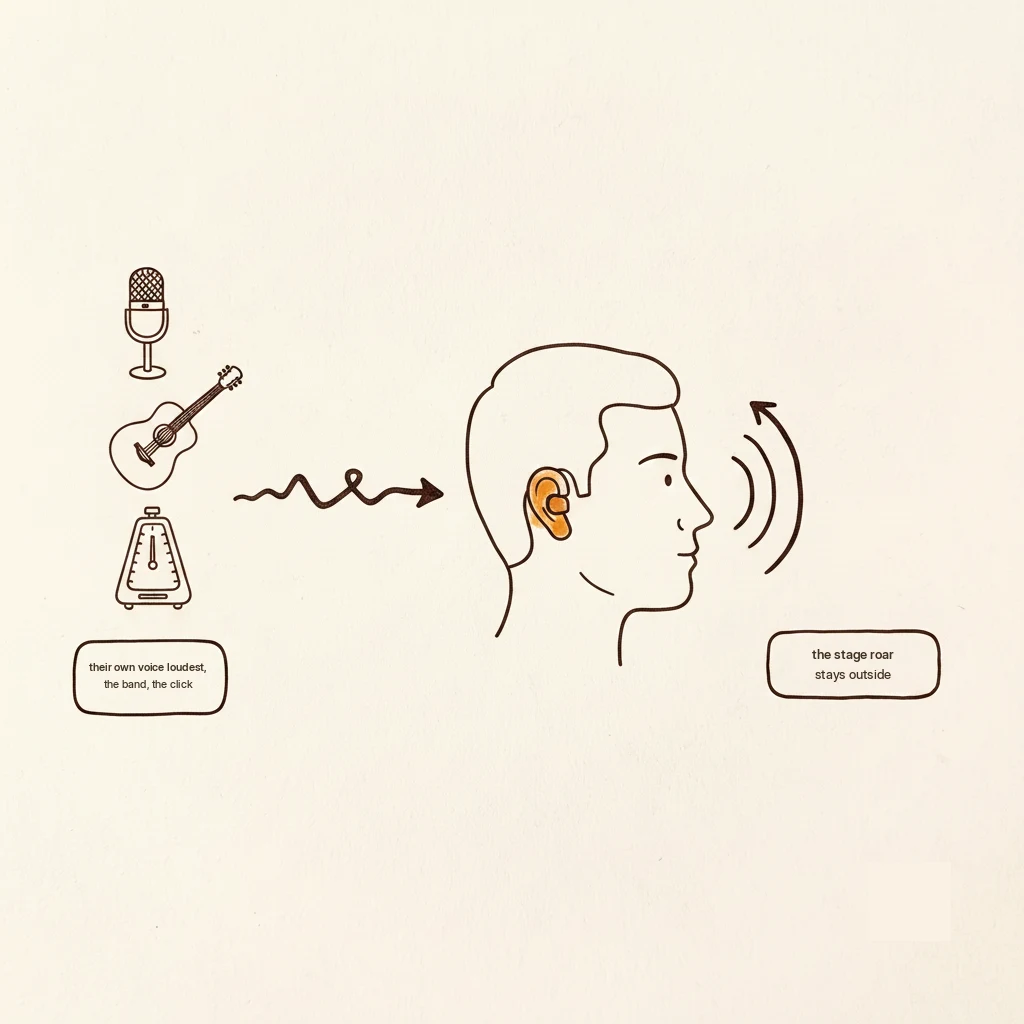
Those earpieces are in-ear monitors playing each singer a private mix of the band with their own voice loudest, because a stage is too loud to hear yourself.
 Gus Harmon · Updated July 8, 2026 · how I decide
If you buy through my links the site earns a little. It's never why I pick things.
Those earpieces are in-ear monitors: private earphones playing each singer their own personal mix of the band, with their own voice loudest. They exist because a stage is too loud to hear yourself, and a singer who can’t hear themselves sings harder until their voice blows out. When a singer pulls one out mid-song, they’re trading their custom mix for the raw sound of the crowd.
You noticed it mid-concert and now you want to know what that little earpiece is. Good news, this is my actual trade. I’ve built these mixes for thirty-five years, so let me just tell you what’s going on in there.
Here’s the thing. A stage is deafeningly loud, all the instruments blasting from every direction, and in that wash a singer literally cannot hear their own voice. So what do people do when they can’t hear themselves? They push harder. They sing louder and louder trying to hear over the noise, and by song six the voice is strained or blown out. The earpiece fixes that. It’s the singer’s own private version of the band, piped straight into their ear, with their voice on top so they always know exactly where their pitch is.
What’s actually in a big singer’s earpiece is a custom recipe, and every performer’s is different. Usually it’s their own voice loud and clear, a little piano or guitar to hold pitch, a click track ticking the tempo so the band stays locked, and often a whisper of a crowd microphone mixed in so the stage doesn’t feel like singing in a closet. And sometimes the crew’s voice: “pyro in three, two, one.” The singer taps their ear, I nudge a fader, and that’s the whole conversation. That tap means “more me,” and it’s the most common request in my line of work.
Why they pull one out
That’s the moment everybody asks about. When a singer yanks an earpiece out mid-song, they’re giving up their clean private mix to hear the actual room, the crowd roaring back the words. It’s a feeling thing, a connection thing. But it has a cost: now they’re back in that too-loud wash, which is why you’ll often see them cup the other ear right after, straining to find their pitch again the old-fashioned way.
The earpieces do a few other quiet jobs too. They actually make the stage quieter and safer for the ears than the old wedge speakers pointed up from the floor. And because the mix lives in their ears, it follows them anywhere they walk.
The same problem, in your bedroom
Here’s the part that’s useful to you, not just interesting. If you sing at home, over a track, and you notice you keep going sharp and pushing too loud, you have the exact same problem the pros solved: you can’t hear yourself. The fix is the same idea for zero dollars. Put a wired earbud in one ear, or use your phone’s Live Listen with earbuds, so you can hear your own voice clearly. That’s the whole trick the earpiece is doing. You don’t need the four-figure custom rig, and anyone selling you “the same sound for twenty-nine dollars” is selling earbuds, not the mix.
If you sing at home and keep going sharp and loud, you’ve got the earpiece problem: you can’t hear you. One earbud in one ear, your own voice in it. That’s the whole trick, and it costs nothing.
If you’re figuring this out, you’re probably also wondering:
Gus Harmon
Gus spent three decades running sound wherever somebody needed it: bar bands, weddings, school shows, and twelve years of Sunday mornings. He can't sing a note. He can make sure you're heard. Now he writes so normal people can buy the right thing the first time.