
← a microphone for singing, at home or on stage
Dynamic vs Condenser Microphones, in Normal Words
The dynamic is the tough mic that mostly hears you and forgives a normal room; the condenser is the sensitive mic that hears your whole house. Singing at home: dynamic, about $30 to $109. Quiet treated room: condenser.
 Gus Harmon · Updated July 11, 2026 · how I decide
If you buy through my links the site earns a little. It's never why I pick things.
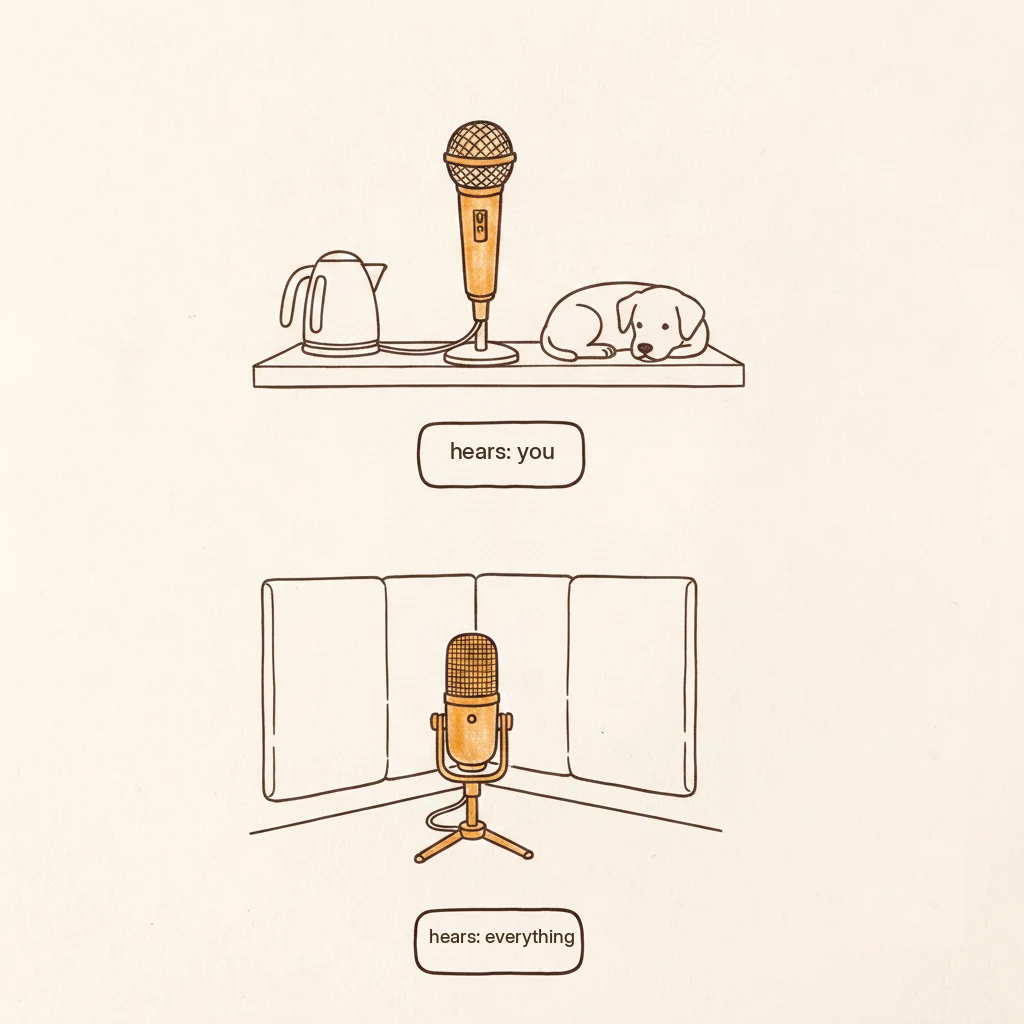
The one rule that decides this
Every page about this comparison starts with how the two mics work inside. I’ll get to that, briefly, but the insides aren’t what decides your purchase. Your room is.
Here’s the rule: the sensitive mic hears your kitchen; the tough mic hears you.
A condenser picks up detail beautifully, and it does not care whether that detail is your voice or the dishwasher, the ceiling fan, the traffic, the echo of your bare walls. A dynamic is less sensitive on purpose. Up close it hears you loud and clear, and the rest of the house falls away.
That’s why the same condenser that sounds gorgeous in a padded studio sounds thin and roomy and disappointing on a kitchen table. Nothing is broken. The mic is doing its job. Its job just includes your house.
What the words actually mean
Two sentences of insides, as promised. A dynamic mic is built like a tiny speaker in reverse, simple and rugged, and needs no power. A condenser uses a delicate charged plate that reacts faster, hears more detail, and needs power to work (from the USB connection, or from the little box XLR mics plug into).
Everything downstream follows from that. The dynamic is the stage mic: it takes drops, spit, bar fights and decades. The Shure SM58 (about $109) is the standard because it’s been doing exactly this since 1966. The condenser is the studio mic: in a controlled room, it captures the detail that makes a recording sound expensive. The Audio-Technica AT2020 (about $119) is the classic first one.
| Dynamic | Condenser | |
|---|---|---|
| Hears | Mostly you, up close | Everything, in detail |
| Happy in | Any normal room, any stage | Quiet, treated rooms |
| Toughness | Legendary | Handle with care |
| Power | Doesn't need it | Needs it |
| First-mic price | About $30 to $109 | About $99 to $159 |
So which one, honestly
Answer one question: where will the mic live?
A normal room, for singing or practicing. Dynamic. A Behringer XM8500 (about $30) is the honest floor, and a used SM58 is the forever answer. Your bedroom’s echo and the neighbor’s mower stay out of your way.
A quiet corner you’re willing to treat. Condenser. And “treat” can be humble: a closet full of hanging clothes is the time-honored budget recording booth. If you’re building toward real recording, I wrote that path up in the condenser guide.
Not sure yet. Then you may not need to buy anything this week. Voice teachers routinely tell beginners to start with the phone’s voice memo app and learn what their voice actually sounds like first. Free, and it makes the eventual purchase smarter.
The wrinkle the categories won’t tell you
Plenty of professional vocals get recorded on dynamics. Radio hosts have lived on them for decades. The categories are guidance, not law, and an SM58 in a bad room beats a condenser in the same bad room every single time.
If you buy through my links the site earns a little coffee money. Doesn’t change the price, doesn’t change my answer.
If you're figuring this out, you're probably also wondering:
Gus Harmon
Gus spent three decades running sound wherever somebody needed it: bar bands, weddings, school shows, and twelve years of Sunday mornings. He can't sing a note. He can make sure you're heard. Now he writes so normal people can buy the right thing the first time.