
← a microphone for singing, at home or on stage
USB vs XLR Microphones: Which Do You Actually Need?
A USB mic plugs straight into the computer, done. An XLR mic needs an extra box (an audio interface, about $170) before it makes a sound. Starting out: USB, and the $80 Samson Q2u is both at once.
 Gus Harmon · Updated July 11, 2026 · how I decide
If you buy through my links the site earns a little. It's never why I pick things.
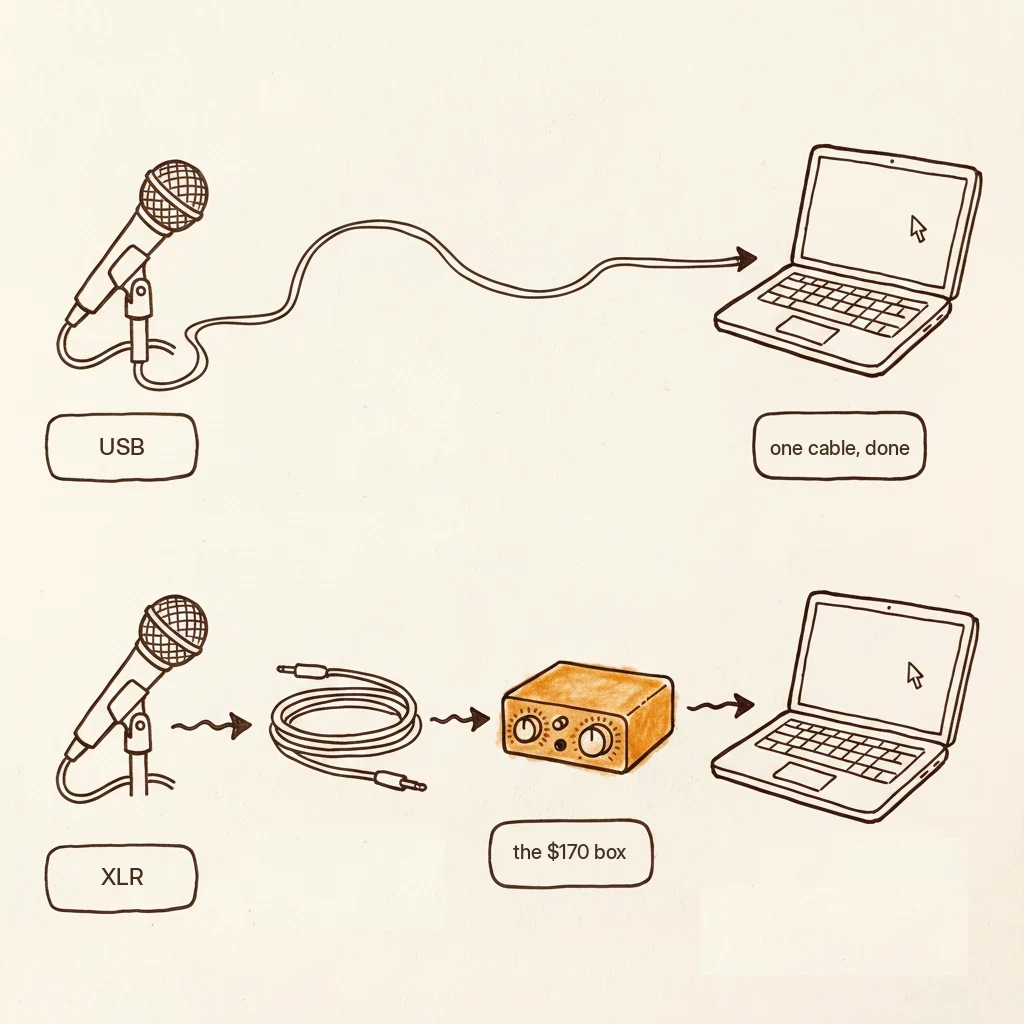
The receipt nobody shows you
Here’s the trap this whole comparison exists to prevent. Somebody falls in love with a proper studio mic, a beautiful $150 XLR condenser. It arrives. They plug its fat three-pin cable into… nothing, because nothing on a computer accepts it. The mic sits silent until another $170 box shows up.
That’s the entire difference between these two words. They’re not quality tiers. They’re plumbing.
USB means the converter that turns your voice into computer language is built INTO the mic. One cable to the laptop, working in five minutes.
XLR means the mic speaks raw analog and needs an audio interface, the small box that powers it and translates for the computer, the Focusrite Scarlett Solo (about $170) being the standard first one. The XLR mic’s price tag is half the receipt. Say the whole number before you fall in love: that $150 mic costs $320.
So why does XLR exist at all?
Because the plumbing being separate is a superpower, later.
With XLR, every piece upgrades independently. Better mic someday, keep the interface. Second mic for an interview, plug it into the same box. The XLR world is LEGO. The USB world is a sealed appliance: usually a very good appliance, but the day you want two mics recording at once, or a fancier converter, you’re starting over.
That’s the real dividing line, and it has nothing to do with seriousness:
| You | Answer |
|---|---|
| Practicing singing, first mic ever | USB |
| Solo podcast, voiceover from a bedroom | USB |
| Recording two people at once | XLR + interface |
| Building a little studio that grows for years | XLR + interface |
| Church or stage work | XLR (that world runs on it already) |
The mic that refuses to choose
One more thing the spec pages bury: a few mics have BOTH plugs, and one of them happens to be the answer I give most often anyway.
The Samson Q2u (about $80 at retailers) is a handheld dynamic mic with a USB port AND an XLR port on the bottom. It plugs into your laptop today, and the day you outgrow it, it plugs into an interface like any studio mic. It also solves the problem nobody admits: a desk-blob mic doesn’t FEEL like a microphone, and feeling like a singer is half of practicing. The Q2u feels like a mic because it is one.
If you buy through my links the site earns a little coffee money. Doesn’t change the price, doesn’t change my answer.
If you're figuring this out, you're probably also wondering:
Gus Harmon
Gus spent three decades running sound wherever somebody needed it: bar bands, weddings, school shows, and twelve years of Sunday mornings. He can't sing a note. He can make sure you're heard. Now he writes so normal people can buy the right thing the first time.