
← for the musical people in your life
Gifts for Piano Players (the Bench, the Tuning, the Lamp)
Pianists are easy to gift because their best presents are things they never buy themselves: a real adjustable bench, a tuning certificate for acoustic owners (about $150 to $200), and a proper piano lamp.
 Gus Harmon · Updated July 8, 2026 · how I decide
If you buy through my links the site earns a little. It's never why I pick things.
Piano players are the easiest musicians to shop for, because their best gifts are things nobody buys themselves: a real adjustable bench (most pianists sit on a wobbly flat one for years), a tuning gift certificate for acoustic owners (about $150 to $200, due yearly, always postponed), a proper piano lamp, and printed music of a song they love. Skip the composer mugs and the scarf covered in piano keys. Even the gift guides admit the themed stuff goes unused.
One question sorts the whole list
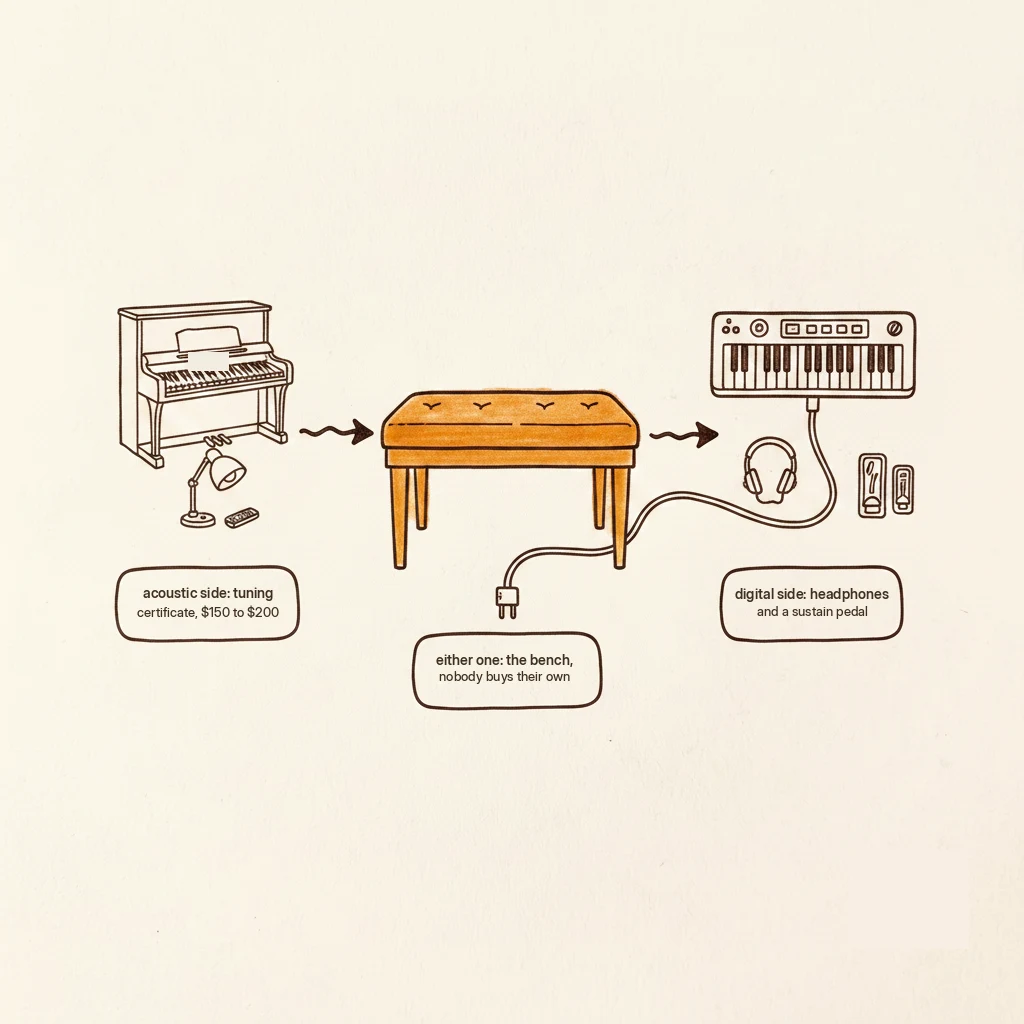
Here’s the thing that makes gifting a pianist simple: check whether their piano has a cord. That one look splits the entire gift list.
A cord means it’s a digital piano, and those gifts run toward headphones and a pedal. No cord means it’s an acoustic, and those gifts run toward tuning and care. And one gift spans both, which we’ll get to, because it’s always the answer.
Always the bench
In thirty years around music, I never once met a pianist with a good bench who bought it themselves. They sit on whatever wobbly, flat, too-tall or too-short thing came with the piano, for YEARS, quietly aching. A real adjustable, padded bench ($60 to $120) fixes their posture and their comfort, fits a digital or an acoustic equally, and lands as an upgrade they didn't know they were allowed to want. When in doubt, this is the gift.
For the acoustic owner (no cord)
The great sleeper here is a tuning gift certificate. An acoustic piano needs tuning about once a year, it costs $150 to $200, and the owner always puts it off. Handing them “your piano’s tuning is covered” is one of the best gifts in music at that price, thoughtful and genuinely needed.
The other is a real piano lamp ($40 to $100). Most people crane at the overhead light to read their music. A proper lamp over the keys says you’ve actually watched them play and thought about it.
For the digital owner (has a cord)
Two easy wins. A good pair of headphones ($25 to $60), which lets them practice silently and gives the rest of the house some peace. And a sustain-pedal upgrade (about $25), because the flimsy little pedal that ships with most keyboards is genuinely bad, and a real one feels like a different instrument. If their keyboard is on a wobbly X-frame stand, a solid stand (about $60) is another quiet upgrade.
For a beginner (any age)
If they’re just starting, the thoughtful deep-cut is a page-keyed hits songbook that matches THEIR method book. Peek at the spine of the book on their stand (an Alfred’s or a Faber) and buy the companion book of real songs at that level (about $15). It’s the “I noticed what you’re actually working on” gift.
And the smallest, sweetest object in the whole wing: printed sheet music of one specific song they love, single sheets run about $6. For a pianist, that’s a lovely little gift with real thought in it.
The one thing not to surprise them with: the piano or keyboard itself. A piano is furniture AND identity, and choosing weighted keys, brand, and size is a real decision. Make that a shopping trip together or a voucher, never a wrapped surprise.
Skip this unless you like the nerdy part. Why does an acoustic piano drift out of tune even if nobody plays it? Because its 200-plus strings are under enormous, constant tension, and the wooden frame they're stretched across swells and shrinks with the seasons. As winter dries the wood and summer dampens it, the frame changes shape by a hair, and the string tension shifts with it, nudging the pitch. So tuning isn't undoing wear from playing, it's keeping up with the weather. That's why it comes due like clockwork, played or not.
Peek at whether it has a cord. No cord: the tuning certificate and the lamp. Cord: real headphones and the sustain pedal. Either way, the bench. In thirty years I never met a pianist with a good one who bought it themselves.
Questions people actually ask
What do you get a piano player for a gift?
A real adjustable bench is the near-universal winner, since almost no pianist buys a good one for themselves. Beyond that, split by their piano: a tuning certificate and a lamp for acoustic owners, headphones and a better sustain pedal for digital owners. Printed music of a song they love is a small, thoughtful add.
What’s a good gift for someone learning piano?
A page-keyed songbook that matches their method book (check the spine of the book on their stand and buy the companion at that level, about $15). It shows you noticed what they’re working on. Pair it with the bench everyone needs, and headphones if they play a digital, for quiet practice.
Should I buy a piano or keyboard as a gift?
Not as a surprise. A piano is both furniture and a personal choice, and details like weighted keys and size really matter to how well someone learns. Make it a shopping trip together or a gift voucher instead. Save the wrapped surprises for the bench, the tuning, and the lamp.
If you buy through my links the site earns a little coffee money. Doesn’t change the price, doesn’t change my answer.
Shopping for a pianist, you're probably also wondering:
Gus Harmon
Gus spent three decades running sound wherever somebody needed it: bar bands, weddings, school shows, and twelve years of Sunday mornings. He can't sing a note. He can make sure you're heard. Now he writes so normal people can buy the right thing the first time.