
← your kid's instrument: costs, rentals, sticking with it
How Much Does a Cello Cost?
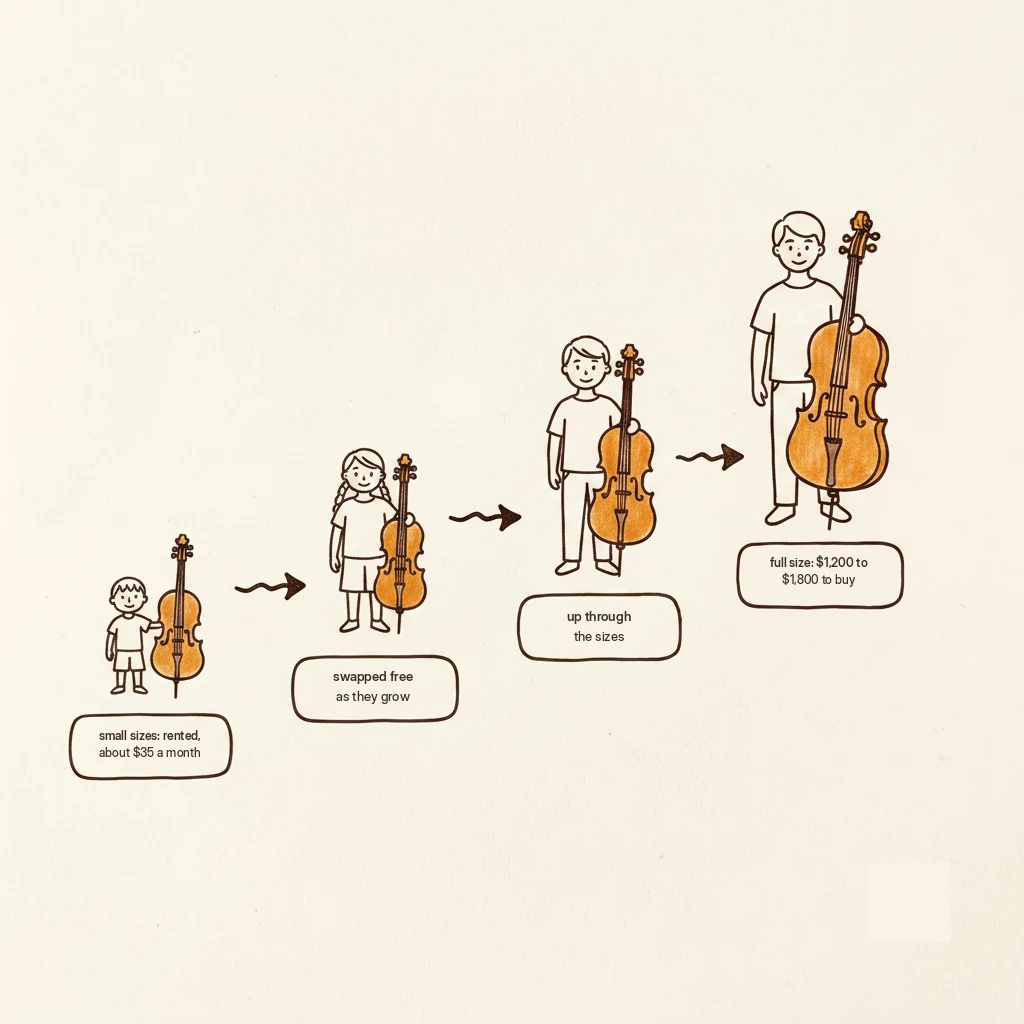
Kids rent cellos: about $35 a month, sized to the child and swapped free as they grow, because a new full-size beginner cello runs $1,200 to $1,800, and many schools keep loaner cellos since they aren't allowed on the bus.
 Gus Harmon · Updated July 8, 2026 · how I decide
If you buy through my links the site earns a little. It's never why I pick things.
The math you’re doing at the kitchen table
A dad wrote out exactly this: two kids, ages eight and six, one on a half-size cello and one on a quarter, thirty-five dollars a month each, plus tax. Then he started multiplying, and then he started wondering whether buying would be smarter.
Let’s do his math. Here’s how it comes out.
Cello is the extreme case
It is the most expensive common school instrument, and it’s also the one kids outgrow the fastest.
Those two facts together are why rent-first isn’t advice on this page. It’s arithmetic.
A cello for a small child comes in fractions: quarter size, half, three-quarter, then full. Your kid climbs that staircase over several years, growing like a sprout, and at every step the instrument they had is the wrong instrument.
The numbers
| What it is | What it costs | What you should know |
|---|---|---|
| Rental, sized | About $35 a month plus tax | Free size swaps. Make sure it builds credit |
| New full-size beginner cello | $1,200 to $1,800 | Buy this when they're full-size and still playing |
| Student bow | $50 to $150 | Separate purchase, and it wears out |
| A set of strings | $60 to $150 | The recurring cost nobody warns you about |
If you buy through my links the site earns a little coffee money. Doesn’t change the price, doesn’t change my answer.
Ask the school before you rent anything
Here’s the fact that saves some families the entire second rental.
Cellos and basses aren’t allowed on school buses. Because of that, most schools that teach cello keep a set of loaner instruments at school, so the kid plays a school cello during class.
Which means you may only need an instrument for home practice, not two instruments, and not one per building. Call the orchestra teacher and ask before you sign anything. That’s a five-minute phone call that has saved people hundreds of dollars.
Make sure the rental builds credit
A rental shop manager put this as plainly as anybody could: make sure the money accrues credit toward a purchase, and if the shop doesn’t offer that, find a shop that does.
That’s the difference between renting and renting toward owning, and it’s usually one line in a contract.
If there’s no shop within an hour of you, mail-order cello rental exists. Families in rural places drive two hours each way for this, and they don’t have to.
The disagreement, stated honestly
Shops argue this one. Some luthier-adjacent people will tell you small cellos trade back in easily enough that owning is fine. Others say don’t own two cellos you can’t return, especially with two kids and the ordinary chance one of them quits.
I land on the credit-accruing rental, and buying at full size if the kid is still playing. If you’re tempted to buy a fractional cello, buy it from a luthier who will trade it back in writing.
If you're figuring this out, you're probably also wondering:
Gus Harmon
Gus spent three decades running sound wherever somebody needed it: bar bands, weddings, school shows, and twelve years of Sunday mornings. He can't sing a note. He can make sure you're heard. Now he writes so normal people can buy the right thing the first time.