
← first chords, first songs, at any age
Nylon vs Steel Guitar Strings: What's the Real Difference?
Nylon strings are soft, warm and easy on fingers; steel is bright and loud. They are NOT interchangeable: a guitar is built for one kind, and steel strings on a classical can wreck it. Sore fingers? Fix the setup, don't swap materials.
 Gus Harmon · Updated July 11, 2026 · how I decide
If you buy through my links the site earns a little. It's never why I pick things.
The warning first, because it’s expensive
Most pages save this for paragraph nine. It goes first.
You cannot fix sore fingers by putting nylon strings on a steel-string guitar, and you REALLY cannot put steel strings on a nylon classical. Steel carries far more tension than a classical guitar’s neck and bridge were built to hold, and string sellers say it without hedging: putting steel strings on a nylon string guitar will cause permanent damage due to the added tension. Many classicals don’t even have the internal steel rod that lets other guitars push back.
The reverse swap won’t break anything, but nylon on a steel guitar sounds dead and floppy and defeats the point. These aren’t two flavors of the same product. They’re parts for two different machines.
Which machine are you holding?
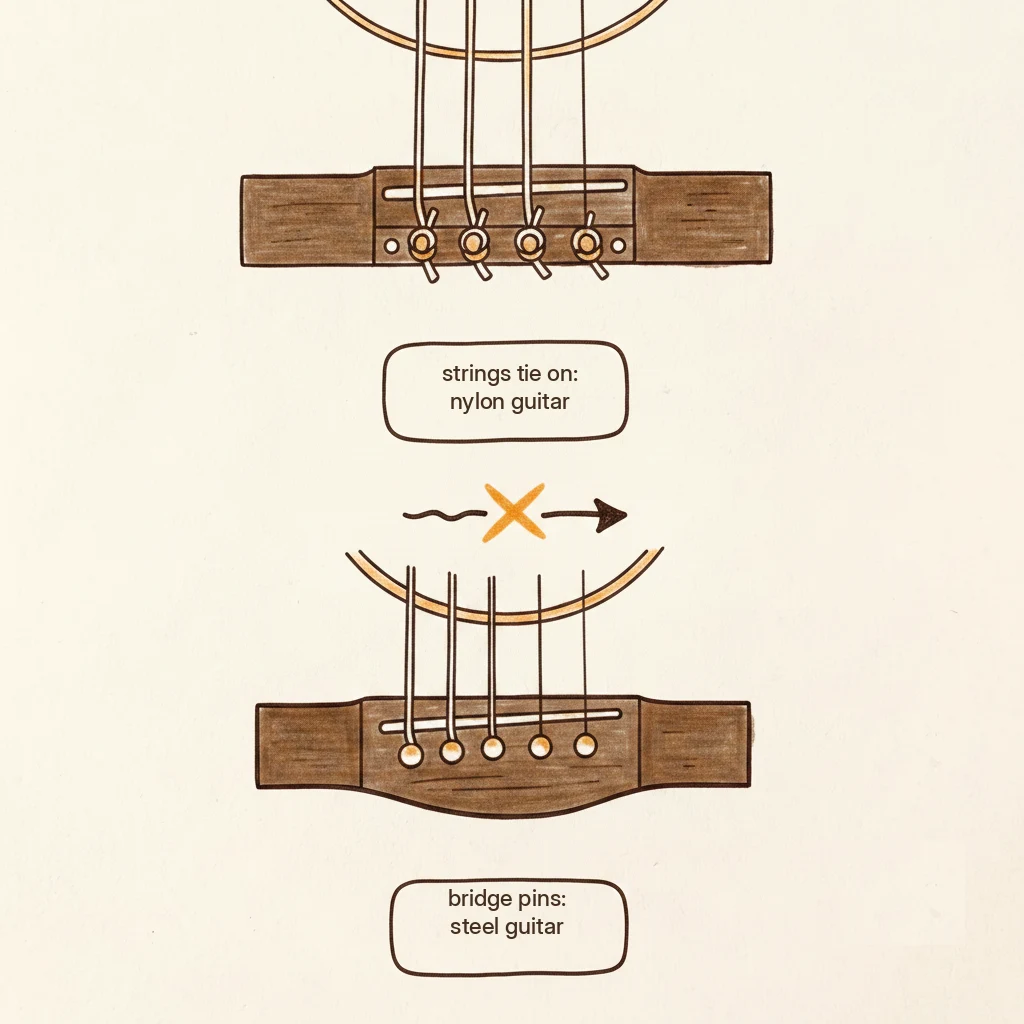
Half the people asking this question already own the guitar, so identify first. One look at the bridge (where the strings attach on the body) answers it.
A classical (nylon) guitar has a wide, flat neck, a headstock with two slots cut through it, and strings that TIE onto the bridge in little loops. Usually no dots on the fretboard.
A steel-string acoustic has a narrower neck, a solid headstock, and strings anchored by pins pushed into the bridge, or a metal tailpiece. Dots up the fretboard.
The school loaner with the wide neck and the tied strings? Classical, nylon, and that’s the only string type it should ever wear.
What each one is actually like to live with
Nylon is the gentle one. Yamaha’s guide says what every teacher says: beginners find nylon-string guitars easier to play, because the tension is lower and the touch is softer. The sound is warm and round, the home of classical, flamenco and bossa nova. The tradeoffs: nylon drifts out of tune more (it stretches, and it feels the weather), and the wide neck is a reach for very small hands.
Steel is the loud one. Bright, crisp, and it’s the sound of nearly everything on the radio: pop, rock, country, folk. The tradeoff is the toll it takes on beginner fingertips, out of which an entire mythology of quitting has been built.
Which one should a beginner start on?
If the music in your head is classical, flamenco, or you’re buying for a small kid or someone with tender hands: the nylon classical is the soft on-ramp, and a Yamaha C40-class guitar runs about $150. The wide neck that annoys lead guitarists is actually generous to clumsy beginner fingers, and the school systems of the world start kids on these for good reasons.
If the music in your head is the radio: start on steel (or electric, which is gentler than both and its own decision), get the setup, and let the calluses come. Starting on nylon “to be safe” and then switching means re-learning the neck feel anyway; the wrong answer isn’t steel, it’s UNPLAYABLE steel.
If you buy through my links the site earns a little coffee money. Doesn’t change the price, doesn’t change my answer.
If you're figuring this out, you're probably also wondering:
Gus Harmon
Gus spent three decades running sound wherever somebody needed it: bar bands, weddings, school shows, and twelve years of Sunday mornings. He can't sing a note. He can make sure you're heard. Now he writes so normal people can buy the right thing the first time.