
← first chords, first songs, at any age
Guitar Strings, Setups, and What They Cost (the Saving $80)
Guitar strings cost $6 to $12 a set and die after about three months, and a $65 to $145 professional setup is the best money a beginner spends, turning a guitar that fights back into one that doesn't.
 Gus Harmon · Updated July 8, 2026 · how I decide
If you buy through my links the site earns a little. It's never why I pick things.
Guitar strings cost $6 to $12 a set and go dead after about three months of regular playing: a dull, lifeless sound is old strings before it's anything else. A professional setup runs $65 to $145 and is the single best money a beginner can spend, because the tech lowers the string height, fixes the tuning, and turns a $150 guitar that fights your fingers into one that doesn't. Getting a shop to restring is about $20 with strings; doing it yourself is a 20-minute rite of passage.
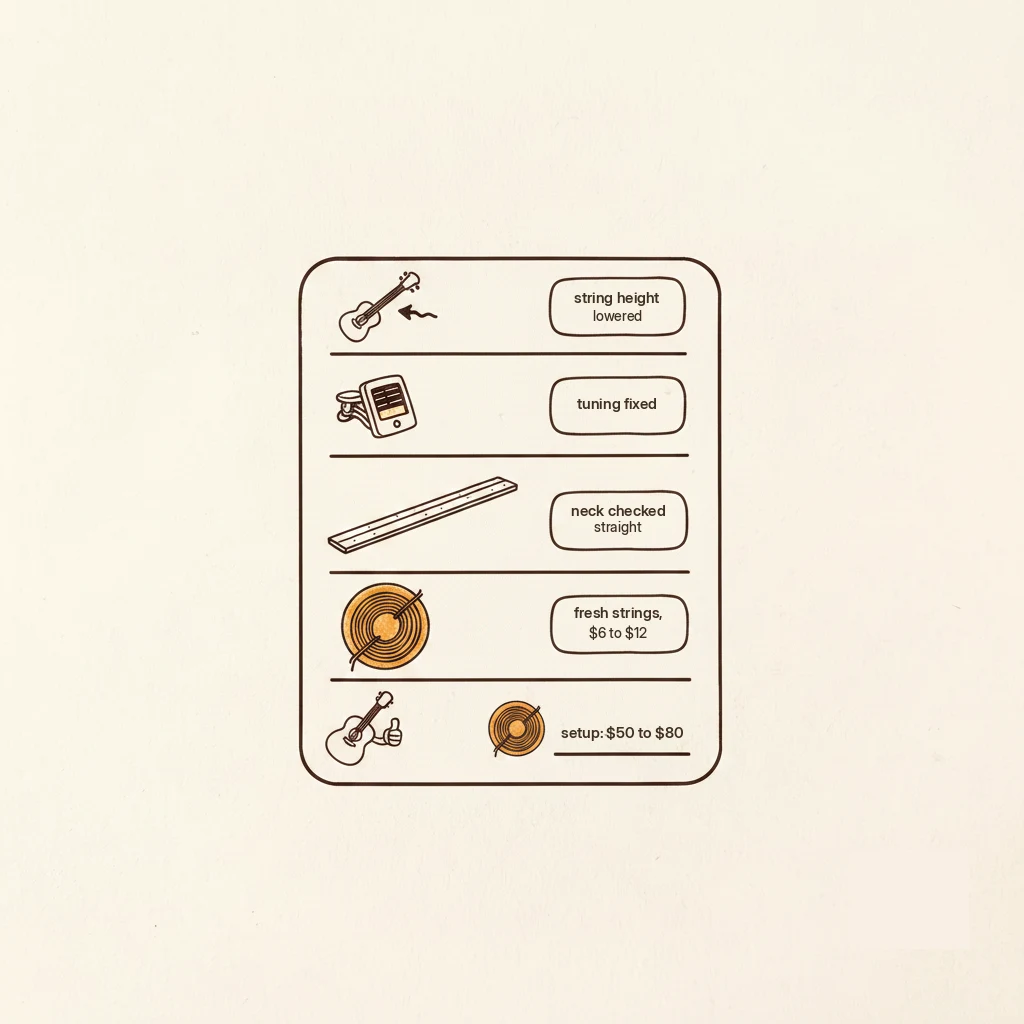
The most important sixty dollars a beginner spends
Here’s the thing I’ve watched save more guitarists than any lesson: a proper setup. A setup is a tech spending an hour making the guitar actually playable, and on a cheap guitar it’s the difference between quitting and sticking with it.
New guitars, and especially cheap ones, come from the factory barely adjusted. The strings sit too high, so your fingers ache and chords buzz. The tuning drifts as you go up the neck. It fights you. A setup fixes all of that, and here’s the kindest truth on this whole page: most “bad” cheap guitars are just unset guitars.
What the tech actually does for your $50 to $80
Three things, and each one matters to a beginner more than any spec.
- Action. That’s the height of the strings above the neck. High action is the number-one cause of sore fingers and buzzing. Lowering it is why a set-up guitar suddenly feels easy.
- Intonation. This is what keeps your chords in tune as you move UP the neck, not just at the open position. Off, and everything sounds slightly wrong the higher you play.
- Neck relief. The neck has a tension rod inside (the truss rod) that sets a tiny, correct amount of bow. The tech dials it in so the whole thing plays evenly.
The math that matters: an $80 setup on a $150 guitar beats a brand-new $250 guitar that's never been set up. Spend the money making the guitar you have playable before you spend it replacing it. That one visit is the real anti-quit purchase.
Strings: what they cost and when they die
A set of strings is $6 to $12, and yes, they wear out. After about three months of regular playing, oxidation and the oil off your fingers kill the brightness, and the guitar starts sounding dull and lifeless. If your once-bright guitar has gone flat and dead, it’s the strings before it’s anything else. That’s the answer to “why does my guitar sound muffled” more often than not.
Quick buying notes so you get the right set:
- Acoustic: bronze (called 80/20) or the warmer phosphor bronze. Go light gauge as a beginner, it’s easier on the fingers.
- Electric: nickel strings, gauge 9s or 10s. 9s are the gentle starting point.
Coated strings that last longer exist and are a fine product, but they’re an upsell you don’t need in month one. Skip them for now.
Do it yourself, or let the shop?
Restringing yourself is a 20-minute job once you’ve done it, plus a $10 string winder and cutter tool, and it’s a genuine rite of passage. Look up a video for your exact guitar and go for it. A shop will restring for about $20 with the strings if you’d rather not, the first time.
The setup itself, though, leave to the tech the first time. It involves that truss rod and small precise adjustments, and it’s worth watching one done if the shop will let you. Ask. It’s free education, and next time you’ll know what you’re paying for.
One seasonal note for acoustic owners: in dry winter months, a $15 case humidifier prevents cracks. Cheap insurance for a wood instrument.
A trap to sidestep: “lifetime free setup” store bundles usually just bake the cost into a higher guitar price. You’re not getting it free, you’re pre-paying.
Skip this unless you like the nerdy part. "Action" has an actual number behind it: it's the gap between the string and the fret, measured in millimeters, usually checked at the 12th fret. A beginner acoustic set high can sit well above where it should, and dropping the action even a fraction of a millimeter makes every note noticeably easier to press. That's the whole magic of a setup. It's not making the guitar "nicer" in some vague way, it's physically reducing how hard your hand has to work on every single note.
Fresh strings tonight if the guitar's older than a school year. And the $80 setup the first week you own anything used. I've watched that eighty dollars save more guitarists than any lesson, because a guitar that stops fighting back is a guitar that gets played.
Questions people actually ask
How much do guitar strings cost?
A set runs $6 to $12, whether acoustic or electric. They go dead after about three months of regular playing as oxidation and finger oil dull them, so budget a few sets a year if you play often. A guitar that’s gone dull and lifeless almost always just needs new strings.
How much does a guitar setup cost?
A professional setup is $50 to $80, and it’s the best money a beginner spends. The tech lowers the string height (which fixes sore fingers and buzzing), corrects the tuning up the neck, and adjusts the neck’s bow. It turns a cheap guitar that fights you into one that plays easily.
Is it worth setting up a cheap guitar?
Absolutely. Most “bad” cheap guitars are simply un-set-up guitars. An $80 setup on a $150 instrument beats buying a new $250 one that also hasn’t been adjusted. Before you blame the guitar or replace it, have it set up. It’s the single change that most often keeps a beginner from quitting.
If you buy through my links the site earns a little coffee money. Doesn’t change the price, doesn’t change my answer.
Keeping your guitar playable, you're probably also wondering:
Gus Harmon
Gus spent three decades running sound wherever somebody needed it: bar bands, weddings, school shows, and twelve years of Sunday mornings. He can't sing a note. He can make sure you're heard. Now he writes so normal people can buy the right thing the first time.