← your kid's instrument: costs, rentals, sticking with it
A Saxophone for a Beginner (Alto, and the Cheap-Horn Trap)
A beginner saxophone is an alto, and the smart first horn is a used Yamaha YAS-23 (about $400 to $600), because the cheap Amazon sax can't be repaired and makes kids blame themselves.
 Gus Harmon · Updated July 8, 2026 · how I decide
If you buy through my links the site earns a little. It's never why I pick things.
A beginner saxophone is an alto, not a soprano (which looks kid-sized but is the hardest common sax to play in tune). The smart first horn is a used Yamaha YAS-23, about $400 to $600: durable, repairable, and cheaper than the Amazon horn once you count the repairs the Amazon horn can’t get. Renting the first year is the safe default.
You’re staring at two prices: a $300 saxophone on Amazon and a used Yamaha for six hundred, and the cheap one is whispering “why pay double?” Let me answer that, because the real cost of the cheap horn isn’t the money. It’s what it does to a kid.
The cheap horn makes the kid blame himself
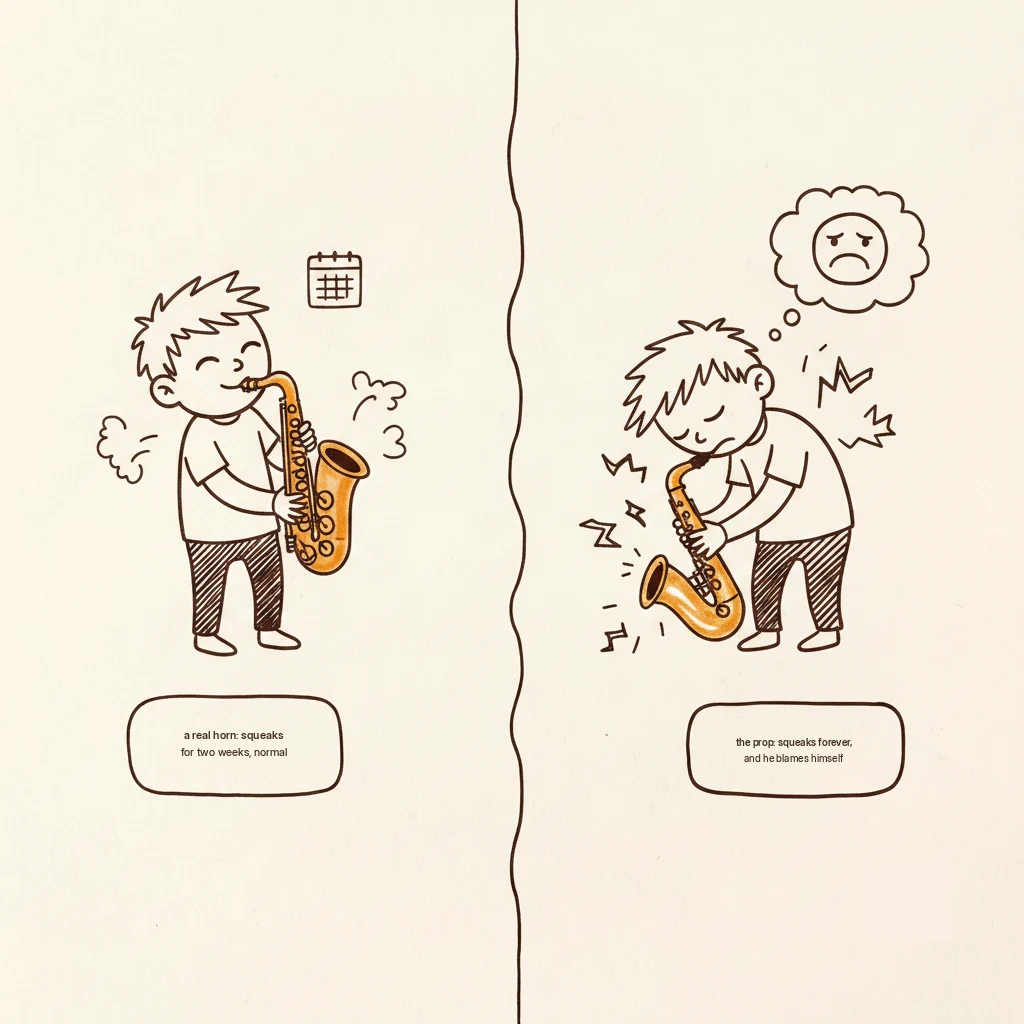
This is the whole argument, and a player nailed it: on a cheap Amazon sax, a beginner “has no way of knowing if it’s them or the sax that is wrong.” Every squeak, every note that won’t come out, reads as personal failure. And here’s the kicker: repair techs won’t even touch those horns. Every saxophone needs an adjustment about every six months, and on an Amazon-tier horn that’s impossible, no one will service it. So it drifts further out of whack, the kid struggles more, blames himself more, and quits. The good horn squeaks too, in week two, but on a Yamaha you’ll both know it’s just week two.
That’s why “cheaper” is a mirage. The $300 horn has zero resale (nobody wants it) and can’t be maintained. The used Yamaha can be serviced for decades and resells for close to what you paid.
Get an alto (not the cute little one)
The saxophone family goes soprano, alto, tenor, bari. It’s tempting to grab a soprano because it’s small and looks kid-friendly. Don’t. Small does not mean easy. The soprano demands a tight, precise mouth and has brutal tuning, it’s one of the hardest to play in tune. The alto is the school standard for good reason, and it’s where every beginner should start. (The tenor is the one to want later, when the jazz itch hits.)
The buy ladder
A used Yamaha YAS-23. About $400 to $600 from a shop or the used market. It’s the answer players give again and again: tough, in tune, endlessly repairable, and it holds value. Buy this and you may never need another beginner horn.
Flaws, said plainly: buying used means having a tech give it a once-over (budget a little for that). It’s still the cheapest true cost in the category.
If you want new-with-a-warranty, the honest ladder past the Yamaha 23 is: a Jean Paul AS-400 (about $750, notable because it’s the cheap horn techs will actually repair), a Better Sax or Bundy alto under a grand, and, as the no-compromise new option, the Yamaha YAS-280 (about $1,100). But before any purchase, renting the first year (about $30 to $50 a month) is the smart default, no commitment while you find out if the kid sticks.
The stuff nobody puts in the box
Two small things that matter: the reeds (a box of 2.5-strength Rico reeds, the consumable that wears out and warps) and the mouthpiece (the stock one is usually mediocre, a Yamaha 4C is the standard, worth-it upgrade). Together about $30, and they do more for a beginner’s sound than a fancier horn would.
There’s a real book pairing too, if the band program hasn’t supplied one: Essential Elements plus a Rubank method (confirm the editions). Free beginner sheet music exists in the online sheet libraries if you want it. And on teaching yourself: the sax speaks early, friendlier than flute or violin that way, so yes with rails. Book two early lessons anyway, because how you shape your mouth and throat (the voicing) locks in fast, and a good habit now saves years of a bad one later.
A sax makes its notes by sealing and unsealing dozens of holes with leather pads pressed down by a web of rods and springs, and everything about that system slowly drifts. The pads compress and harden, the little cork and felt bumpers that set how far each key travels wear thin, and springs lose a bit of tension, so keys stop sealing perfectly and stop lining up. A tiny leak anywhere and the notes below it go weak or won’t sound. A tech’s regulation just resets all of that: reseats pads, replaces worn corks, retensions springs, so the whole air-tight machine works as one again. It’s not that the horn is fragile, it’s that it’s a precision mechanism in constant tiny motion, which is exactly why an unrepairable Amazon horn is a dead end, it drifts and there’s no bringing it back.
A used YAS-23 from a shop, or rent the year. The kid squeaks either way for the first two weeks. On the Yamaha, you’ll both know it’s just two weeks, and that difference is worth every dollar.
If you buy through my links the site earns a little coffee money. Doesn’t change the price, doesn’t change my answer.
If you’re figuring this out, you’re probably also wondering:
Gus Harmon
Gus spent three decades running sound wherever somebody needed it: bar bands, weddings, school shows, and twelve years of Sunday mornings. He can't sing a note. He can make sure you're heard. Now he writes so normal people can buy the right thing the first time.