
← a microphone for singing, at home or on stage
A Singing Microphone with a Speaker (and the Teacher's Secret)
To hear yourself sing you want a $30 to $99 dynamic mic and a small powered speaker, but if you really need your talking voice carried across a room, that product is a $40 voice amplifier.
 Gus Harmon · Updated July 8, 2026 · how I decide
If you buy through my links the site earns a little. It's never why I pick things.
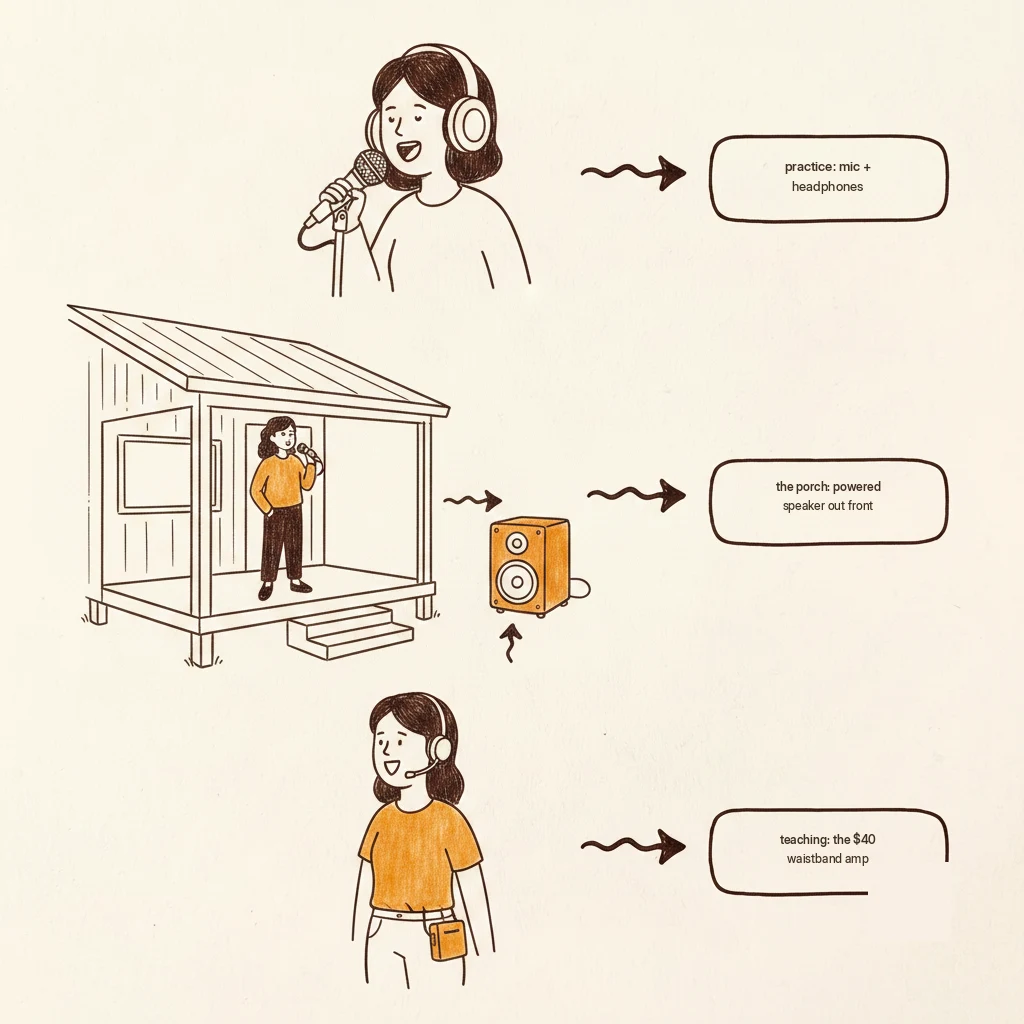
To hear yourself sing, you want a dynamic microphone ($30 to $99) and a small powered speaker (about $100 to $130). For quiet practice, headphones on that same mic beat any speaker. And if what you really need is your talking voice carried across a room, that’s a different product called a voice amplifier: it clips to your waist and runs about $40.
Before you spend a dollar, do the free thing: sing into your phone’s voice memo app and listen back. A lot of beginners need no purchase at all, just the shock of hearing themselves honestly for the first time. If you’ve done that and you want the real thing, read on.
Because “singing microphone with speaker” hides two very different needs, and I want to make sure you buy for yours.
If you want to hear yourself sing
There’s a reason hearing yourself changes everything: through a mic and speaker, your voice comes back to you louder and clearer than it ever does in your own head, and suddenly you can tell what you’re actually doing. That’s the whole magic, and it doesn’t take much gear.
A dynamic mic into a small powered speaker. A dynamic mic (the rugged kind that ignores room noise and doesn’t need extra power) like a Behringer XM8500 runs about $20, or a Shure SM58 about $110. Add a small powered speaker (amp built in) for roughly $100 to $130. That’s a rig that outlasts every glowing all-in-one toy by a decade.
Flaws, said plainly: it’s two pieces, and you’ll want a cable and maybe a stand. Boring, sturdy, and it never becomes landfill.
The reason I steer you to a dynamic mic and not a fancy studio one: your living room is a normal, echoey room, and a dynamic mic forgives that. The delicate studio mics hear every hard wall and hum.
If you actually want to practice
For real practice, headphones beat a speaker. No feedback squeal, no waking the house, no neighbors, and honestly your ears hear more detail through headphones than across a room. Same mic, plug in headphones instead of the speaker, and you’ve got the best practice setup there is for the money.
The teacher’s secret (the product nobody names for you)
Here’s a reader I think about. A soft-spoken substitute teacher, on her second bout of laryngitis for the year, searches for a “singing microphone with speaker,” because nobody ever told her the real name of the thing she needs. She doesn’t want to perform. She wants to get through a school day without shredding her voice.
The product is a voice amplifier: a little battery box that clips to your belt with a headset mic, made for teachers, coaches, and tour guides. About $40, and one teacher said of hers, “I probably wouldn’t be here without it.” People who bought them during the mask years kept using them just for the relief of “not having to project as hard.”
If that’s you, skip the whole singing rig above. The waistband amp is the answer, and it’s the best sound-per-dollar object in this entire catalog.
And keep the basics kind to your voice, the same things that thread mentioned: sip water, talk less when you can, use gestures to save words. That’s not medical advice, just the wear-and-tear wisdom of anyone who talks for a living.
If you meant your computer
If you’re really asking how to sing into your computer and hear it back, that’s a USB microphone question wearing speaker clothes, and it’s a slightly different setup worth its own page.
That awful squeal when a mic gets near a speaker is feedback, and here’s what’s happening: the speaker plays a sound, the mic hears that sound and sends it back to the speaker, which plays it louder, which the mic hears again, and the loop screams within a fraction of a second. The fix is simple once you see it, keep the microphone from hearing the speaker. On a porch or in a room, that means putting the speaker in front of you, aimed away, with the mic behind it pointing at your mouth, not at the speaker. Point a mic at its own speaker and it will always, eventually, howl. Point it away and it stays quiet. Sound people spend half their lives just managing that one loop.
An XM8500 into a used powered speaker for the porch, headphones on that same mic for practice. And if you’re a teacher, skip all of it and buy the $40 waistband voice amplifier. It’s the best money in this whole guide.
If you buy through my links the site earns a little coffee money. Doesn’t change the price, doesn’t change my answer.
If you’re figuring this out, you’re probably also wondering:
Gus Harmon
Gus spent three decades running sound wherever somebody needed it: bar bands, weddings, school shows, and twelve years of Sunday mornings. He can't sing a note. He can make sure you're heard. Now he writes so normal people can buy the right thing the first time.