
Sound System Installation for Churches (How to Read the Quote)
Professional church sound installation runs about $70 to $125 per seat, roughly $3,000 to $10,000 for a small church, and a good quote talks about your room, not just gear.
 Gus Harmon · Updated July 8, 2026 · how I decide
If you buy through my links the site earns a little. It's never why I pick things.
Professional church sound installation runs about $70 to $125 per seat: roughly $3,000 to $10,000 for a small church under 200 seats, and $10,000 to $35,000 for 200 to 500 seats. A good installer talks about your room’s acoustics before any equipment list. If the quote is all gear and no room treatment, get another quote.
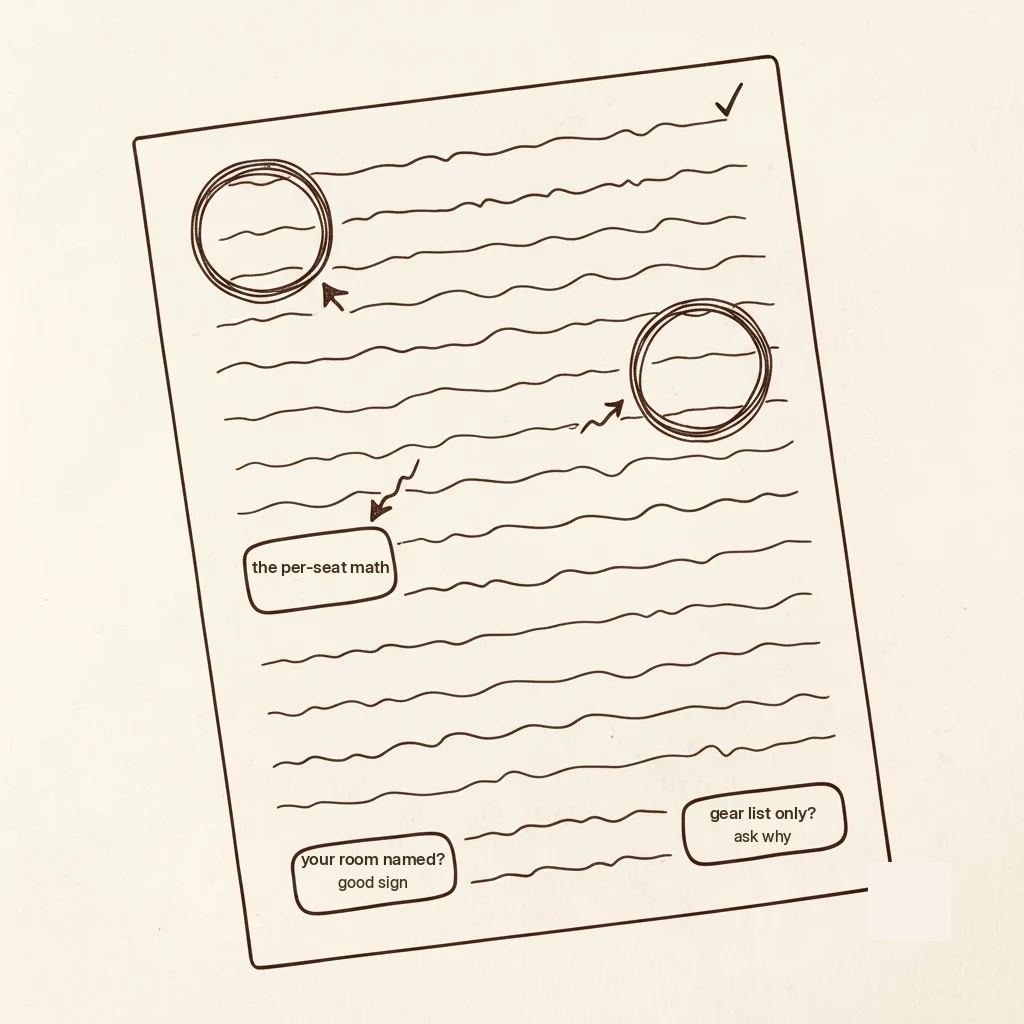
You’re holding a quote you can’t read. One big number, five figures, and a line that just says “integration.” And you have to stand up in front of the whole congregation and either sign off on it or turn it down. I’ve sat in that meeting. Let me translate.
Here’s the thing. That number is probably normal, and I can tell you that because I spent twelve years on a church board watching these quotes get read aloud. The fear underneath is the old one, that you’re being taken, just wearing a bigger price tag. So let’s make the quote legible so you can tell a fair one from a padded one.
The real numbers, so you walk in knowing
Installers publish these, so here they are plainly. About seventy to a hundred and twenty-five dollars per seat, installed. A small church, three to ten thousand dollars. A medium one, ten to thirty-five thousand. Sound techs charge fifty to a hundred and twenty-five an hour. Acoustic treatment, if it’s a real project, can run five to twenty-five thousand on its own.
Somebody posted a thirty-person church quoted twenty-four thousand and asked, in public, is this really entry level? Both answers turned out to be true at once, and that’s the whole lesson, so stick with me.
Both answers were true, and here’s why
A professional integrator in that same thread said the twenty-four-thousand price wasn’t unreasonable, that it was basically the most basic level of name-brand gear once you add broadcast and streaming equipment. Also in that thread: for thirty people you could put powered speakers on poles, a Shure BLX wireless, and a used mixer together for three to five thousand.
Both are correct. The difference is scope. The expensive quote included a whole streaming and broadcast rig; the cheap build was just “make Sunday sound good in the room.” So the single most useful skill is learning to see which scope you got quoted, and whether it’s the scope you actually need.
The one test for a quote’s quality
Does the quote talk about your room, or just list boxes?
A good installer addresses acoustics: panels, speaker aiming, coverage design so every pew hears the same sermon. That’s the same “you can’t fight physics” law the volunteers live by, and the pros live by it too. A quote that’s all gear and no room is a red flag. Get a second opinion.
What the install actually buys you
The line items translate to real things. Coverage design, so the back row hears what the front row hears. Speaker rigging, because hanging heavy things over people’s heads is an insurance-and-physics job, not a weekend project. Cable runs through real walls. Commissioning, which is tuning the finished system to your specific room. And training your volunteers, which you should ask for explicitly, in writing, because the rota churns and the person running it next year hasn’t been hired yet.
Why does hanging one speaker cost around fifteen hundred dollars when the speaker itself is cheaper than that? Because a speaker dangling over a congregation is a load-bearing safety problem. Somebody has to calculate the weight, the rigging points, the building structure that’s actually holding it, and the safety margin, then certify it and carry insurance on it. You’re not paying for the bracket. You’re paying for the promise that it never, ever falls on anyone. That’s why “just mount it up there” is a real expense and not a rip-off.
The third path the installers won’t quote
Here’s one nobody offers you, and I’ll endorse it for a small room: buy the gear yourself from a place like Sweetwater, then pay a real sound tech for a few hours to tune it and train your volunteers. A pastor did exactly this. Powered speakers on poles for the room, and a professional’s afternoon to make it sing and to teach the team. For an under-200-seat church on speaker stands, that hybrid is often the smart money. Flying speakers over a balcony, though, pay the pro, full stop.
Bring this short list to every quote meeting. Is the per-seat math shown? Is room treatment addressed? Is training included? Who services this in year three? And can you give me references from churches our size?
Get two quotes, ask both for the per-seat math and the room-treatment line, and do the volunteer Saturday setup first. Half the time the room was the problem, and once you fix that, the quote you actually need gets smaller.
If you’re figuring this out, you’re probably also wondering:
Gus Harmon
Gus spent three decades running sound wherever somebody needed it: bar bands, weddings, school shows, and twelve years of Sunday mornings. He can't sing a note. He can make sure you're heard. Now he writes so normal people can buy the right thing the first time.