
← old cassettes and camcorder tapes, rescued
VHS Tape Mold: What's Saveable and How Not to Spread It
Mold on a VHS tape is often survivable: white spots on the shell and reel edges clean off, but mold grown into the wound tape is usually gone, and a moldy tape must never go in a good VCR.
 Gus Harmon · Updated July 8, 2026 · how I decide
If you buy through my links the site earns a little. It's never why I pick things.
Mold on a VHS tape is often survivable, so don't grieve it yet. White dusty spots on the shell and the visible reel edges usually clean off with rubbing alcohol and cotton swabs. The line that matters: if mold has grown INTO the wound-up tape, furry layers between the windings, the recording is usually gone. Two hard rules while you work: wear a mask and gloves in a ventilated spot away from your living space, and never put a moldy tape in a VCR you care about.
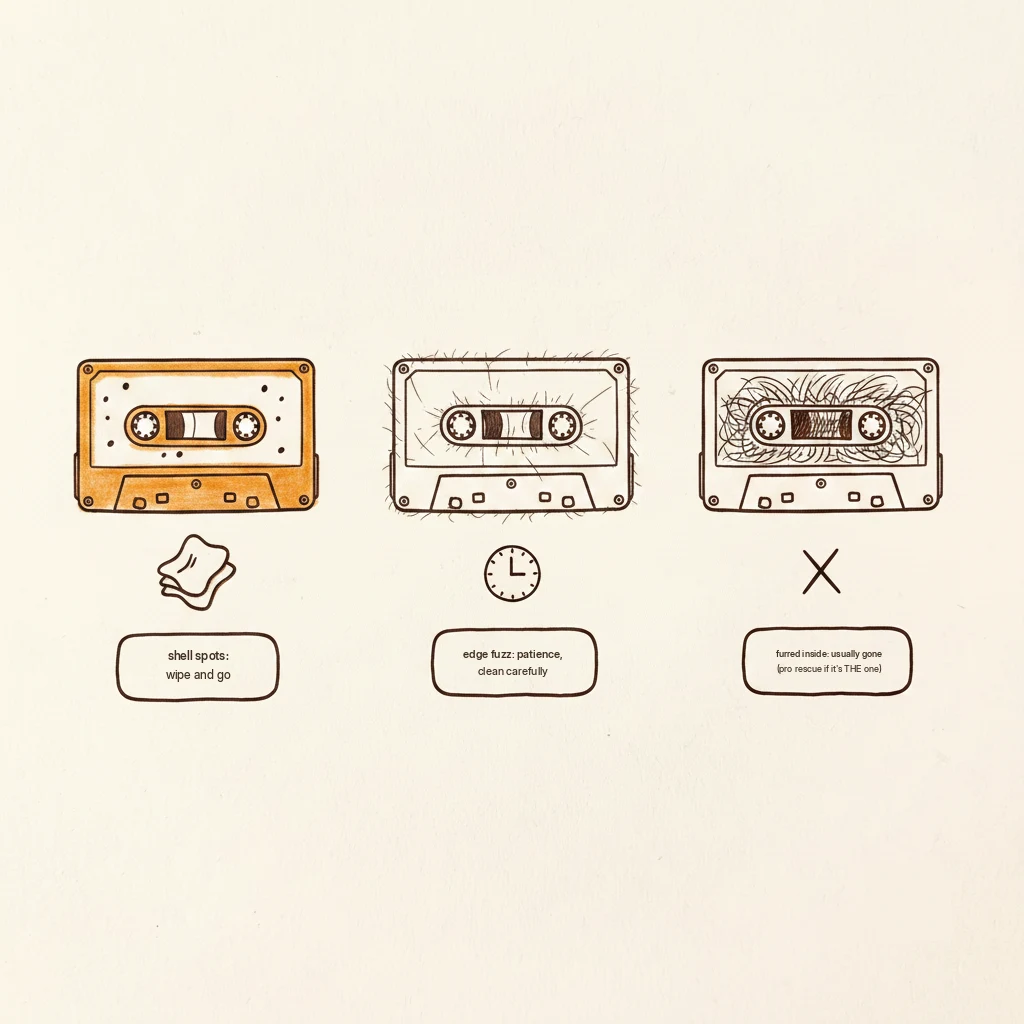
First, figure out which kind of mold you’re looking at
Here’s the thing. “Moldy tape” covers three very different situations, and knowing which one you have tells you whether to celebrate or brace yourself. So look before you touch.
If it’s just white dusty spots on the plastic shell and the edges of the reels you can see, that’s the good case. That cleans off, and the recording underneath is probably fine.
If the fuzz has crept onto the outer windings of the tape itself but only a little, that’s the patience case. Cleanable, slowly, with a careful hand.
If mold has grown down INTO the wound-up pack, furry layers packed between the windings, that’s the hard case. I’ll be straight with you: that recording is usually gone. Say it now so you’re not chasing false hope with a Q-tip for three hours.
How to clean the saveable ones
For the shell and the reel faces, it’s rubbing alcohol (the strong 91-percent kind) and cotton swabs, wiping gently. There’s a well-known collector move for a tape whose reels are fine but the shell is a mess: unscrew a junk tape, lift its reels out, and swap your good reels into that clean donor shell. Collectors document doing exactly this for tapes they care about.
That last trick is real, and it’s also fiddly. If your hands shake or you’ve never opened a tape, don’t learn on the one that matters. Practice on a throwaway first, or leave it to someone steady.
The safety block, and it isn't optional. Mold is a health matter, not just a tape matter. Wear an N95 mask and gloves, work in a ventilated spot, and get out of your living space (a porch or garage table, not the kitchen counter). A mask and gloves run about $10. Cheap insurance for your lungs and your house.
The one rule that saves the rest of the box
Never play a moldy tape in a VCR you love. The moment those reels spin, the machine picks up spores and seeds them into every tape you play afterward. One moldy tape in a good deck can quietly infect your whole collection. Clean the tape first. If you've got a beat-up junk VCR, that's the one that plays the questionable tapes.
While you’re at it, protect the tapes that are still clean. Store them dry, cool, and up off a concrete basement floor, because concrete wicks moisture and moisture is what started this.
After the rescue
If a tape cleans up and plays, don’t put it back in the box. It just beat mold once. Don’t schedule a rematch. Digitize it that same week, while it’s healthy and while you’re already set up.
And the honest last resort: for the one irreplaceable tape whose pack is truly moldy, professional recovery labs exist. They’re expensive and they can’t promise a save, but for the wedding or the last Christmas, sometimes the expensive maybe is worth asking about.
Skip this unless you like the nerdy part. The tape's picture and sound sit in a coating held down by a layer called the binder, and that binder is basically an organic buffet for mold. The spores don't eat the memories on purpose, they eat the glue holding the coating on, and the recording sloughs off as collateral. That's why surface fuzz wipes away but mold that has burrowed into the pack has usually already loosened the layer you were trying to save.
Mask on, porch table, one tape at a time. Clean the shell-and-edge cases yourself and let the deep ones go, unless it's THE one, in which case ask a recovery lab. And the tape that plays goes straight to the capture box this weekend, not back in the box.
Questions people actually ask
Is it safe to play a moldy VHS tape?
Not in a VCR you care about. A moldy tape seeds spores into the machine and every tape after it. Clean the tape first, and if you must test a questionable one, use a junk deck you’re willing to lose. And protect yourself while handling it: mask, gloves, ventilation.
Can moldy VHS tapes be saved?
Often, yes. Surface mold on the shell and reel edges cleans off with rubbing alcohol and swabs, and the recording underneath usually survives. What’s usually lost is a tape where mold has grown down into the wound-up pack, because by then the mold has loosened the coating that holds the picture.
How do you get mold off a VHS tape?
Gently, with strong rubbing alcohol and cotton swabs on the shell and the reel faces, wearing a mask and gloves in a ventilated spot. For a messy shell with good reels, collectors sometimes swap the reels into a clean donor shell from a junk tape. Practice that on a throwaway before trying it on the one that matters.
Rescuing that box, you're probably also wondering:
Gus Harmon
Gus spent three decades running sound wherever somebody needed it: bar bands, weddings, school shows, and twelve years of Sunday mornings. He can't sing a note. He can make sure you're heard. Now he writes so normal people can buy the right thing the first time.