
← old cassettes and camcorder tapes, rescued
What to Do With That Box of Old Cassette Tapes
Sort a found box of cassettes into three piles: home recordings (digitize these first), commercial albums (mostly a few dollars, a few exceptions), and the rest (donate, don't landfill).
 Gus Harmon · Updated July 8, 2026 · how I decide
If you buy through my links the site earns a little. It's never why I pick things.
Sort the box into three piles before you do anything else. Home recordings (voices, family, anything homemade) are irreplaceable: those get digitized first. Commercial albums are mostly worth a few dollars, with a handful of real exceptions worth checking. Everything else can go to a thrift store or library, not the trash. Tape lasts 10 to 30 years depending on how it was stored, so a box from the '90s is right on time for a rescue.
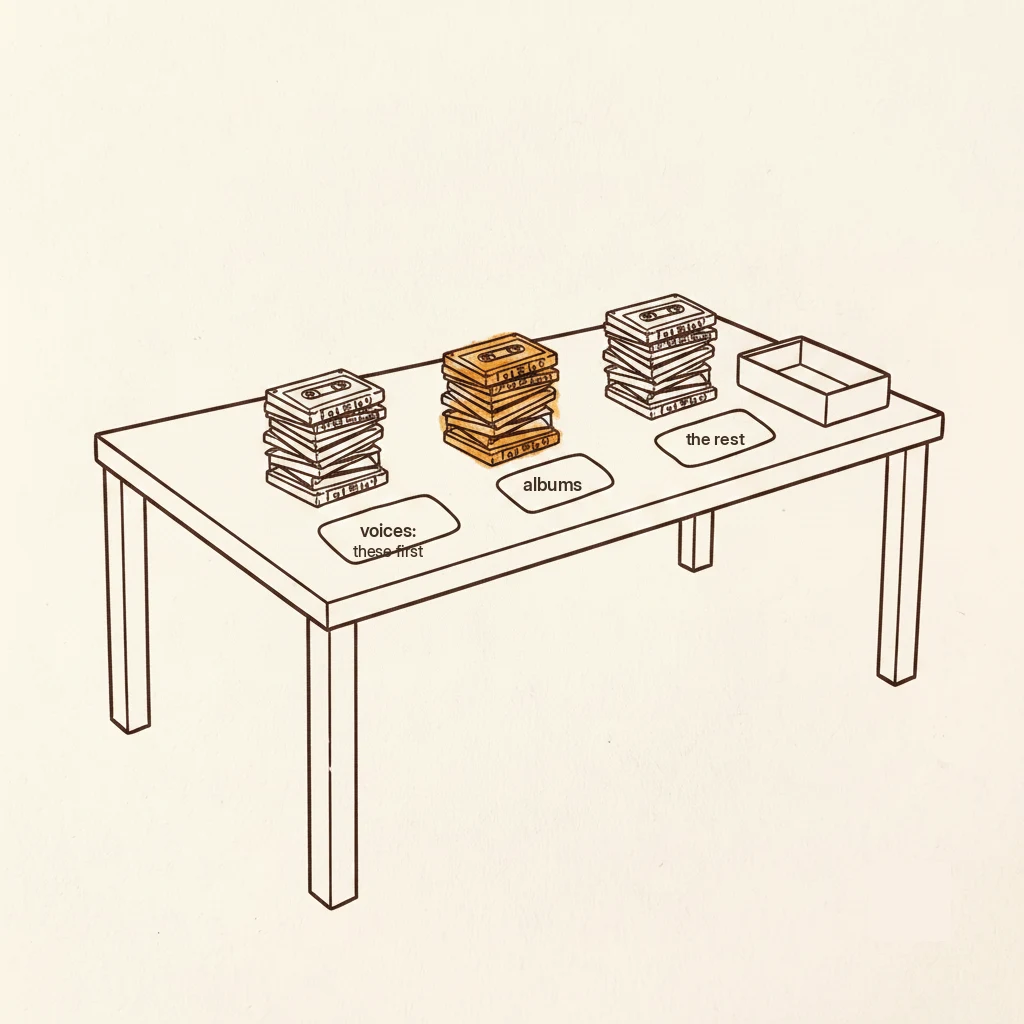
Start with three piles on the kitchen table
Here’s the thing. A found box of tapes feels like one big overwhelming decision, and it’s really three small ones. So make three piles.
Pile one: home recordings. Anybody’s voice, a family gathering, a kid’s recital, a mixtape somebody made by hand. These are the ones time is actually chasing.
Pile two: commercial albums. Store-bought music with a printed label.
Pile three: everything else. Blanks, mystery tapes, stuff you don’t recognize.
Now you’re not staring at a box. You’re looking at three little jobs, and only one of them is urgent.
Are old cassette tapes worth anything?
Mostly, the store-bought music is worth a few dollars each, and that’s fine to know up front so you don’t build up a fantasy. There are real exceptions, though. A handful of collectible titles pull actual money, and certain metal-formula blank tapes (the TDK MA-R type is the famous one) can be genuinely valuable to the right buyer.
If you want to check, look at eBay’s COMPLETED listings, the ones that actually sold, not the hopeful asking prices people slap on. Sold prices are the truth.
The home recordings are worthless to the market and priceless to you. No collector wants your grandmother reading a letter out loud. That tape is the whole reason you're doing this. Don't measure the voices pile in dollars.
How long do cassette tapes last?
Roughly 10 to 30 years, and storage is what decides where you land in that range. Heat and humidity are the killers. A tape that lived in a cool, dry closet is in far better shape than one that baked in an attic or sweated in a basement.
I’ll be straight with you: the urgency is real, but it’s not the panic the digitizing companies want to sell you. Your tapes aren’t turning to dust this month. They are, however, past middle age, and the voices pile is the part you don’t want to gamble on. Do that pile first.
Playing them again, and storing the keepers
Before you play anything precious, know that the tape itself is usually fine but the little rubber belt inside old players dries out and snaps. That’s a player problem, not a tape problem. If your deck sounds slow or dead, it’s likely the belt.
One gotcha: those fancy metal blank tapes need a deck that can actually handle metal tape, or they’ll sound wrong.
For anything you’re keeping, store it cool, dry, standing upright, wound all the way to one end, and away from speakers and magnets. That’s it. No special box required.
And please don’t landfill the rejects. The shells have metal in them. Thrift stores and libraries take tapes, and specialty e-waste recycling handles the truly dead ones.
Skip this unless you like the nerdy part. Tape stores sound as billions of tiny magnetic particles, each frozen in a direction that spells out the music. Over decades those particles slowly relax and drift out of alignment, and the recording quietly loses a little of itself. It's not rot and it's not your fault. It's just magnetism letting go by degrees, which is exactly why the voices are worth grabbing now instead of someday.
Sort into three piles tonight: voices, albums, everything else. The voices pile goes by the computer for the weekend. That's the pile time is actually chasing. Everything else can wait as long as it wants.
Once those voices are safe as files, there’s a nice thing you can do next door: record the story behind them. Sit a parent or grandparent down and have them talk over the transfer, naming who’s who and when it was. That’s a keeper too.
Working through that box, you're probably also wondering:
Gus Harmon
Gus spent three decades running sound wherever somebody needed it: bar bands, weddings, school shows, and twelve years of Sunday mornings. He can't sing a note. He can make sure you're heard. Now he writes so normal people can buy the right thing the first time.