← your kid's instrument: costs, rentals, sticking with it
Easy Violin Songs for Beginners (Real Songs, First Position Only)
Beginner violin songs live in first position, Ode to Joy, Greensleeves, Simple Gifts, plus any Disney melody from an easy fake book, and Suzuki Book 1 ends on real Bach minuets.
 Gus Harmon · Updated July 8, 2026 · how I decide
If you buy through my links the site earns a little. It's never why I pick things.
The first real violin songs live in first position: Ode to Joy, Greensleeves, Simple Gifts, Silent Night, plus any Disney melody from an easy fake book. And a kid who finishes Suzuki Book 1 is already playing Bach minuets. Those count as real songs, and the kid bored of Twinkle needs to hear that.
Let me guess who’s really reading this. Your kid reads music well enough now, plays Happy Birthday and Go Tell Aunt Rhody and Old MacDonald, and is desperate for real songs. The kid’s own definition of real, posted by his dad, was “a verse-chorus-bridge sort of deal by a band that is not Taylor Swift or The Beatles or Owl City.” Translation: he doesn’t want to feel like a baby anymore.
That’s the whole problem, and it’s a good problem. It means he’s sticking with it. Here’s how you feed that without moving him past what his hands can do.
”First position” is where the real songs already are
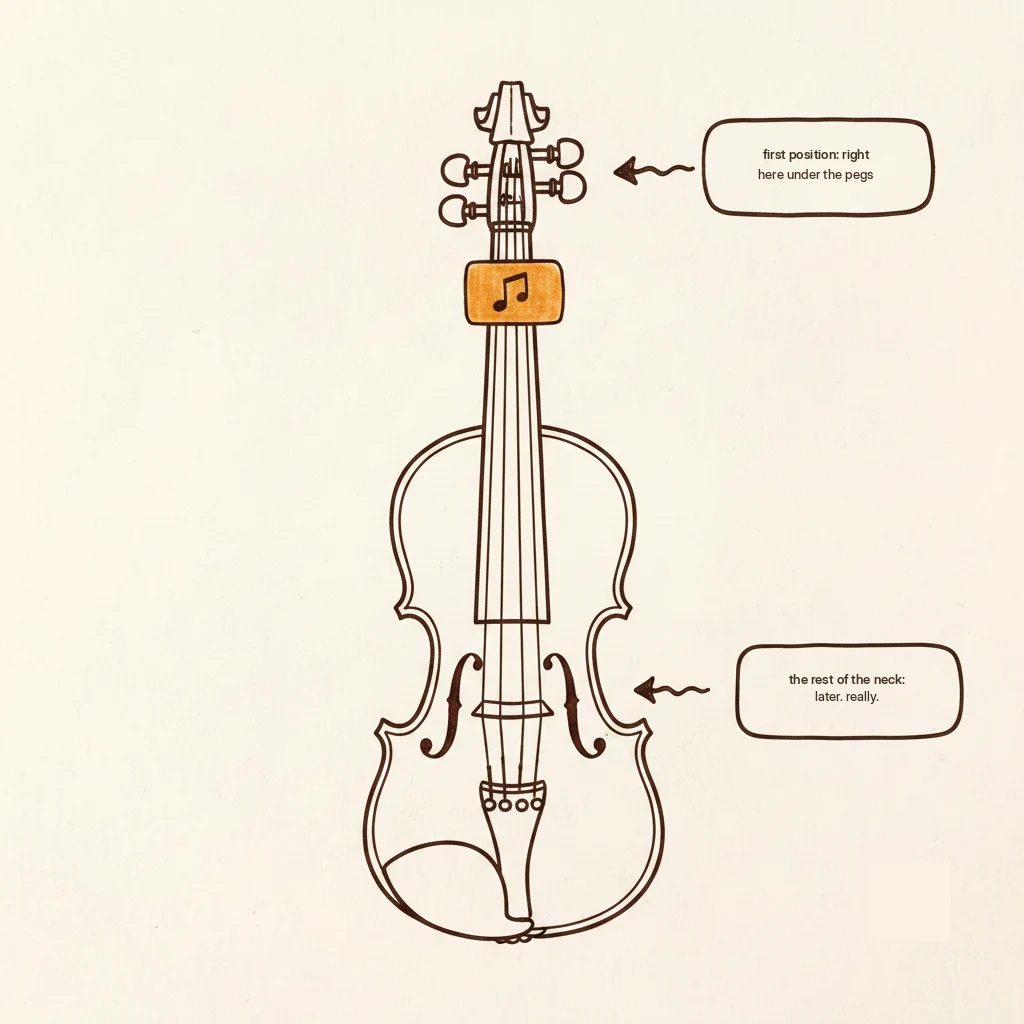
First position just means the basic hand placement your kid already learned, no sliding the hand up the neck yet. And here’s the news that fixes the boredom: a huge amount of real, recognizable music lives entirely in first position. He doesn’t need to advance to play songs he’s proud of. He needs the right songs at the level he’s already at.
The first-position real songs, pulled from players themselves:
- Ode to Joy, Greensleeves, Simple Gifts, Silent Night. Recognizable, satisfying, and squarely playable.
- The Mozart K.331 theme as a duet, where you (or the teacher) play the harmony line underneath. This is the warmest move on the page. A kid plays a “real” Mozart piece and a grown-up they like is playing right alongside them.
- Any Disney song. As one player flatly put it: “Any Disney song can be played in first position. Get the fake book.” A fake book is just a book of melody lines you can play straight through.
The Suzuki reframe (say this to the kid)
If your kid’s in a Suzuki program and grinding through what feels like baby songs, here’s a line from a teacher worth repeating to him directly: Suzuki Book 1 ends on Bach minuets, and “I see no reason not to think of those as real songs.” Because they are. The method itself is a song ladder, and the top of book one is actual Bach. He’s closer to “real songs” than he feels.
The secret exit: fiddle tunes
Fiddle tunes rarely leave first position, and they don’t sound like classical practice at all. Same violin, same hand placement, completely different costume. For a kid sick of the classical rut, this is the escape hatch that needs no new technique.
Try Tennessee Waltz, Ash Grove, or bluegrass staples like Cripple Creek and Angeline the Baker. It’s the same instrument he already plays, just wearing jeans instead of a tux.
Named beginner sets, if you want a book
- Elgar’s Six Very Easy Pieces, an actual first book for a lot of players.
- Dvořák’s Sonatina, Op. 100, “composed for his children,” a nice level-up carrot for down the road.
- Movie themes really do exist as real sheet music: Lord of the Rings, Game of Thrones, even the Mario underwater theme are out there (musicnotes carries them). If that’s the recognizable thing that lights him up, it counts.
An easy Disney fake book (violin-friendly). About $24. It’s the fastest route to a song his friends will recognize, all in first position, and it doubles as reading practice since it has both the notes and the letters.
Flaws, said plainly: fake books give you the melody, not a full arrangement, so it’s a solo line, not a showpiece. For a kid who wants to play the tune he knows, that’s exactly right.
About those “songs with letters” sheets
Letter-notation sheets, the ones that write the note names instead of standard notation, are fine training wheels for week one. But the violin has no frets, so the note isn’t a spot you press, it’s a pitch you find by ear and by reading. Lean on letters too long and you skip the reading and the ear that actually make a violinist. Use them briefly, then move to the fake book, which gives you both.
One more thing you can ask for outright: a good teacher will take the song your kid wants and write an easier version he can actually play now. That’s normal. You’re allowed to ask for exactly that.
Fiddle tunes stay in first position for a plain historical reason: they were dance music. They had to be played for hours, at speed, often by ear, by people who needed the tune to come out fast and reliable, not fancy. So the melodies settled into the range that sits easiest under a resting hand, the low-to-middle stretch you reach without ever shifting the hand up the neck. Centuries of barn dances quietly optimized these tunes for exactly the hand position a beginner already has. That’s why they feel so playable. They were built by and for players who couldn’t afford to fumble.
Buy the Disney fake book this week, and ask the teacher to duet the Mozart theme with him. A kid who doesn’t want to feel like a baby mostly needs one song his friends recognize. That’s the whole fix.
If you buy through my links the site earns a little coffee money. Doesn’t change the price, doesn’t change my answer.
If you’re figuring this out, you’re probably also wondering:
Gus Harmon
Gus spent three decades running sound wherever somebody needed it: bar bands, weddings, school shows, and twelve years of Sunday mornings. He can't sing a note. He can make sure you're heard. Now he writes so normal people can buy the right thing the first time.