
← how singers and sound actually work
Why Do Musicians Wear Headphones? (Three Different Jobs)
In the studio, headphones let a musician hear the track and the click without the microphone recording it. Drummers hear the beat that keeps the band in time. DJs hear the next song before you do.
 Gus Harmon · Updated July 17, 2026 · how I decide
If you buy through my links the site earns a little. It's never why I pick things.
Headphones do three different jobs depending on which musician you’re watching. In the studio, they let you hear the song and the metronome without the microphone recording them too. Drummers hear the click that keeps the whole band in time. And DJs are listening to the next song, the one you can’t hear yet.
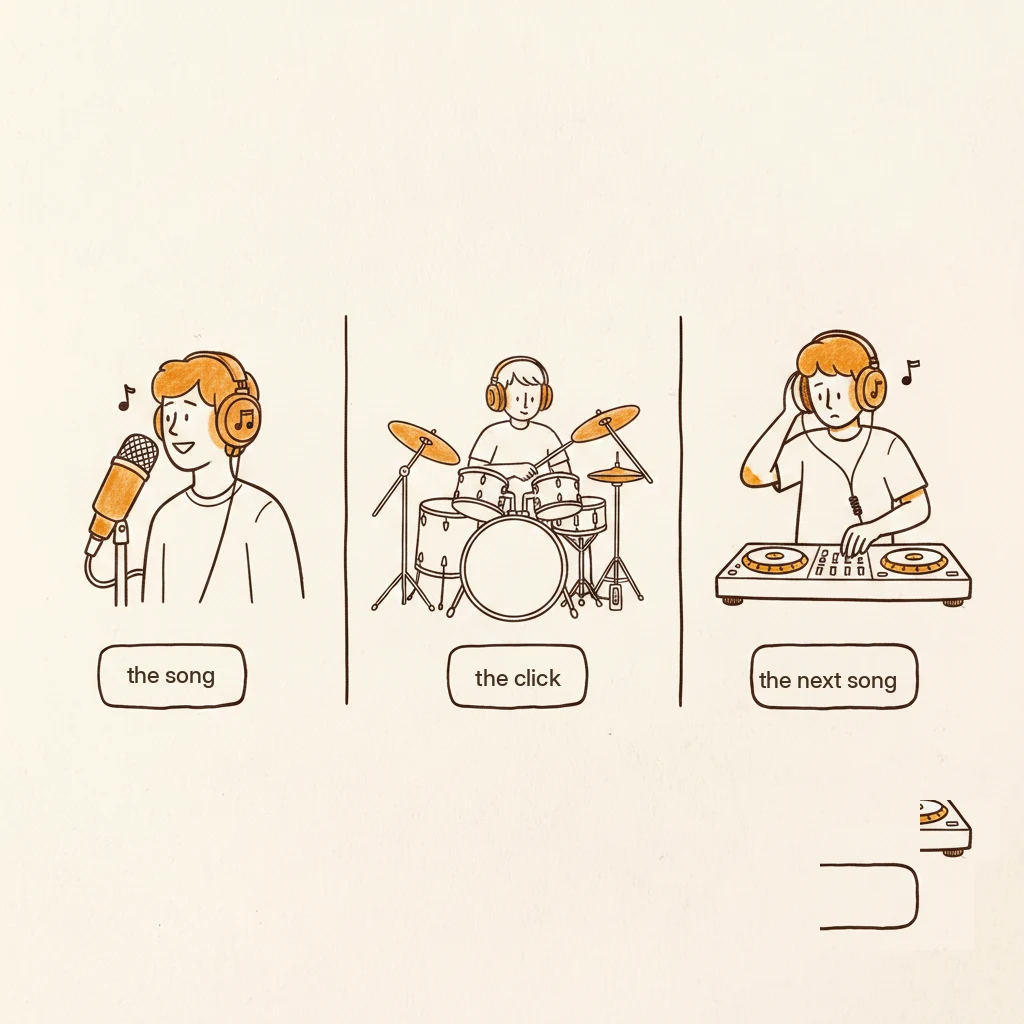
You’ve seen it in three places: the singer in the recording studio with big headphones on, the drummer at a concert wearing them while nobody else does, and the DJ with one cup pressed to an ear. Same gear, three completely different reasons. I’ve spent thirty-five years handing people headphones in all three situations, so let me walk you through each one.
In the studio: keeping the song out of the microphone
A recording microphone is a vacuum cleaner. It picks up everything in the room, not just the voice in front of it. So if a singer played the backing track out of a speaker while recording, the mic would record the track right along with the voice, and the finished song would have a smeared, doubled-up copy of itself baked in. A studio engineer put it plainly: headphones stop the guide track “being picked up by the microphones.”
So the song, the metronome, and the producer saying “one more take” all go into the headphones instead. The singer hears everything they need. The microphone hears only the singer. That’s the entire trick.
Drummers: the click track
Here’s the thing about a band: everybody follows the drummer. So who does the drummer follow? A steady tick-tick-tick called a click track, playing in those headphones. In the studio, drums usually get recorded first, to the click, and every other instrument stacks on top. At big concerts the drummer often wears the click too, especially when part of the show is pre-recorded and the live band has to line up with it exactly.
One thing drummers themselves will tell you: playing to a click is a skill, not a crutch. One of them said it straight in a thread I keep coming back to: if your timing is shaky, “just throwing him in front of a click will likely make it worse… Good time is like any other technical skill; it has to be learned and developed.”
DJs: hearing the next song before you do
The DJ’s rig plays two songs at once: one goes to the room, and one exists only inside the headphones. That private one is the next song, being lined up so the switch lands right on the beat. As one answer put it: “They are listening to the next song to prepare the transition. You can’t hear that bit.”
There’s a second, less romantic reason. The speakers are aimed at the crowd, not the booth, so the spot where the DJ stands is often the worst-sounding place in the building, all boom and mud. The headphones are the only clean thing they get to listen to, which is why DJ headphones are built thick and sealed, like ear protection with speakers inside.
What about singers on stage?
Different gadget, different story. Those little wireless earpieces singers wear in concert are in-ear monitors, a private mix of the band with their own voice loudest, and I’ve written that whole story up separately: why singers wear earpieces.
The DJ trick has a name: the cue system. A DJ controller has two separate outputs, one feeding the room and one feeding the headphones, and a button per deck that decides which songs land in the phones. Press cue on deck two while deck one plays to the crowd, and you can nudge the next song’s speed up and down until its beat marches in step with the current one. That lining-up is beatmatching, and the headphones are where it happens.
The version of this that matters at home
If you ever record yourself singing over a backing track, you have the exact studio problem. Play the track from a speaker and your phone records the track along with you, and the result sounds mushy and doubled. Headphones or earbuds on while you record, track in your ears, only your voice in the air. Same physics as the pros, zero dollars.
Recording yourself over a track at home? Headphones on, track in your ears, only your voice reaching the mic. That’s the whole studio secret, and it’s free.
If you’re figuring this out, you’re probably also wondering:
Gus Harmon
Gus spent three decades running sound wherever somebody needed it: bar bands, weddings, school shows, and twelve years of Sunday mornings. He can't sing a note. He can make sure you're heard. Now he writes so normal people can buy the right thing the first time.