
← first chords, first songs, at any age
Acoustic-Electric Guitars for Beginners (the $80 Question)
An acoustic-electric is just a normal acoustic guitar with a pickup built in, so the real question is whether the $50 to $100 premium buys anything you'll actually use in your first year.
 Gus Harmon · Updated July 8, 2026 · how I decide
If you buy through my links the site earns a little. It's never why I pick things.
An acoustic-electric is a normal acoustic guitar with a pickup and a little battery preamp built in. Unplugged, it sounds identical to its plain acoustic twin, and it never plugs into an electric-guitar amp. The honest question is whether the $50 to $100 premium buys anything you'll use. If an open mic, church, or a looper pedal is even plausible in your first year, yes, plugging in beats being mic'd. If you're playing the living room, spend that money on better wood or a setup instead.
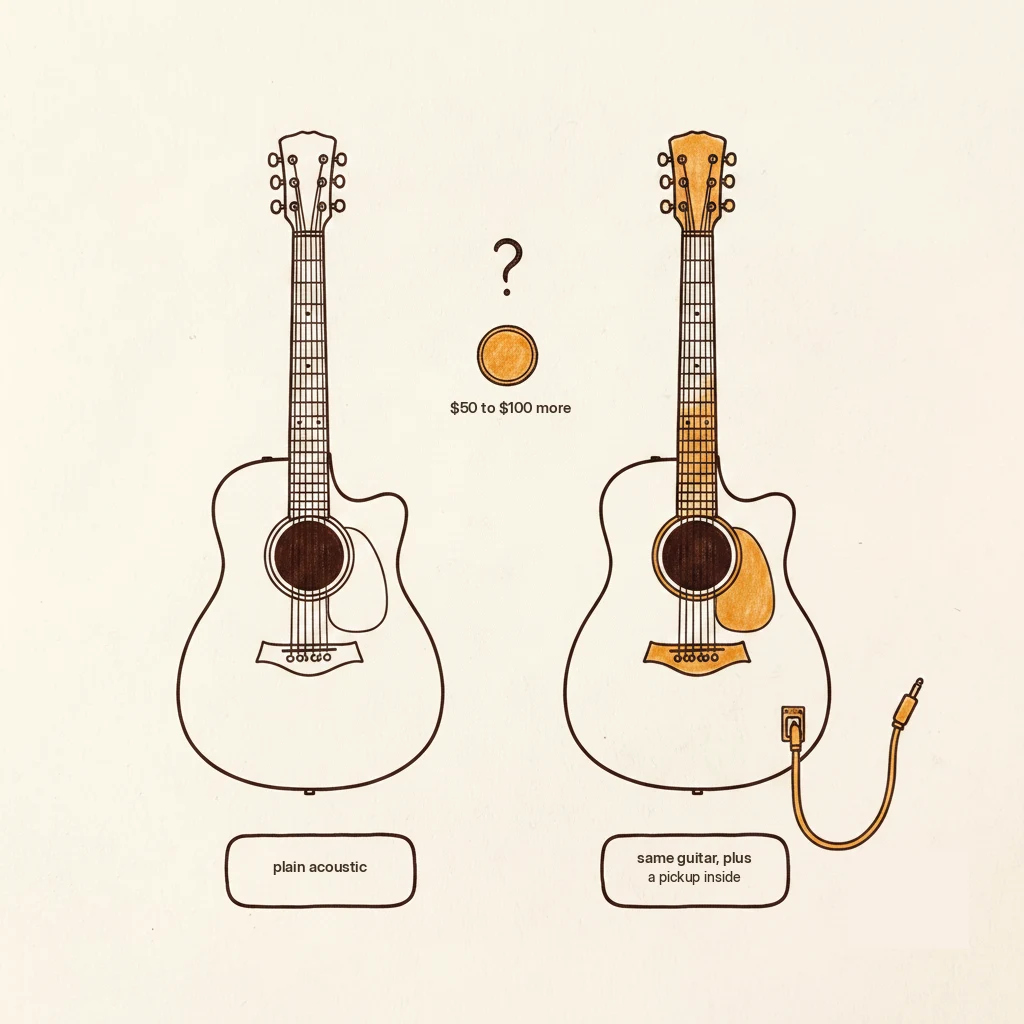
It’s a socket, not an upgrade
Here’s the thing that trips up half the people shopping for a first guitar: you see “acoustic-electric” on listing after listing and assume it’s the better, fancier category. It isn’t a category at all. It’s a plain acoustic guitar with a jack added so you can plug it into a PA or an acoustic amp.
Say this part out loud so it sticks: unplugged, an acoustic-electric sounds exactly like the same guitar without the electronics. And it is NOT an electric guitar. It doesn’t do distortion, it doesn’t want a rock amp. It’s an acoustic that can also plug into a sound system. That’s the whole story.
Do you actually need the jack?
Both sides of this are real, so here’s the honest fork.
You probably DON’T need it if you’re playing at home. Recording an acoustic is done with a microphone anyway, not the jack, and in the living room the pickup just sits there unused.
You WILL want it if there’s any chance of playing where people gather: an open mic, leading a song at church, a coffee-shop night. Ask any sound guy (this is my own tribe) and they’ll tell you the same thing: sure, I can point a microphone at your guitar, but it’s so much easier and cleaner to just plug you in. The built-in tuner most of these have is a quiet bonus too.
Here's the rule that decides it cleanly. At the same price, the plain acoustic has BETTER WOOD than the acoustic-electric, because the electronics come out of the build budget. So buy tone first, socket second. If you'll never plug in, the money's better spent on a nicer-sounding plain guitar or a proper setup. If you might plug in, the small premium is worth it. Same guitar, one just has a socket.
The picks
Best plain acoustic (more guitar for the money)
A Yamaha FG800 class is about $250 at Sweetwater. The consensus beginner acoustic, solid-top, honest tone, and no electronics eating into the wood budget. If you're playing at home, this is the smart buy.
Flaws, said plainly: no jack, so you'd need a mic to be heard through a PA later.
Best "same guitar, plus the socket"
A Yamaha FGX800C class runs about $400 to $450 at Sweetwater. Essentially the FG800's family with a pickup, preamp, and cutaway added, for when open mics are in your near future.
Flaws, said plainly: you're paying more for the electronics, not for better wood. Only worth it if you'll plug in.
Best lower-cost acoustic-electric
A Fender CD-60SCE class is about $350 at Sweetwater. A well-liked entry point into the plug-in world at a friendlier price.
Flaws, said plainly: at this price the electronics come out of the build, so a plain acoustic near this cost may sound a touch fuller unplugged.
Two honest notes before you buy
The looper crumb, because nobody sells it this way: being able to plug into a looper pedal (which records a chord loop and plays it back so you can practice over it) genuinely improves a lot of players. That’s a practice-tool reason for the jack, not just a stage reason.
And the maintenance line: the preamp runs on a battery (a 9V or a couple of AAs), and it always seems to die right at the open mic. Check it before you leave the house. That’s the whole upkeep.
You’ll also hear the Keith Richards line, “if it doesn’t sound right on an acoustic, it won’t sound right electric.” That’s a fine songwriting test. It is NOT advice that you must learn on acoustic first. Learn on whatever guitar you’ll actually pick up.
Skip this unless you like the nerdy part. The pickup in most acoustic-electrics is a piezo strip under the saddle, and it doesn't hear air the way a microphone does. It feels the string pressure and vibration through the bridge. That's why a plugged-in acoustic can sound a little "quacky" or brittle straight out of the jack, since it's sensing squeeze, not the round sound coming off the body. The battery preamp exists partly to tame that and shape it back toward the natural tone, which is why the better the preamp, the more it sounds like the guitar.
Playing the house: the plain FG800, and spend the difference on a setup. Any chance of an open mic by summer: the FGX800C, and thank yourself at soundcheck. Either way you bought the same guitar. One just has a socket.
Questions people actually ask
Do beginners need an acoustic-electric guitar?
No, not unless you’ll plug into a sound system. Unplugged it’s identical to a plain acoustic, and home recording uses a microphone anyway. The jack earns its keep for open mics, church, or a looper pedal. If none of that is on your horizon, a plain acoustic gives you better wood for the money.
Is an acoustic-electric the same as an electric guitar?
No. An acoustic-electric is an acoustic guitar with a pickup so it can plug into a PA or acoustic amp, and it sounds like an acoustic. An electric guitar is a different instrument entirely, built for amps, effects, and distortion. Don’t buy one expecting the other.
Should I pay extra for the electronics?
Only if you’ll use them. At equal price, a plain acoustic has better wood, since the electronics come out of the build budget. So decide first whether plugging in is realistic in your first year. If yes, the modest premium is worth it. If no, put that money toward a setup or a nicer plain guitar.
If you buy through my links the site earns a little coffee money. Doesn’t change the price, doesn’t change my answer.
Choosing your first guitar, you're probably also wondering:
Gus Harmon
Gus spent three decades running sound wherever somebody needed it: bar bands, weddings, school shows, and twelve years of Sunday mornings. He can't sing a note. He can make sure you're heard. Now he writes so normal people can buy the right thing the first time.