
← quieter kits and household peace treaties
Electric Drums vs Acoustic Drums: Which for a Beginner?
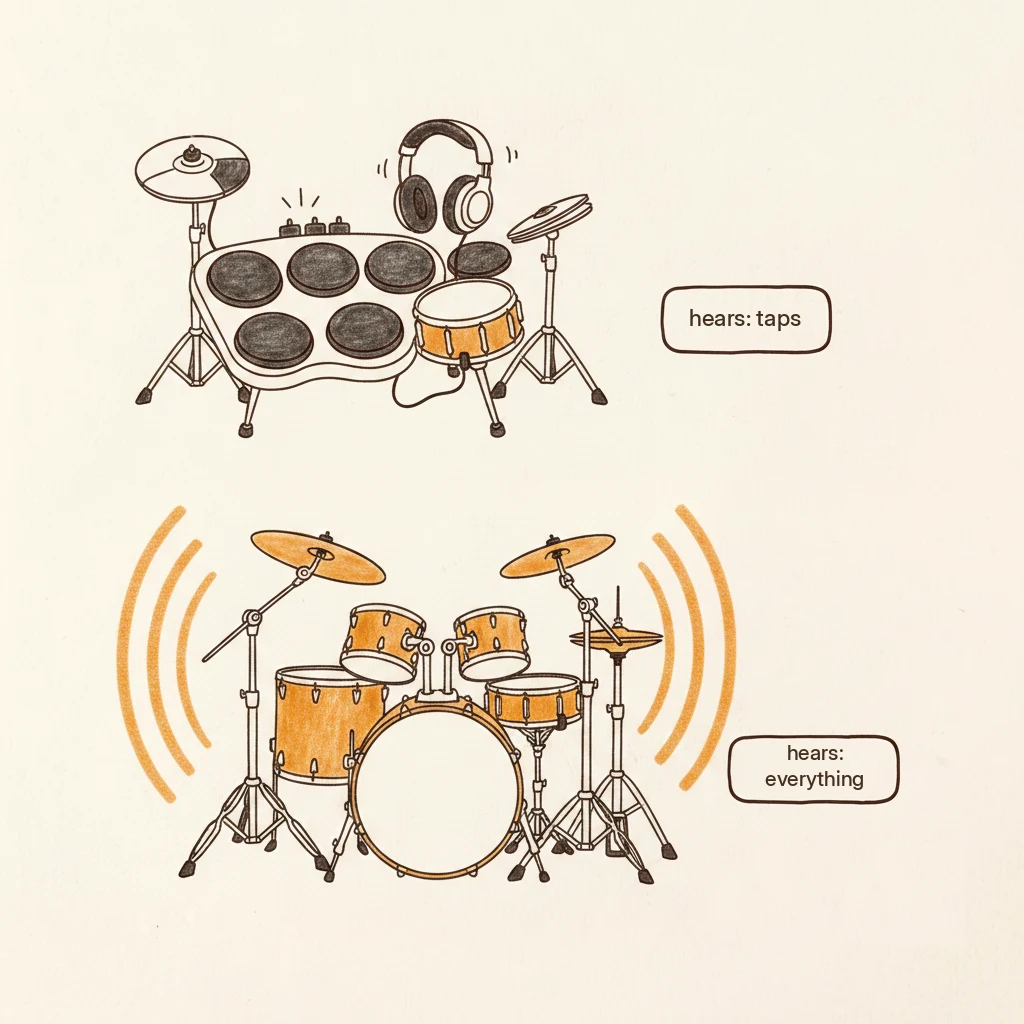
The house decides, not the drummer: electronic drums with headphones sound like rubber taps to the rest of the home (about $400 for the consensus kit), while acoustic drums feel and teach better but are always loud.
 Gus Harmon · Updated July 11, 2026 · how I decide
If you buy through my links the site earns a little. It's never why I pick things.
The question isn’t about drums
Every spec-sheet comparison of these two misses the actual decision, which is: what is the rest of the household willing to live with?
An acoustic kit has no volume knob. Not “loud until you learn control,” loud, permanently, structurally. An electronic kit through headphones reduces the sound in the house to sticks tapping rubber, quiet enough to practice while someone watches TV in the next room.
So the honest first question is real estate. Shared walls, sleeping baby, downstairs neighbor: the electronic kit isn’t a compromise, it’s the difference between a drummer who practices daily and a drummer who’s banned by Thanksgiving. Detached garage or a forgiving basement: the acoustic kit is on the table, and it’s the better teacher.
What each side is actually right about
The drummers who say acoustic teaches better aren’t gatekeeping. Real drumheads bounce the stick back in a way rubber pads only approximate, real cymbals swing and choke, and the infinite shadings between a whisper and a crash are where drummers actually live. Some of that gets lost on pads.
The counterargument is shorter: a kid practicing daily on an electronic kit beats a kid banned from practicing on an acoustic one. Skills built on pads transfer with a short adjustment period. Skills never built don’t transfer at all.
The electronic kit also brings two quiet superpowers for a beginner. The metronome plays right in the headphones, actually audible, which acoustic drummers famously struggle with (the kit drowns it out). And late-night practice exists at all.
| Electronic (about $400 new) | Acoustic (about $400 used) | |
|---|---|---|
| The house hears | Taps, plus kick thump below | Everything, three houses over |
| Feel and dynamics | Good, not the real thing | The real thing |
| Metronome practice | In the headphones, easy | Genuinely hard to hear |
| Space | Folds into a corner | Owns the room |
The specific answers
Electronic: the consensus starter is the Alesis Nitro Max, about $400. When drummers get asked whether it’s a real instrument or a toy, owners answer plainly: it’s a real e-drum kit at a fraction of the big-brand price, and it resells well. (You’ll also see the cheaper Alesis Turbo: it drops pads and module headroom to save about $70. The Nitro is the one drummers actually recommend.)
Acoustic: buy used. Around $400 on the local marketplace buys a real kit, because kits outlive interest and the used market is deep. The what-to-check list, shells, heads, hardware, lives in the beginner drums guide.
Already own the loud kind? There’s a third path nobody selling new kits mentions: low-volume cymbals and mesh heads retrofit an acoustic kit into something practice-friendly. Zildjian’s own L80 line claims up to 80% quieter, and drummers call the low-volume setup a secret weapon. The full quiet-drums playbook is here.
If you buy through my links the site earns a little coffee money. Doesn’t change the price, doesn’t change my answer.
If you're figuring this out, you're probably also wondering:
Gus Harmon
Gus spent three decades running sound wherever somebody needed it: bar bands, weddings, school shows, and twelve years of Sunday mornings. He can't sing a note. He can make sure you're heard. Now he writes so normal people can buy the right thing the first time.