
← your kid's instrument: costs, rentals, sticking with it
Flute vs Clarinet: Which One for Beginning Band?
The clarinet gives a kid real notes sooner (the reed helps), then hits its 'break' wall later. The flute's hard part is week one (the embouchure), then it runs smoother, and beginner flutes cost less. Let the kid's ear pick.
 Gus Harmon · Updated July 11, 2026 · how I decide
If you buy through my links the site earns a little. It's never why I pick things.
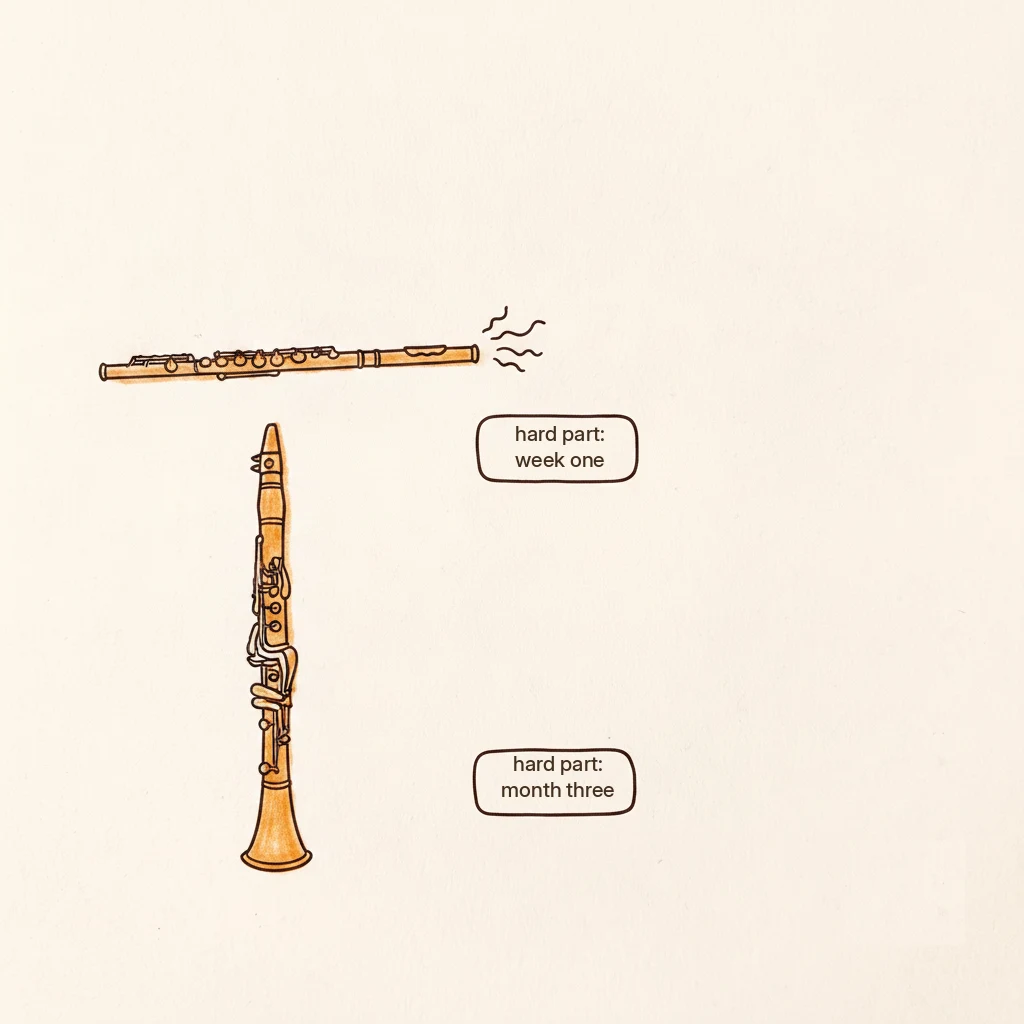
Two instruments, two different walls
Every beginning instrument has a wall somewhere. The honest version of this comparison isn’t “which is easier,” it’s “when does the hard part arrive.”
The flute’s wall is week one. There’s no reed, no mouthpiece to bite. You make the sound by shaping your lips and aiming air across a hole, the same physics as blowing across a bottle. Until that clicks, the flute produces expensive-sounding air. Once it clicks, and it does click, the flute runs smoother than almost anything in the band room.
The clarinet’s wall is month three. The reed gives a beginner real notes fast, which feels great in September. Then comes the break: the spot where the fingering system changes registers, and every clarinetist squeaks through it for a while. It’s a rite of passage, not a defect, but it arrives right when the novelty has worn off. Reeds are also a small forever-cost the flute doesn’t have.
Both instruments converge after year one. The question is which flavor of frustration your kid weathers better: a slow start, or a mid-course speed bump.
The physical stuff that actually decides it
Arms and hands. The flute is held sideways, and it needs enough arm length to do that comfortably for a half-hour rehearsal. Small-framed kids feel it. The clarinet hangs straight down with keys closer together, friendlier for small hands, with one catch: beginner clarinet fingers have to fully cover open tone holes, so very slim fingers sometimes leak. A band director can check both fits in two minutes at the signup table.
Weight. Neither is the problem the saxophone is. Both travel in a backpack-sized case, both survive the bus.
Braces. Light impact on both, far gentler than the brass table. The flute’s placement barely touches the front teeth; the clarinet needs a period of adjustment. If braces are coming, mention the date to the director and don’t let it decide the instrument.
Money. This one runs backwards from what most parents expect: the flute is the CHEAPER door. Decent student flutes cost less than decent student clarinets, and the flute door’s real trap is overspending, being upsold to a $1,500 instrument a beginner cannot use. On the clarinet side, the plastic student Yamaha is famously indestructible and holds value. Both rent well. The full price maps live in the flute guide and the clarinet guide.
The tiebreaker that beats all of the above
The band directors’ own consensus, from a long argument about how kids get matched to instruments: a kid should play what they’re most interested in, because that’s the instrument they’ll be most successful on.
The kid who loves the sound practices through the wall. The kid assigned the sensible choice meets the wall and quits. Every practical factor on this page is a tiebreaker, not a verdict.
If you're figuring this out, you're probably also wondering:
Gus Harmon
Gus spent three decades running sound wherever somebody needed it: bar bands, weddings, school shows, and twelve years of Sunday mornings. He can't sing a note. He can make sure you're heard. Now he writes so normal people can buy the right thing the first time.