
← how singers and sound actually work
The K-pop Headset Mic (Costumes, Covers, Actually Singing)
The k-pop headset look comes three ways: a $10 costume prop (right for most filmed dance covers), a real wireless headset system for about $100 to $200, or the touring gear idols rent.
 Gus Harmon · Updated July 8, 2026 · how I decide
If you buy through my links the site earns a little. It's never why I pick things.
The k-pop headset comes in three honest versions. A costume prop (about $10) is right for filmed dance covers, because your camera is recording the backing track anyway. A real wireless headset system (about $100 to $200) is for actually singing through speakers. And the touring earsets the idols wear are pro gear productions rent, not something fans buy. For most covers, the prop is the right answer, and that's not cheating.
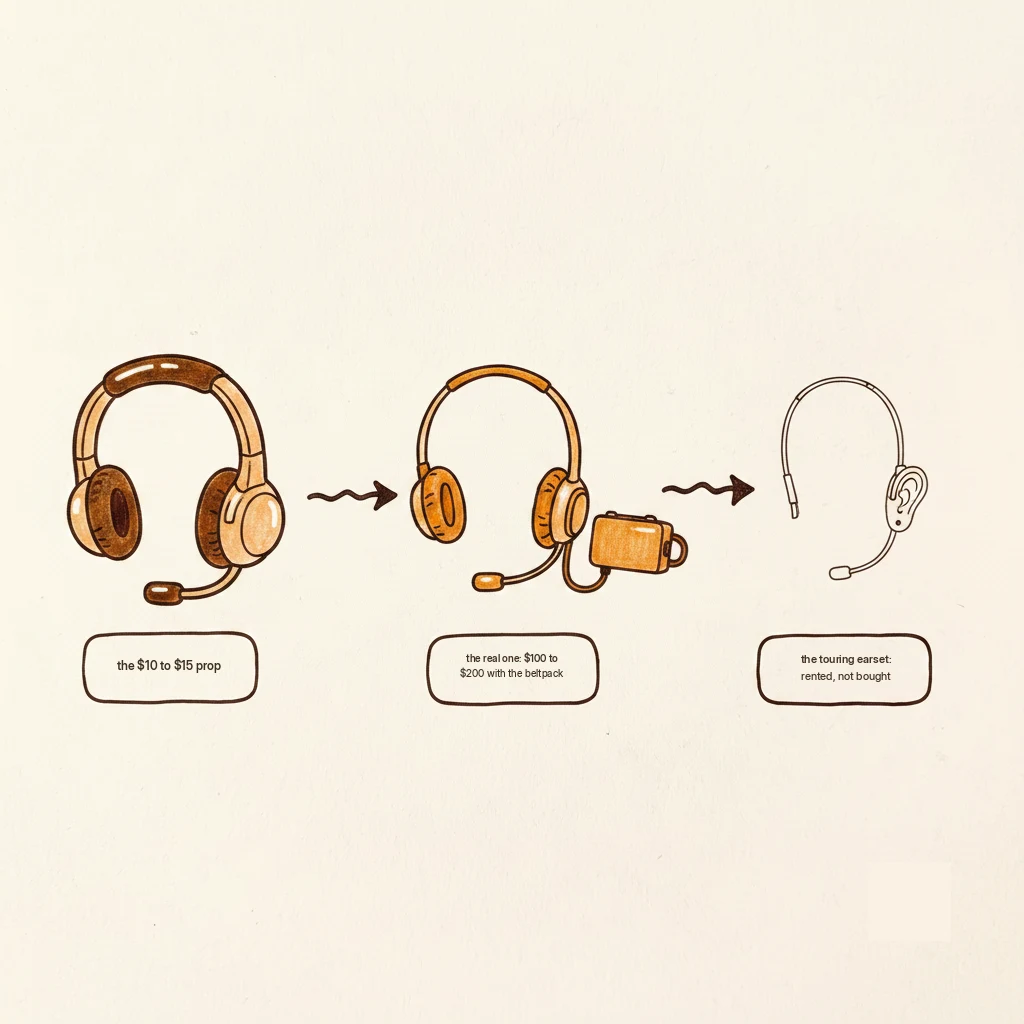
Which one you need depends on one thing: are you singing, or filming?
Here’s the thing that untangles this whole question. The k-pop headset is really three different products wearing the same look, and which one is right comes down to whether real sound has to come out of it.
Filming a dance cover for TikTok or YouTube? The headset doesn’t have to work at all. Your phone is recording the song from your speaker, not from the headset. So the $10 costume prop is honest and correct.
Singing live through speakers at a school showcase or convention? Now the mic has to actually carry your voice, and you want a real wireless headset system.
Wearing the touring gear the idols wear? You basically can’t, and I’ll tell you why in a second.
The prop is more legit than you think
Fans worry the $10 prop is fake, like they’re cheating. Let me put that to rest, because the idols are sometimes doing the exact same thing.
On choreography-heavy songs, a lot of what you hear is a backing track with the vocal already on it. As one longtime concertgoer put it, if your mic volume is set to 1 and the backing track is set to 10, it’s basically the same as lip syncing. That’s not a scandal. It’s a production choice: when you’re dancing that hard, a live vocal falls apart, so the headset preserves the LOOK of live singing while the track carries the sound.
Which means the prop on your head is doing precisely what the idol’s headset is doing on the hard numbers. No shame in it.
The idols’ actual gear (and why you don’t buy it)
When idols really are singing, they wear touring earsets: tiny professional capsules that curl over the ear and sit near the cheek. Think the class of gear that costs $500 and up per rig, gets fitted and maintained by a production crew, and travels with the tour. It’s rented into shows, not sold to fans.
I can't tell you the exact model any one group wears without guessing, so I won't. What I can tell you is the honest category: pro earset, road-crew gear, four figures with the wireless pack. Anybody selling you "the Blackpink mic" for $40 is selling you a costume with a markup.
If you actually need to sing through it
For a real school or convention performance, you want a proper wireless headset system: a headset mic and a receiver that plugs into the sound system, about $100 to $200. The honest thing to know going in is that cheap wireless can drop out at the worst moment. Do a soundcheck walk of the whole stage before doors open.
Best for a filmed dance cover
A costume headset prop is about $8 to $15 at Amazon, roughly one fast-food combo. It completes the look, and since your phone records the music from the room, it's all the "mic" a cover needs.
Flaws, said plainly: it does not actually amplify your voice. If you need to be heard through speakers, this isn't it.
Best for singing live at a showcase
A consumer wireless headset system runs about $100 to $200 at Amazon or Sweetwater. This one carries your real voice to the speakers so a live performance actually works.
Flaws, said plainly: budget wireless can drop out. Soundcheck the whole stage first, and keep fresh batteries.
The trap to dodge sits right in the middle: “k-pop headset microphone” listings that are really karaoke-toy mics with a headband glued on. They’re neither cheap enough to be a good prop nor good enough to sing through. Worst of both. If you want the look, buy the cheap prop on purpose. If you want to sing, buy the real system on purpose.
Skip this unless you like the nerdy part. The reason real earsets curl down to the cheek instead of sitting out front is distance. Through hard choreography your head whips around constantly, and a mic on a boom near the corner of your mouth stays the same tiny distance from your voice the whole time. Steady distance means steady volume, so the sound engineer isn't chasing your level every time you spin. A mic bouncing six inches off your face would surge and fade with every move.
The headset-as-icon isn’t even a k-pop invention. Britney, Madonna, and Michael Jackson made that little boom mic famous forty years ago. The look you want has a long family tree.
Filming a cover? The $10 prop, zero shame. You're in good company. Singing at the school showcase? The real system, and do a soundcheck walk of the whole stage before doors open.
Questions people actually ask
What headset mic do k-pop idols use?
When they’re singing live, they wear pro touring earsets: tiny capsules over the ear, fitted and maintained by a road crew, in the $500-and-up class. When the choreography is heavy, the vocal is often on a backing track and the headset is mostly there for the look. Either way, it’s not gear a fan buys off a shelf.
What mics does Blackpink use?
I won’t name a specific model, because I’d be guessing and this site doesn’t guess. Honestly, it’s the same story as any big touring act: professional earset mics rented and maintained by the production, with backing tracks doing a lot of the work on the dance numbers. Any “Blackpink mic” listing for cheap is a costume, not their gear.
What headset mic do singers use?
Depends on the singer. Touring pros wear pro earsets managed by a crew. A school performer or a cover creator singing live wants a consumer wireless headset system, around $100 to $200. And plenty of “headset” moments you see are props over a backing track. Match it to whether real sound has to come out of the thing.
If you buy through my links the site earns a little coffee money. Doesn’t change the price, doesn’t change my answer.
If you're chasing the headset look, you're probably also wondering:
Gus Harmon
Gus spent three decades running sound wherever somebody needed it: bar bands, weddings, school shows, and twelve years of Sunday mornings. He can't sing a note. He can make sure you're heard. Now he writes so normal people can buy the right thing the first time.