← first chords, first songs, at any age
Piano vs Keyboard: What's the Actual Difference?
A piano has hammers and strings; a keyboard is the light electronic one; between them sits the digital piano, which feels like a piano and plugs in. For learning, weighted keys matter more than key count, about $500 buys the real thing.
 Gus Harmon · Updated July 11, 2026 · how I decide
If you buy through my links the site earns a little. It's never why I pick things.
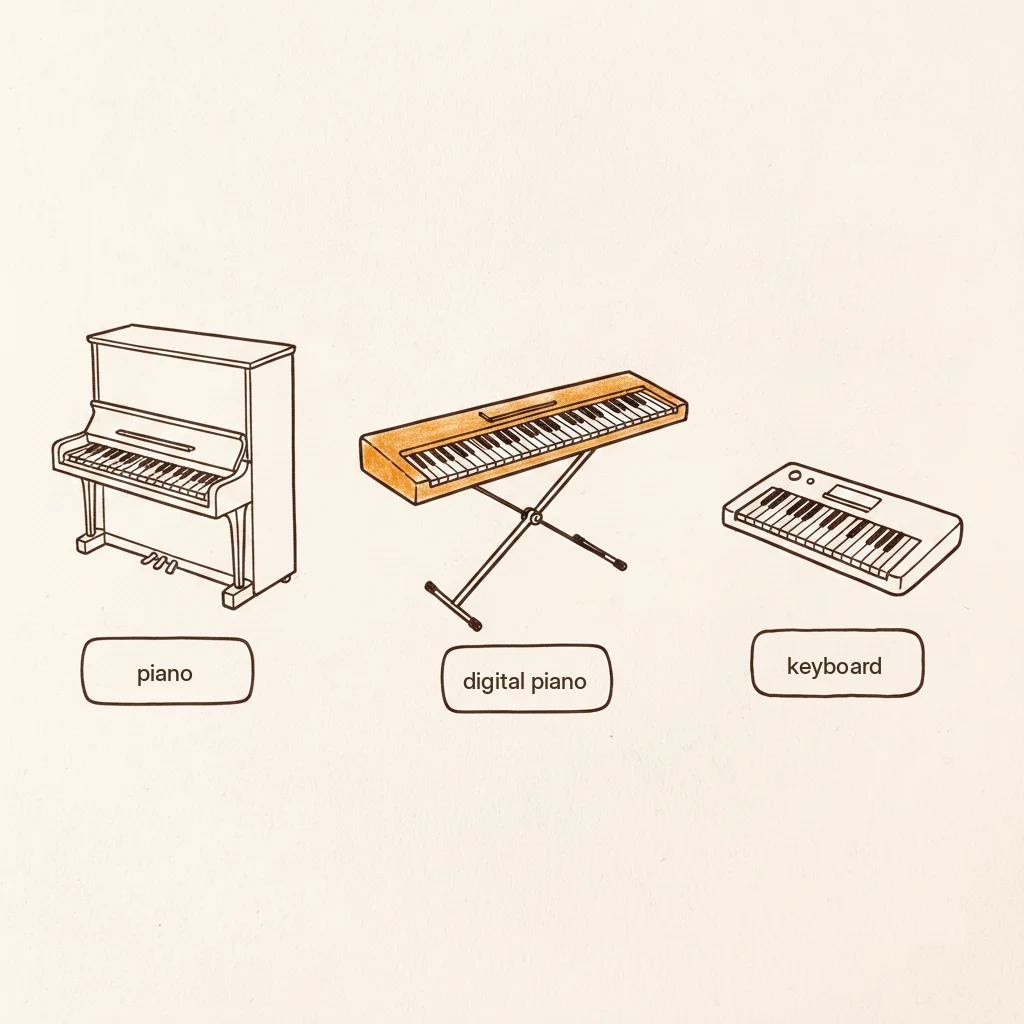
Stores sell three things, not two
Half the confusion in this question comes from the word “keyboard” covering two very different objects. So here’s the map, because once you can name all three, the decision mostly makes itself.
The piano. Wooden, acoustic, heavy. Press a key and a felt hammer strikes real strings. It needs tuning once or twice a year, it needs space, and moving one is an event. Nothing else sounds or feels exactly like it.
The keyboard. Light, portable, usually 61 unweighted keys that press like buttons. It has trumpet sounds and drum beats and it runs on a wall plug or batteries. Great fun, honest starter, roughly $100 to $250.
The digital piano. The in-between object, and the one most families have never heard named. It’s electronic like the keyboard, but it has all 88 keys, and they’re weighted: little mechanisms give each key the resistance of a real hammer. It never needs tuning, works with headphones, and the good entry ones, like the Yamaha P-45 (about $500), are what piano teachers mean when they say a keyboard is fine.
The rule that sorts every model: weighted beats wide
If you remember one thing from this page, make it this. When pianists get asked whether key count or key feel matters more, the answer is consistent. In one long discussion of exactly this question, the top answer put it plainly: the amount of keys is less limiting than the non-weighted action.
In normal words: a weighted 61-key instrument teaches more real piano than an unweighted 88. Weighted keys build the finger strength and the touch control that actual piano playing runs on. Unweighted keys teach your hands a version of the instrument that doesn’t exist anywhere else.
That’s why the sorting question isn’t “how many keys.” It’s “do the keys push back.”
What about lessons?
Teachers accept digital pianos without blinking. A weighted 88 is, for the first several years, functionally a piano.
An unweighted keyboard buys you goodwill for a little while. Plenty of kids start on one, and if the interest is unproven that’s a completely reasonable opening move. But if lessons stick, the teacher will eventually say the word “weighted,” and that day was always coming. Budget for it emotionally now.
And the classical-versus-pop wrinkle, honestly: a kid headed toward classical lessons needs touch dynamics early, which means weighted keys early. A kid who wants to make beats and play chords under pop songs will be genuinely happy on a keyboard for longer, because features are the fun there.
The free piano, briefly
Somewhere in this decision, someone will offer you a free acoustic piano. I’ve written the long version in the piano cost guide, but the short version belongs here: a free piano is a moving bill and a tuning bill wearing a bow. Sometimes it’s still worth it. Price the move before you say yes.
If you buy through my links the site earns a little coffee money. Doesn’t change the price, doesn’t change my answer.
If you're figuring this out, you're probably also wondering:
Gus Harmon
Gus spent three decades running sound wherever somebody needed it: bar bands, weddings, school shows, and twelve years of Sunday mornings. He can't sing a note. He can make sure you're heard. Now he writes so normal people can buy the right thing the first time.